Carbon offset in the Yangtze River Delta urban agglomeration based on ecosystem service flow
Received date: 2025-07-13
Revised date: 2025-12-23
Online published: 2026-03-25
Supported by
Beijing Social Science Foundation(19GLA005)
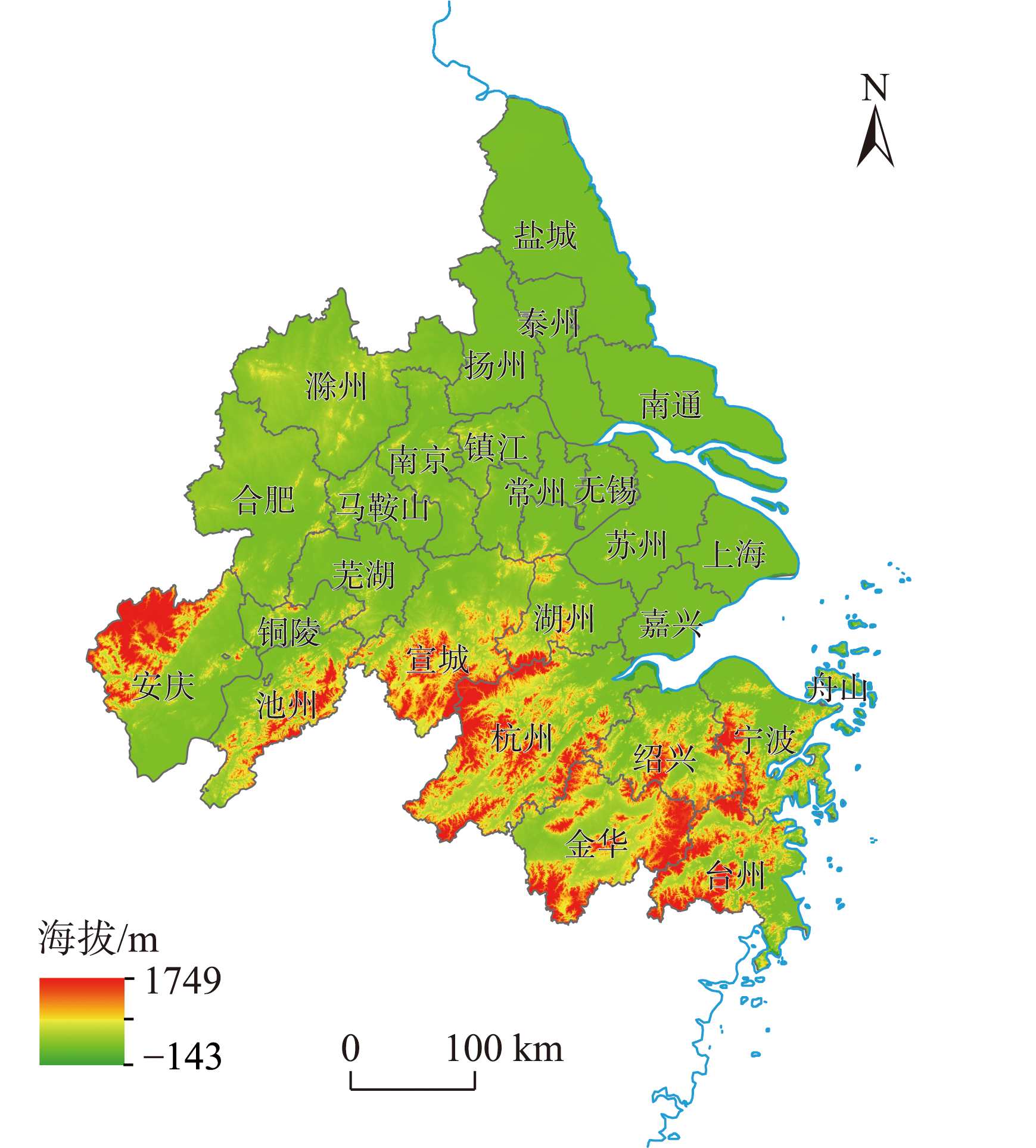
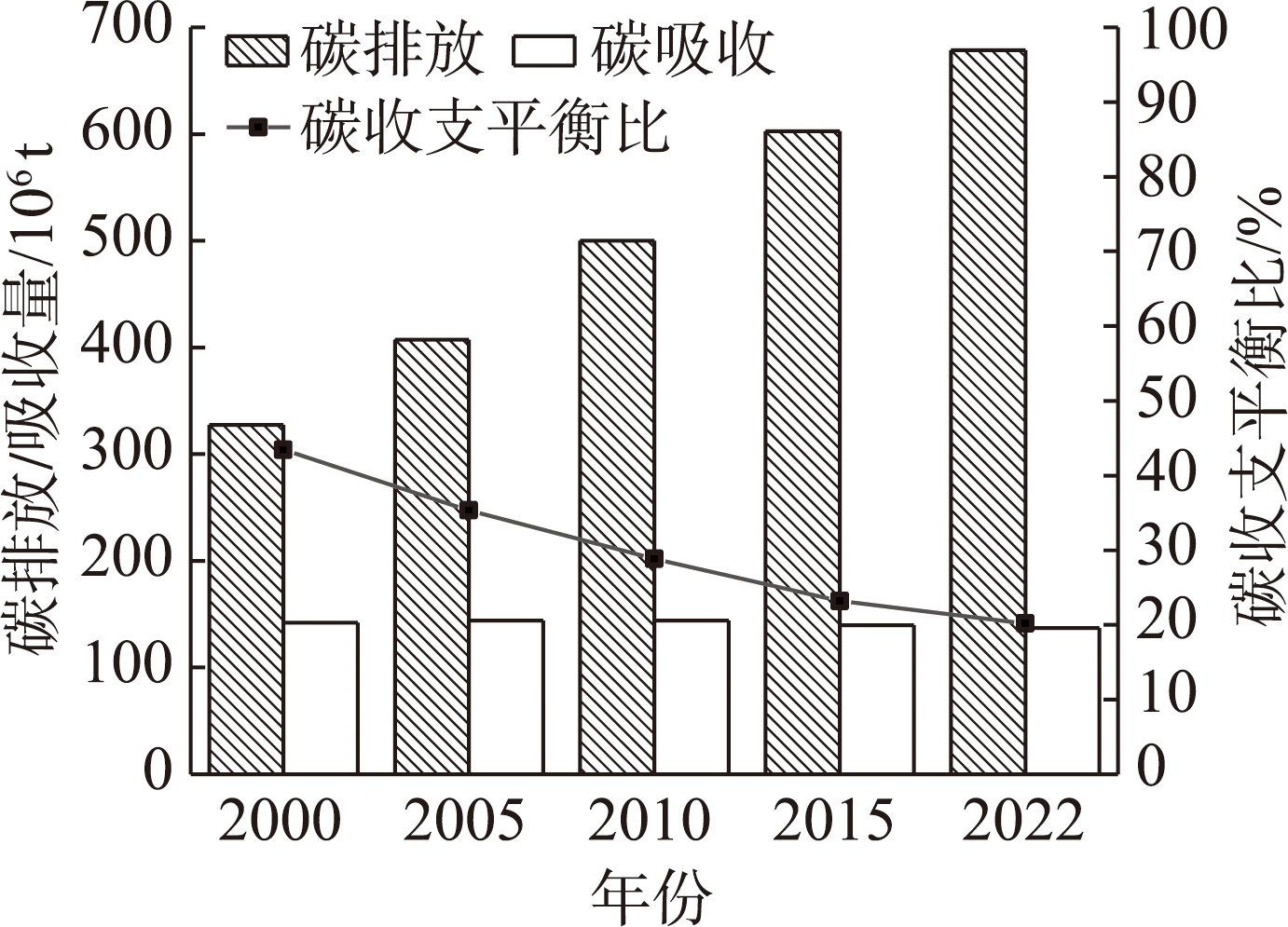
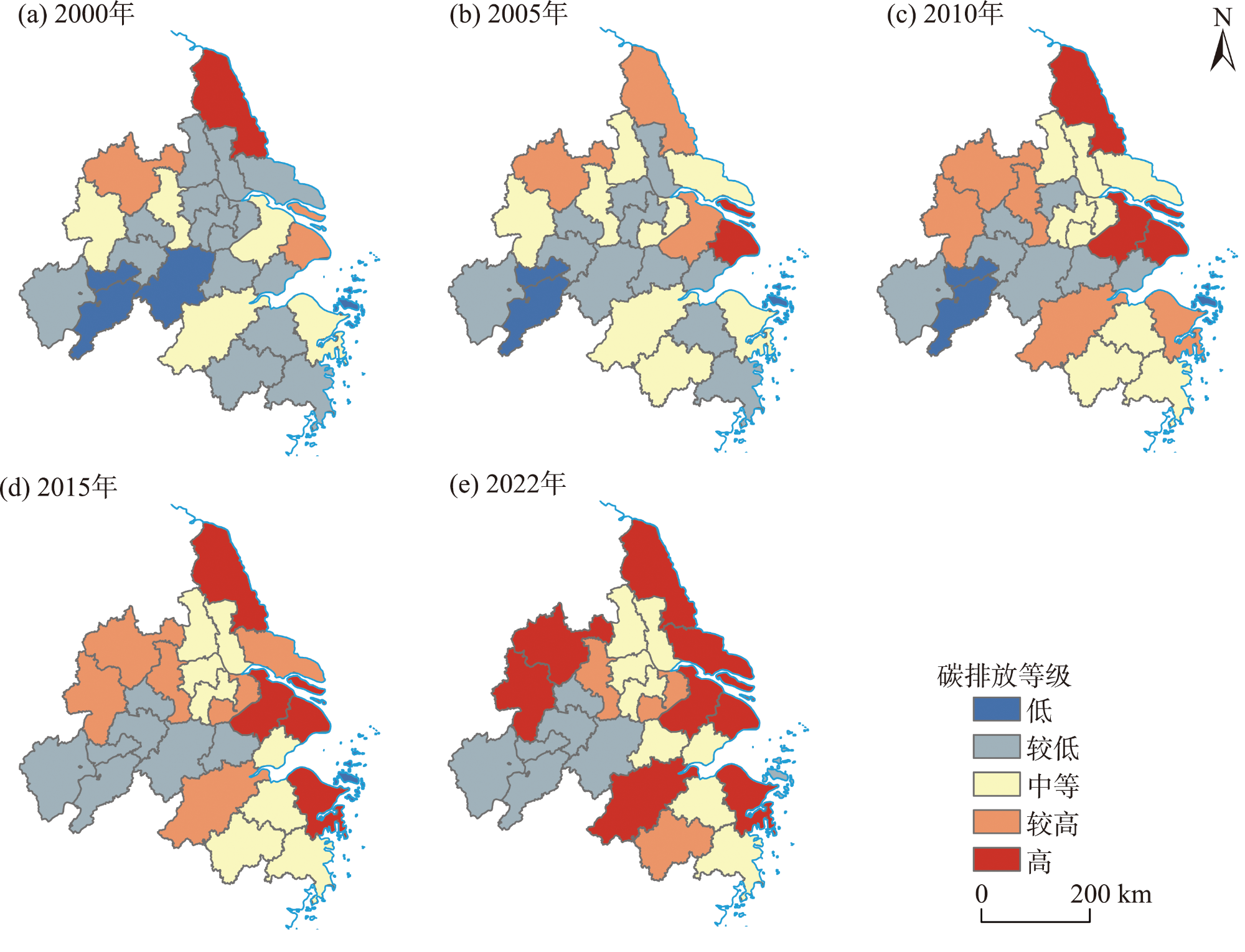
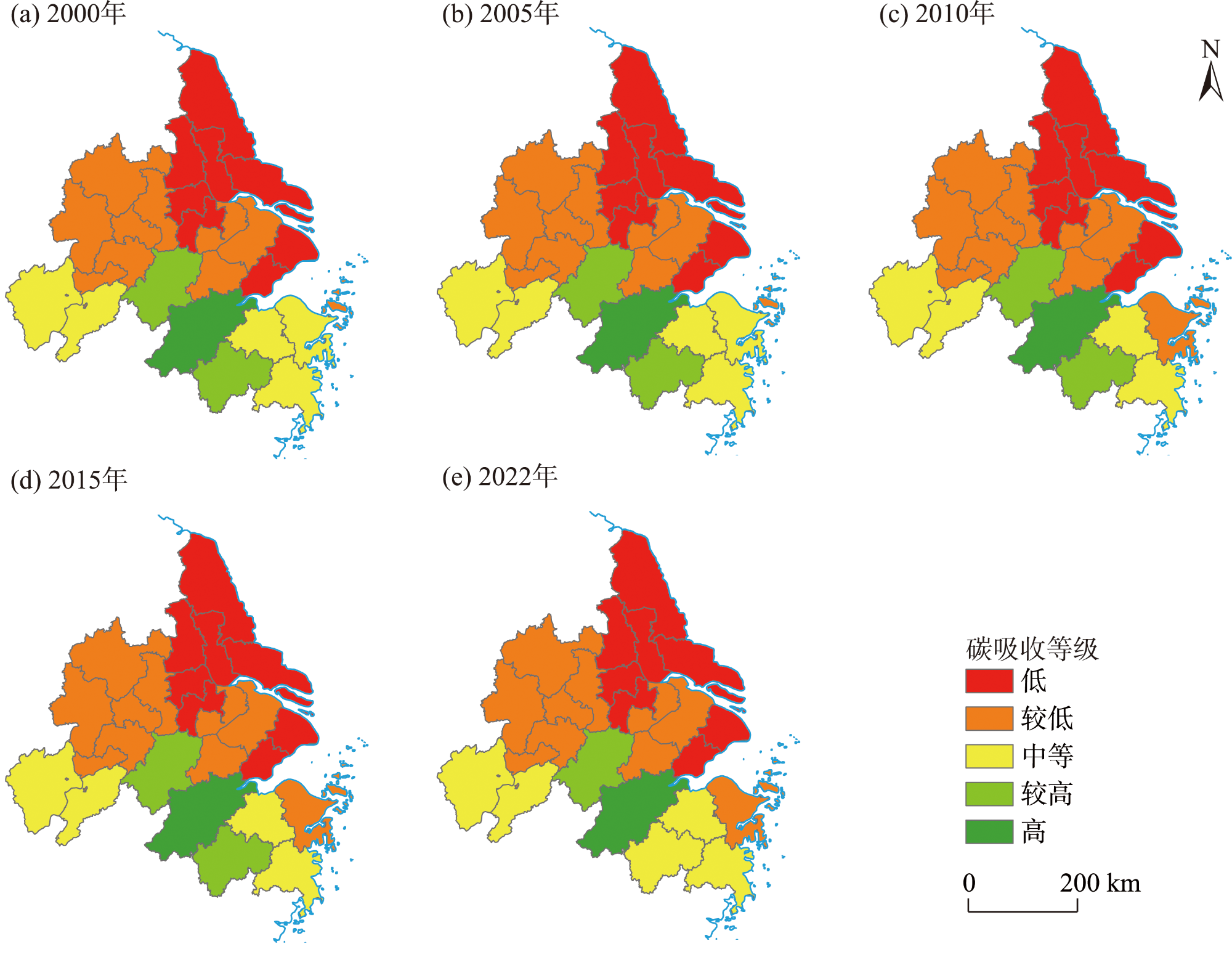
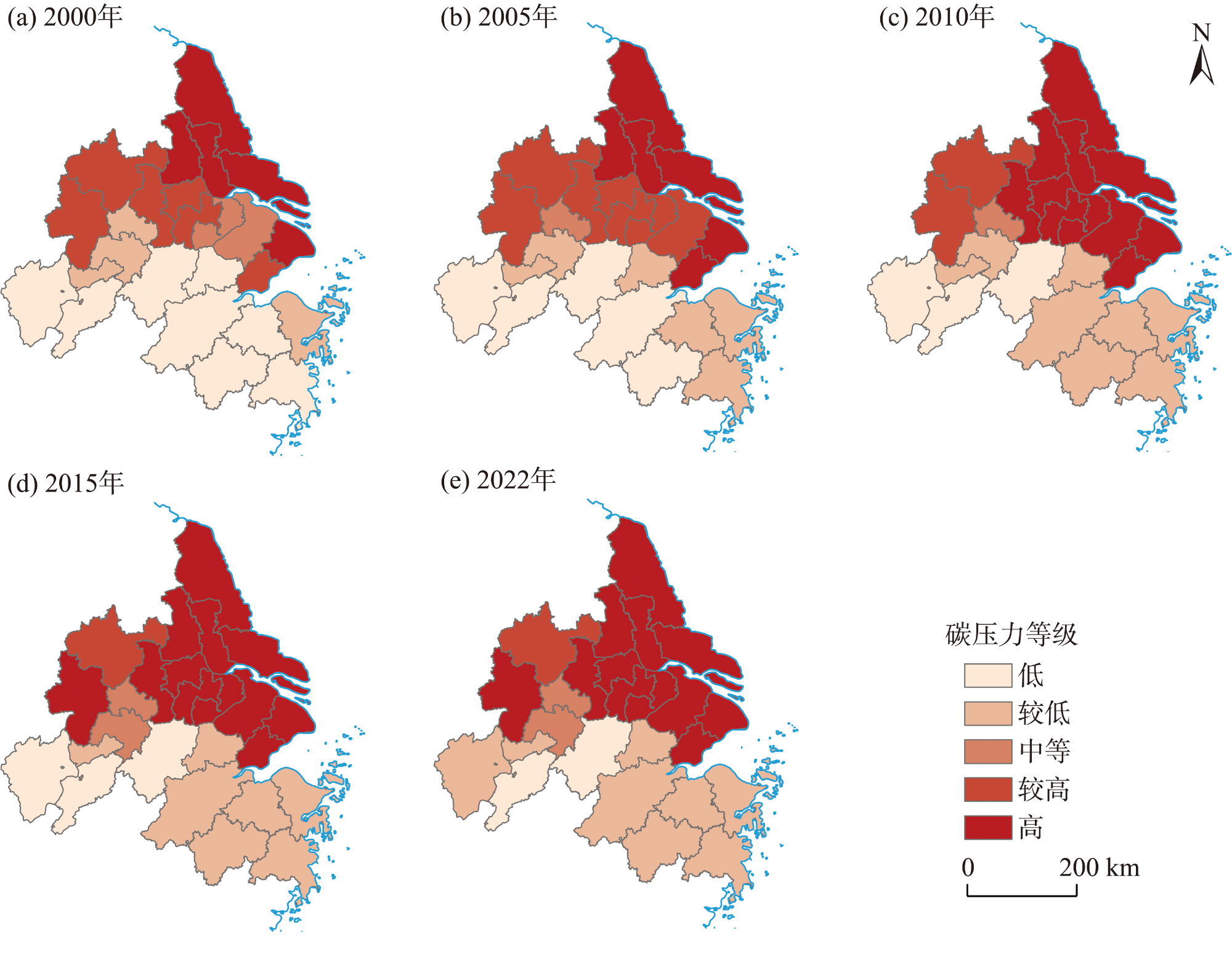
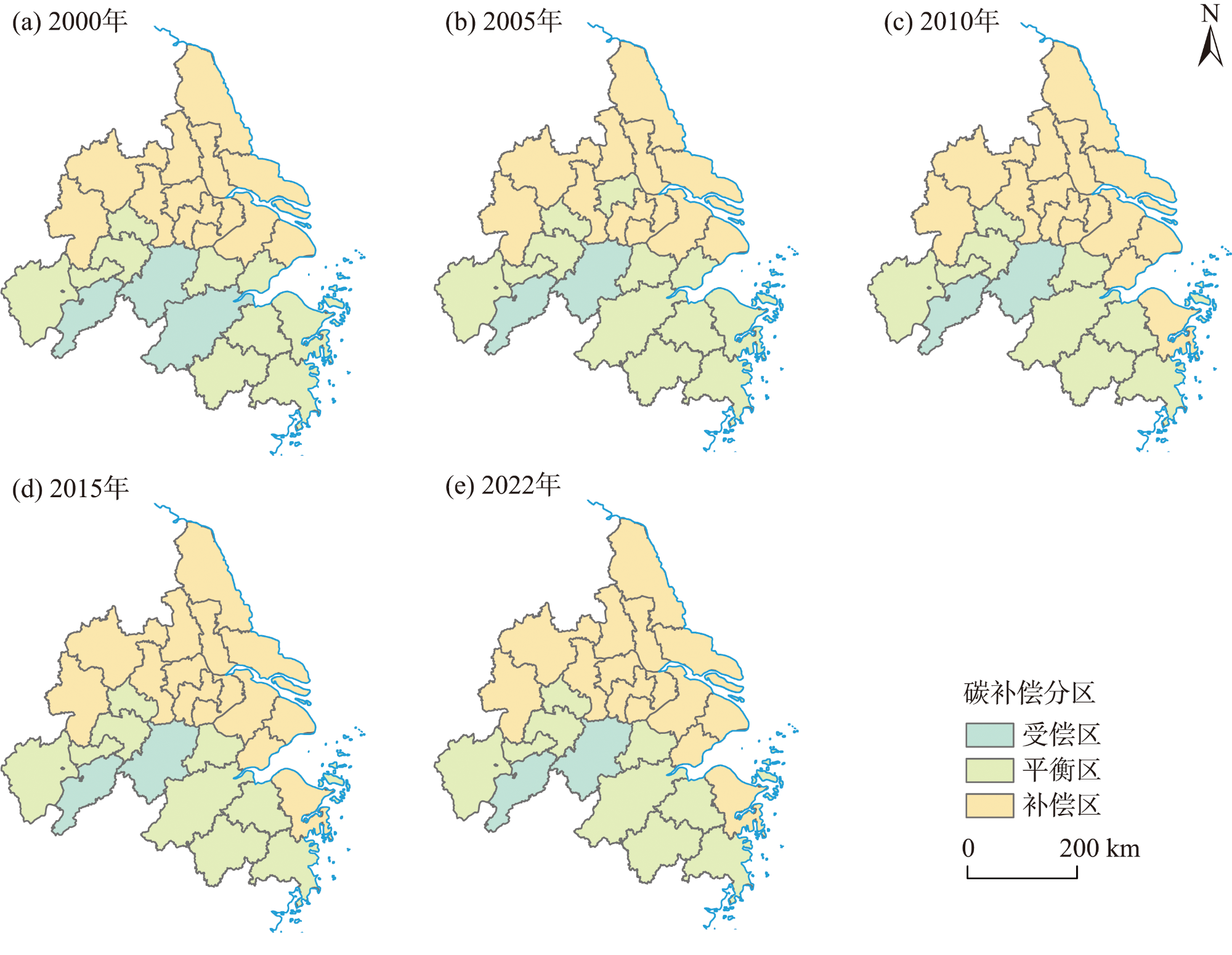
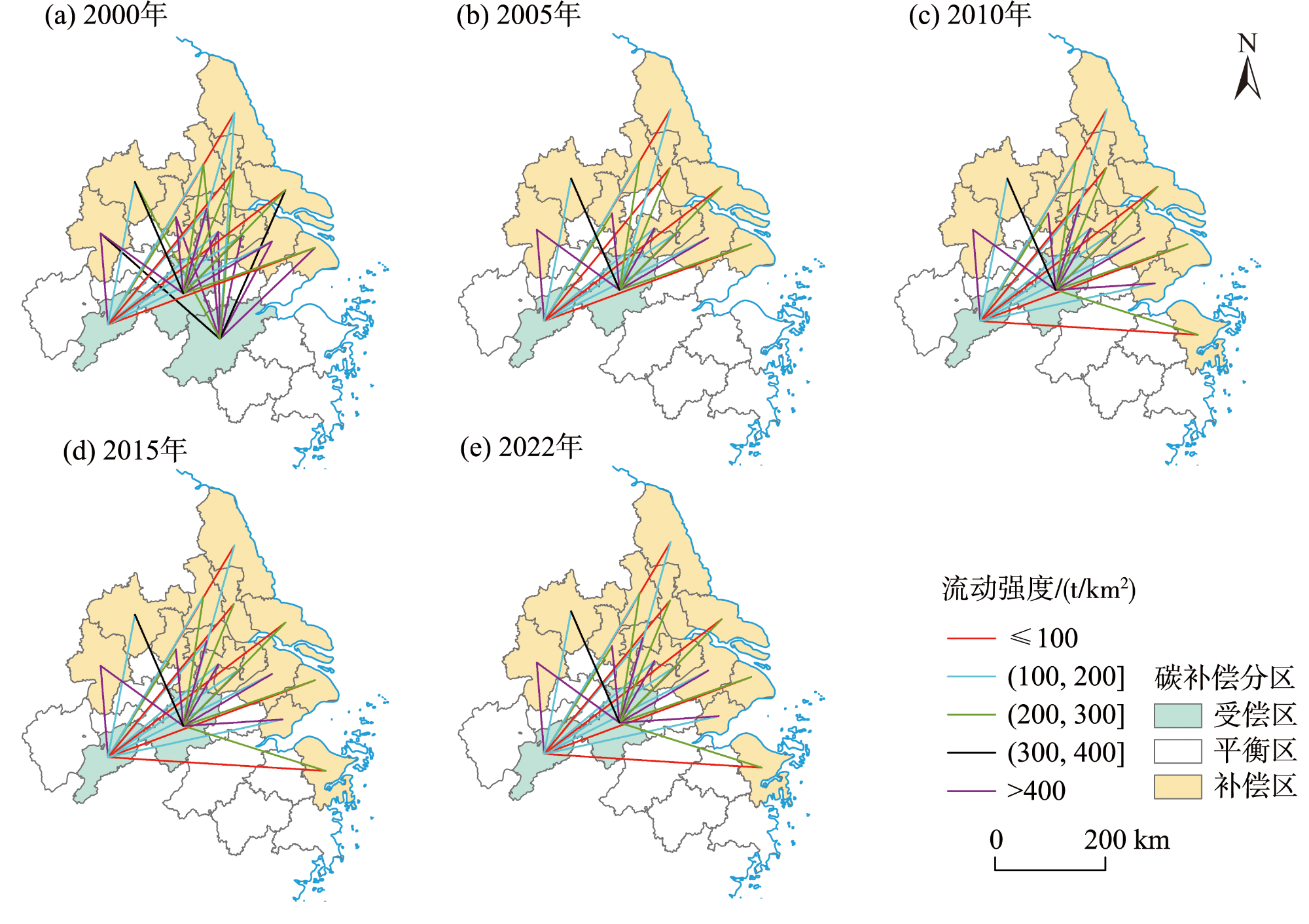
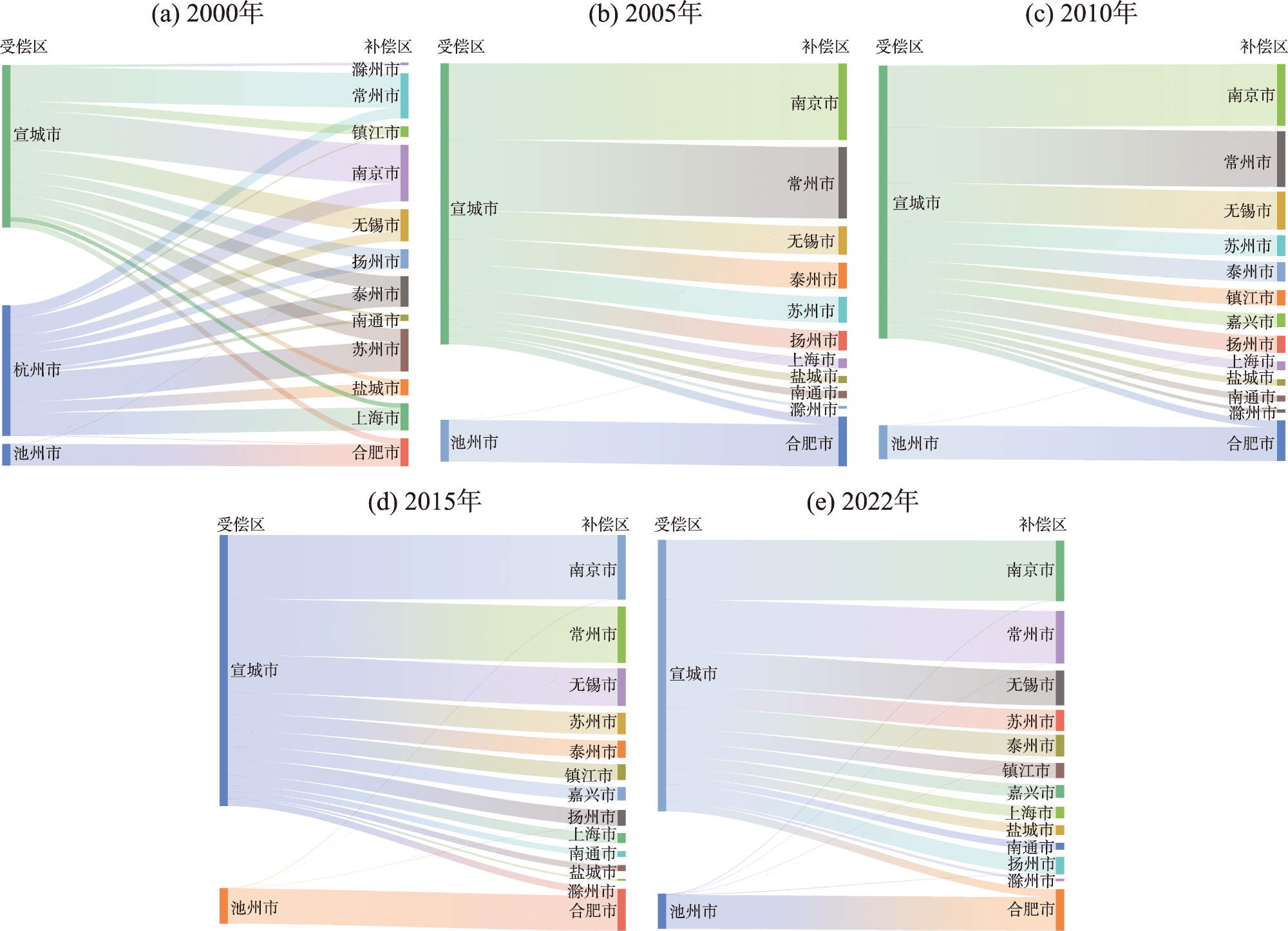
This study analyzed the spatial flow path of carbon sequestration services based on the flow of ecosystem services, and constructed a one-to-one carbon compensation mechanism linking the subject and object of compensation, to provide a theoretical reference and scientific support for optimizing the carbon compensation policy for the coordinated development of the ecology and economy. Taking the Yangtze River Delta (YRD) urban agglomeration as the study area, the study clustered the standard explicit comparative advantages in the socioeconomic, ecological environment, and land use structure aspects, identified carbon compensation and compensated areas, revealed the spatial transfer paths of carbon sequestration services within the YRD urban agglomeration by combining with the fracture point and field strength model, and then calculated the amount of carbon compensation based on the contribution of carbon sinks of the cities. The results of the study indicate that: 1) Carbon emissions in the YRD urban agglomeration showed a continuous upward trend, while carbon sequestration showed a downward trend. Spatially, carbon emissions and carbon sequestration showed opposite distribution patterns, with carbon emissions characterized by "high in the east, low in the west and high in the north, low in the south" and carbon sequestration characterized by "high in the west, low in the east and high in the south, low in the north". 2) During the study period, the flow of carbon sequestration services in the YRD urban agglomeration was mainly in the direction of southwest-northeast, with a clear preference for proximity, where Xuancheng was the most stable and largest carbon sequestration service output area, and Nanjing (adjacent to Xuancheng) was the largest input area. In 2022, the carbon compensation payment of Nanjing was 41036500 yuan. In conclusion, the scale of carbon deficits in the YRD urban agglomeration has been expanding, and there was an obvious spatial mismatch between carbon revenues and expenditures, so the construction of a cross-regional carbon compensation mechanism is a realistic demand for realizing the dual carbon goals.
HAN Yu , CUI Chuyun , WEN Yali . Carbon offset in the Yangtze River Delta urban agglomeration based on ecosystem service flow[J]. PROGRESS IN GEOGRAPHY, 2026 , 45(3) : 573 -588 . DOI: 10.18306/dlkxjz.2026.03.009
表1 2000—2022年长三角城市群碳补偿支付金额Tab.1 Amount of ecological compensation payments in the Yangtze River Delta urban agglomeration during 2000-2022 (万元) |
| 补偿区 | 2000年 | 2005年 | 2010年 | 2015年 | 2022年 |
|---|---|---|---|---|---|
| 上海 | 2373.37 | 443.38 | 484.40 | 546.30 | 773.30 |
| 南京 | 3256.67 | 2632.53 | 2822.48 | 3945.71 | 4103.65 |
| 无锡 | 2517.34 | 1368.08 | 2465.75 | 2534.68 | 2609.93 |
| 常州 | 2319.08 | 2179.63 | 2636.78 | 3257.18 | 3551.92 |
| 苏州 | 3286.92 | 1690.26 | 2152.13 | 1506.26 | 1485.06 |
| 南通 | 168.12 | 130.56 | 199.46 | 265.67 | 374.28 |
| 盐城 | 308.89 | 93.04 | 134.62 | 177.40 | 384.53 |
| 扬州 | 579.66 | 408.90 | 599.32 | 723.63 | 1011.51 |
| 镇江 | 479.82 | — | 688.67 | 905.96 | 882.79 |
| 泰州 | 732.92 | 456.81 | 600.10 | 701.07 | 1170.27 |
| 宁波 | — | — | 0 | 0 | 0 |
| 嘉兴 | — | — | 501.30 | 524.55 | 588.29 |
| 合肥 | 603.89 | 906.04 | 1560.93 | 1584.12 | 1984.07 |
| 滁州 | 40.82 | 20.00 | 39.32 | 28.99 | 78.64 |
| [1] |
杜梦晴, 杨欣. 碳中和背景下统筹土地利用碳收支的广东省横向碳补偿[J]. 水土保持学报, 2024, 38(1): 197-206, 219.
[
|
| [2] |
路慧玲, 韩燕. 基于土地利用的甘肃省县域碳收支时空分异与碳平衡分区[J]. 甘肃农业大学学报, 2025, 60(1): 281-287, 296.
[
|
| [3] |
王文治, 胡雍, 张晓宇. 中国省域碳排放责任分配方法比较与碳补偿设计[J]. 资源科学, 2023, 45(10): 1913-1930.
[
|
| [4] |
张亚龙, 张海峰, 杨雪梅. 黄河流域城市碳收支时空差异与碳补偿分区研究[J]. 世界地理研究, 2024, 33(3): 116-130.
[
|
| [5] |
韩超跃, 赵先超, 胡艺觉, 等. 湖南省县域农业碳收支时空差异及碳补偿潜力[J]. 水土保持通报, 2023, 43(5): 343-354.
[
|
| [6] |
郗长军, 李园园, 薛彩霞. 陕西省保护性耕作净碳汇的时空格局及驱动因素[J]. 农业现代化研究, 2025, 46(2): 294-304.
[
|
| [7] |
孔凡斌, 曹露丹, 徐彩瑶. 县域碳收支核算与碳综合补偿类型分区: 以钱塘江流域为例[J]. 经济地理, 2023, 43(3): 150-161.
[
|
| [8] |
杨军, 贾倩, 丛建辉, 等. 基于 “收支—责益” 双平衡视角的中国省域碳补偿机制研究[J]. 资源科学, 2024, 46(7): 1265-1283.
[
|
| [9] |
孔凡斌, 曹露丹, 徐彩瑶. 基于碳收支核算的钱塘江流域森林碳补偿机制[J]. 林业科学, 2022, 58(9): 1-15.
[
|
| [10] |
伍国勇, 刘金丹, 杨丽莎. 中国农业碳排放强度动态演进及碳补偿潜力[J]. 中国人口·资源与环境, 2021, 31(10): 69-78.
[
|
| [11] |
王凯, 曾琴琴, 甘畅, 等. 中国旅游业碳补偿率空间关联网络及影响因素[J]. 中国人口·资源与环境, 2025, 35(1): 77-86.
[
|
| [12] |
王宗超, 闫丰, 田朋飞, 等. 2002—2020年京津冀植被固碳能力时空分异及其影响因素[J]. 环境科学, 2025, 46(6): 3784-3796.
[
|
| [13] |
温丁, 徐丽, 王春燕, 等. 京津冀城区森林植被碳汇遥感评估与预测[J]. 地理科学进展, 2024, 43(12): 2520-2529.
[
|
| [14] |
王丽蓉, 石培基, 尹君锋, 等. 碳中和视角下甘肃省县域碳收支时空分异与国土空间分区优化[J]. 环境科学, 2024, 45(7): 4101-4111.
[
|
| [15] |
夏全升, 洪欣, 桂翔, 等. 基于 InVEST 模型的芜湖市固碳能力及影响因子研究[J]. 水土保持通报, 2023, 43(5): 385-394.
[
|
| [16] |
刘亦文, 李桢枭, 颜建军. 长株潭城市群蓝绿空间碳汇时空演化与组态提升路径[J]. 生态学报, 2025, 45(15): 7349-7361.
[
|
| [17] |
王喜, 鲁丰先, 秦耀辰, 等. 河南省碳源碳汇的时空变化研究[J]. 地理科学进展, 2016, 35(8): 941-951.
[
|
| [18] |
孙佳慧, 周凯, 郑曦. 基于局地气候区的城市碳汇时空变化及其影响因素分析: 以北京市中心城区为例[J]. 生态学报, 2025, 45(15): 7257-7276.
[
|
| [19] |
彭卓越, 李梦婷, 刘亚明, 等. 南水北调工程实施下受水区碳生态补偿标准研究: 以济南市为例[J]. 地理科学进展, 2025, 44(8): 1720-1731.
[
|
| [20] |
邓文萍, 朱文博, 张哲, 等. 河南省县域土地利用碳收支时空格局与碳补偿分区[J]. 环境科学, 2025, 46(3): 1517-1534.
[
|
| [21] |
吴昊玥, 何宇, 黄瀚蛟, 等. 中国种植业碳补偿率测算及空间收敛性[J]. 中国人口·资源与环境, 2021, 31(6): 113-123.
[
|
| [22] |
韩宇, 杨伶, 周文强, 等. 洞庭湖流域碳收支平衡与碳补偿功能分区[J]. 环境科学, 2025, 46(8): 4888-4899.
[
|
| [23] |
陈姜全, 李效顺, 刘希朝, 等. 基于 “三生空间” 转型的碳收支演变机制与碳补偿研究: 以西南地区为例[J]. 长江流域资源与环境, 2025, 34(3): 610-626.
[
|
| [24] |
夏四友, 杨宇. 基于主体功能区的京津冀城市群碳收支时空分异与碳补偿分区[J]. 地理学报, 2022, 77(3): 679-696.
[
|
| [25] |
李璐, 董捷, 徐磊, 等. 功能区土地利用碳收支空间分异及碳补偿分区: 以武汉城市圈为例[J]. 自然资源学报, 2019, 34(5): 1003-1015.
[
|
| [26] |
|
| [27] |
|
| [28] |
谢慧明, 毛狄, 沈满洪. 流域上游居民接受生态补偿意愿及其偏好研究: 以新安江流域为例[J]. 生态学报, 2022, 42 (16): 6633-6643.
[
|
| [29] |
|
| [30] |
黎永豪, 张安录, 张宇, 等. 生态系统服务流视角下武汉城市圈横向生态补偿研究[J]. 长江流域资源与环境, 2025, 34(1): 111-125.
[
|
| [31] |
权天舒, 张晖, 许玉韫. 长三角城市群碳排放效率的空间关联网络及其影响因素[J]. 南京林业大学学报 (自然科学版), 2024, 48(6): 217-228.
[
|
| [32] |
张宁, 邓清晨, 茹泓凯. 长三角地区碳排放时空特征与影响因素研究[J]. 长江流域资源与环境, 2025, 34(8): 1811-1823.
[
|
| [33] |
李建豹, 陈红梅, 张彩莉, 等. 长三角地区碳源碳汇时空演化特征及碳平衡分区[J]. 环境科学, 2024, 45(7): 4090-4100.
[
|
| [34] |
李瑞发, 崔旺来. 长三角城市群生态安全的时空演变及影响因素[J]. 水土保持研究, 2025, 32(2): 377-386.
[
|
| [35] |
|
| [36] |
董捷, 魏旭华, 陈恩. 土地利用碳排放地域差异下减排责任分摊研究: 以武汉城市圈为例[J]. 长江流域资源与环境, 2019, 28(4): 872-882.
[
|
| [37] |
邓元杰, 陈航, 海宜峰, 等. 成渝双城经济圈土地利用碳排放空间格局及碳平衡分区[J]. 水土保持通报, 2024, 44(5): 337-346.
[
|
| [38] |
陈靖松, 张建军, 李金龙, 等. 京津冀地区碳排放时空格局变化及其驱动因子[J]. 生态学报, 2024, 44(6): 2270-2283.
[
|
| [39] |
吴蒙, 王琳琳, 程进. 长三角城市群国土空间碳汇冲突测度及空间格局特征分析[J]. 资源科学, 2022, 44(10): 2048-2059.
[
|
| [40] |
中华人民共和国国土资源部. 低碳排放: 土地利用调控新课题[EB/OL]. 2009-12-25 [2025-07-05]. http://www.mlr.gov.cn/xwdt/jrxw/200912/t20091225-130977.htm.
[The Ministry of Land and Resources of the People's Republic of China. Low carbon emissions: A new topic of land use regulation. 2009-12-25 [2025-07-05]. http://www.mlr.gov.cn/xwdt/jrxw/200912/t20091225-130977.htm. ]
|
| [41] |
付春宝, 程红光, 崔磊, 等. 金沙江下游河段水电开发碳汇量估算研究[J]. 环境影响评价, 2021, 43(6): 10-16.
[
|
| [42] |
蔡鑫, 叶长盛, 肖蔚, 等. 长江中游地区土地利用碳收支空间关联及碳补偿分区[J]. 长江流域资源与环境, 2024, 33(7): 1474-1488.
[
|
| [43] |
冯薇, 赵荣钦, 谢志祥, 等. 碳中和目标下土地利用碳排放效率及其时空格局: 以黄河流域72个地级市为例[J]. 中国土地科学, 2023, 37(1): 102-113.
[
|
| [44] |
李硕硕, 李汝资, 刘耀彬, 等. 环鄱阳湖区县域城镇化对碳收支平衡的影响[J]. 地理研究, 2023, 42(8): 2245-2263.
[
|
| [45] |
李子杰, 许凌峰, 叶芸, 等. 长三角城市群土地利用碳收支时空分异及碳补偿分区[J]. 环境科学, 2025, 46(12): 7415-7427.
[
|
| [46] |
李寒雨, 毛春梅. 碳中和目标下长三角城市群碳收支时空分异与碳补偿量化研究[J]. 环境保护科学, 2024, 50(5): 67-75.
[
|
| [47] |
|
| [48] |
|
| [49] |
王奇, 姜明栋, 黄雨萌. 生态正外部性内部化的实现途径与机制创新[J]. 中国环境管理, 2020, 12(6): 21-28.
[
|
/
| 〈 |
|
〉 |