Evolution of digital economy industry agglomeration in the Yellow River Basin and its impact on green technology innovation
Received date: 2025-05-06
Revised date: 2025-08-31
Online published: 2025-12-26
Supported by
National Natural Science Foundation of China(42371194)
Taishan Scholars Support Plan of Shandong Province(tsqn202408148)
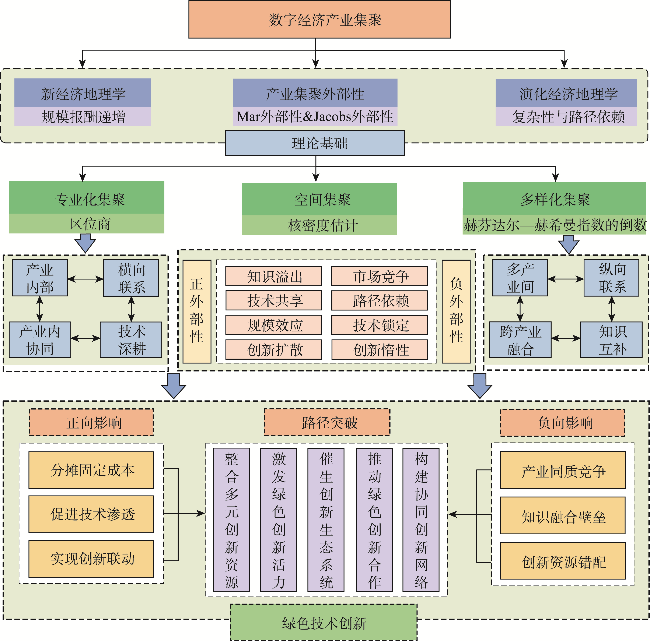
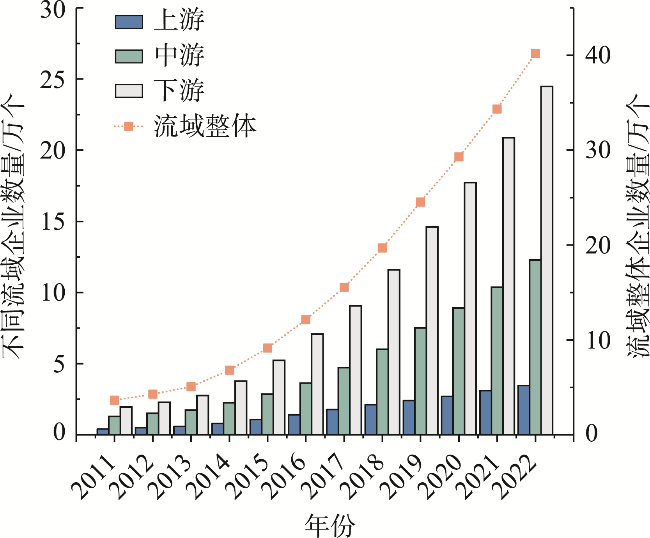
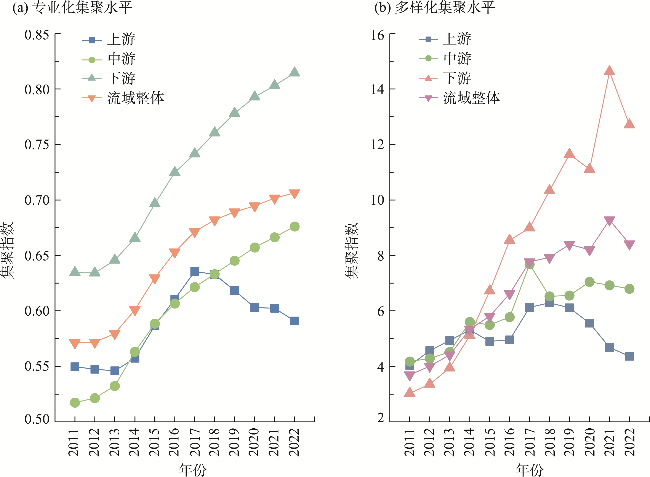
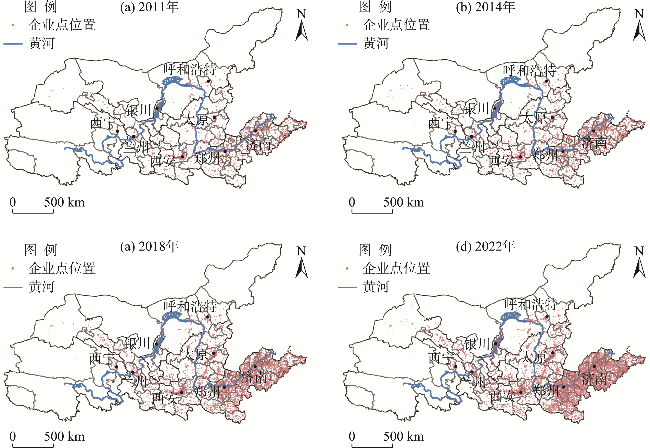
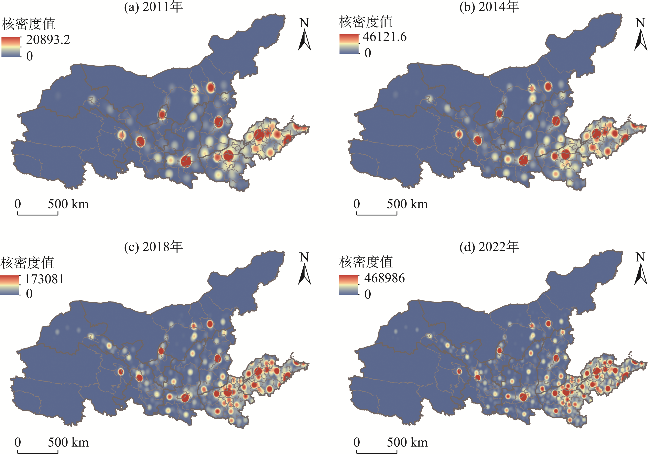
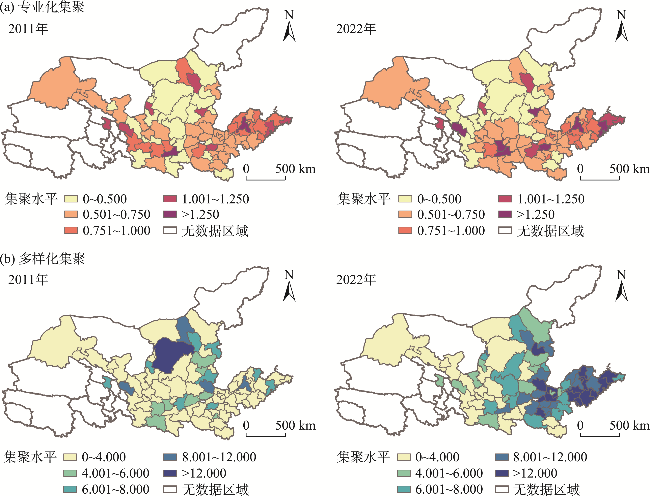
The industrial agglomeration of digital economy is an important support for promoting green technology innovation, which is of great strategic significance for realizing ecological protection and high-quality development in the Yellow River Basin. Based on the data of digital economy enterprises in 78 prefecture-level cities in the Yellow River Basin from 2011 to 2022, this study used the kernel density estimation and location entropy methods, reciprocal of Herfindahl-Hirschman index, and the two-way fixed effect model to explore the temporal dynamics, spatial patterns, agglomeration characteristics of specialized agglomeration and diversified agglomeration, and their impact on green technology innovation. The results show that: 1) From 2011 to 2022, the number of digital economy enterprises in the Yellow River Basin increased from 36400 to 402100, an increase of about 10.05 times. 2) The spatial distribution of kernel density changed from single-core or dual-core to multi-cores in individual province. The lower reaches formed a contiguous development trend, and the middle and upper reaches showed a scattered distribution of high-value agglomeration areas. The regional differences between specialized agglomeration and diversified agglomeration of digital economy industry were significant, and the overall distribution was high in the east and low in the west. 3) The influence of specialized agglomeration and diversified agglomeration of digital economy industry on green technology innovation showed obvious heterogeneity. Specialized agglomeration had a positive effect on green technology innovation, while diversified agglomeration inhibited green technology innovation in the basin to a certain extent, and there were significant differences in the upstream, midstream, and downstream industries. Based on these results, corresponding countermeasures and recommendations were put forward from the aspects of infrastructure development, industrial planning and layout, and regional cooperation, in order to promote the deep integration of digital economy industry and green technology innovation, and help the high-quality development of the Yellow River Basin.
CHEN Yong , CHENG Yu , ZHANG Yue , ZHANG Jianing . Evolution of digital economy industry agglomeration in the Yellow River Basin and its impact on green technology innovation[J]. PROGRESS IN GEOGRAPHY, 2025 , 44(12) : 2584 -2559 . DOI: 10.18306/dlkxjz.2025.12.012
表1 基准回归结果Tab.1 Benchmark regression results |
| 变量 | 随机效应 | 个体固定效应 | 双向固定效应 | |||||
|---|---|---|---|---|---|---|---|---|
| 模型1 | 模型2 | 模型3 | 模型4 | 模型5 | 模型6 | |||
| ln RZI | 0.207* | 0.082 | 0.243* | |||||
| (0.127) | (0.131) | (0.103) | ||||||
| ln RDI | 0.114*** | 0.081** | -0.075** | |||||
| (0.042) | (0.041) | (0.033) | ||||||
| ln ER | 0.495*** | 0.482*** | -0.160 | -0.173 | -0.410** | -0.392** | ||
| (0.135) | (0.137) | (0.274) | (0.274) | (0.216) | (0.215) | |||
| ln HC | 0.304*** | 0.323*** | 0.315*** | 0.316*** | 0.112*** | 0.093*** | ||
| (0.048) | (0.045) | (0.050) | (0.048) | (0.400) | (0.038) | |||
| ln GTS | -0.010 | -0.007 | -0.065 | -0.062* | -0.312 | -0.340 | ||
| (0.042) | (0.041) | (0.042) | (0.041) | (0.032) | (0.033) | |||
| ln IS | 0.157 | 0.156 | 0.442*** | 0.420*** | 0.074 | 0.132 | ||
| (0.135) | (0.136) | (0.369) | (0.371) | (0.147) | (0.144) | |||
| ln ED | 0.178** | 0.179** | 0.183*** | 0.182*** | 0.871* | 0.988* | ||
| (0.865) | (0.866) | (0.092) | (0.087) | (1.095) | (1.091) | |||
| ln DOW | -0.011 | -0.011 | -0.016 | -0.016 | -0.019* | -0.018* | ||
| (0.016) | (0.015) | (0.015) | (0.016) | (0.012) | (0.012) | |||
| 常数项 | -3.714*** | -3.745*** | -1.580*** | -1.561*** | 1.627 | 2.596 | ||
| (2.358) | (2.279) | (1.488) | (1.450) | (2.822) | (2.778) | |||
| 个体固定 | NO | NO | YES | YES | YES | YES | ||
| 时间固定 | NO | NO | NO | NO | YES | YES | ||
| R2 | 0.205 | 0.197 | 0.515 | 0.516 | 0.594 | 0.589 | ||
注:*、**、***分别表示P<0.10、P<0.05、P<0.01;括号内为标准误。下同。 |
表2 流域异质性回归结果Tab.2 Watershed heterogeneity regression results |
| 变量 | 上游 | 中游 | 下游 | |||||
|---|---|---|---|---|---|---|---|---|
| 模型7 | 模型8 | 模型9 | 模型10 | 模型11 | 模型12 | |||
| ln RZI | 0.363 | 0.275 | 0.286** | |||||
| (0.283) | (0.229) | (0.211) | ||||||
| ln RDI | 0.264** | -0.152** | 0.070** | |||||
| (0.115) | (0.076) | (0.035) | ||||||
| 常数项 | 6.938** | 5.097 | -22.522*** | -16.819*** | -1.150 | -0.146 | ||
| (6.329) | (6.698) | (8.571) | (7.612) | (3.689) | (3.695) | |||
| 个体固定 | YES | YES | YES | YES | YES | YES | ||
| 时间固定 | YES | YES | YES | YES | YES | YES | ||
| 控制变量 | YES | YES | YES | YES | YES | YES | ||
| R2 | 0.5011 | 0.3688 | 0.4310 | 0.2982 | 0.4337 | 0.5426 | ||
表3 行业异质性回归结果Tab.3 Sectoral heterogeneity regression results |
| 变量 | 模型13 | 模型14 | 模型15 | 模型16 | 模型17 | 模型18 |
|---|---|---|---|---|---|---|
| ln Cem | 0.110** | |||||
| (0.045) | ||||||
| ln Tbs | 0.101*** | |||||
| (0.038) | ||||||
| ln Irs | -0.098*** | |||||
| (0.037) | ||||||
| ln Sit | -0.091* | |||||
| (0.050) | ||||||
| ln Di | 0.212*** | |||||
| (0.061) | ||||||
| ln Dei | 0.209** | |||||
| (0.093) | ||||||
| 常数项 | 5.686** | 7.734*** | 0.760 | 0.931 | 3.677*** | 3.012*** |
| (2.908) | (2.817) | (2.788) | (2.823) | (2.921) | (2.804) | |
| 个体固定 | YES | YES | YES | YES | YES | YES |
| 时间固定 | YES | YES | YES | YES | YES | YES |
| 控制变量 | YES | YES | YES | YES | YES | YES |
| R2 | 0.2773 | 0.3643 | 0.1743 | 0.1407 | 0.4690 | 0.4362 |
| [1] |
苗长虹, 张佰发. 黄河流域高质量发展分区分级分类调控策略研究[J]. 经济地理, 2021, 41(10): 143-153.
[
|
| [2] |
陆大道, 孙东琪. 黄河流域的综合治理与可持续发展[J]. 地理学报, 2019, 74(12): 2431-2436.
[
|
| [3] |
张永姣, 丁少斌, 方创琳. 中国数字经济产业发展的时空分异及空间收敛性分析: 基于企业大数据的考察[J]. 经济地理, 2023, 43(3): 120-130.
[
|
| [4] |
|
| [5] |
赵金国, 王秀丽, 李先涛. 绿色技术创新、环境规制对黄河流域城市绿色发展的影响机理[J]. 中国人口·资源与环境, 2024, 34(9): 132-141.
[
|
| [6] |
韩燕, 潘成, 金凤君, 等. 黄河流域数字经济产业空间格局演化及影响因素[J]. 资源科学, 2024, 46(3): 488-504.
[
|
| [7] |
毛丰付, 高雨晨, 周灿. 长江经济带数字产业空间格局演化及驱动因素[J]. 地理研究, 2022, 41(6): 1593-1609.
[
|
| [8] |
夏杰长, 刘睿仪. 数字产业集群创新网络的形成机制与发展模式研究[J]. 区域经济评论, 2024(5): 58-68.
[
|
| [9] |
李腾, 孙国强, 崔格格. 数字产业化与产业数字化: 双向联动关系、产业网络特征与数字经济发展[J]. 产业经济研究, 2021(5): 54-68.
[
|
| [10] |
刘耀彬, 邓伟凤, 李硕硕, 等. 数字产业集聚对减污降碳协同的影响: 以长江经济带为例[J]. 资源科学, 2024, 46(4): 744-760.
[
|
| [11] |
|
| [12] |
冷硕峰, 席广亮, 甄峰, 等. 基于企业股权关联的长三角数字经济网络演变和空间扩展模式研究[J]. 人文地理, 2024, 39(3): 81-91, 182.
[
|
| [13] |
王胜鹏, 滕堂伟, 胡森林, 等. 中国数字经济空间网络结构演化及其驱动因素[J]. 地理科学, 2024, 44(5): 743-753.
[
|
| [14] |
陈博, 朱华晟, 代嘉欣, 等. 基于头部企业的城市数字经济网络空间结构及其影响因素[J]. 经济地理, 2024, 44(10): 108-116.
[
|
| [15] |
段德忠, 杜德斌. 中国城市绿色技术创新的时空分布特征及影响因素[J]. 地理学报, 2022, 77(12): 3125-3145.
[
|
| [16] |
金红, 段德忠. 长江经济带城际绿色技术流动的时空特征及减排效应研究[J]. 地理科学进展, 2024, 43(1): 17-32.
[
|
| [17] |
范丹, 孙晓婷. 环境规制、绿色技术创新与绿色经济增长[J]. 中国人口·资源与环境, 2020, 30(6): 105-115.
[
|
| [18] |
戈兴成, 季璐. 数字经济产业创新生态系统的形成与演化分析[J]. 经济体制改革, 2023(1): 125-134.
[
|
| [19] |
张英浩, 汪明峰, 匡爱平, 等. 数字经济赋能中国城市创新发展的多维机制与空间效应研究[J]. 地理科学进展, 2023, 42(12): 2283-2295.
[
|
| [20] |
孙燕铭, 谌思邈. 长三角区域绿色技术创新效率的时空演化格局及驱动因素[J]. 地理研究, 2021, 40(10): 2743-2759.
[
|
| [21] |
赵林, 高晓彤, 吴殿廷. 黄河流域绿色技术创新空间关联网络结构与影响因素[J]. 人文地理, 2023, 38(4): 102-111.
[
|
| [22] |
|
| [23] |
张娟, 耿弘, 徐功文, 等. 环境规制对绿色技术创新的影响研究[J]. 中国人口·资源与环境, 2019, 29(1): 168-176.
[
|
| [24] |
王彦杰, 高启杰. 数字经济产业集聚对绿色技术创新的影响: 基于环境规制的调节效应分析[J]. 技术经济, 2023, 42(2): 20-30.
[
|
| [25] |
郭爱君, 杨春林, 张永年, 等. 数字经济产业发展对城市绿色创新效率的影响: 基于两阶段价值链视角的分析[J]. 城市问题, 2023(1): 49-59.
[
|
| [26] |
赵卉心, 孟煜杰. 中国城市数字经济与绿色技术创新耦合协调测度与评价[J]. 中国软科学, 2022(9): 97-107.
[
|
| [27] |
李刚, 刘梦雪, 王兴帅. 数字经济影响城市群绿色技术创新的机制及空间溢出效应[J]. 大连理工大学学报(社会科学版), 2024, 45(4): 37-49.
[
|
| [28] |
吴朝霞, 许越, 孙坤. 城市集聚效应对绿色技术创新的影响研究: 基于中国232个地级及以上城市的空间计量分析[J]. 经济地理, 2022, 42(10): 25-34, 71.
[
|
| [29] |
|
| [30] |
|
| [31] |
|
| [32] |
谢里, 张敬斌. 中国制造业集聚的空间技术溢出效应: 引入制度环境差异的研究[J]. 地理研究, 2016, 35(5): 909-928.
[
|
| [33] |
张可. 不同产业集聚对区域创新的影响及其空间溢出效应[J]. 西安交通大学学报(社会科学版), 2019, 39(2): 12-19.
[
|
| [34] |
|
| [35] |
|
| [36] |
吴康, 刘骁啸, 姚常成. 产业转型对中国资源型城市增长与收缩演变轨迹的影响机制[J]. 自然资源学报, 2023, 38(1): 109-125.
[
|
| [37] |
齐放, 贺灿飞. 企业本地根植对城市出口产品结构动态的影响研究[J]. 地理科学进展, 2022, 41(7): 1195-1212.
[
|
| [38] |
徐维祥, 郑金辉, 王睿, 等. 黄河流域城市生态效率演化特征及门槛效应[J]. 地理科学, 2022, 42(1): 74-82.
[
|
| [39] |
王腾飞, 马仁锋, 庄汝龙. 数字经济背景下长三角城市产业比较优势演化及其知识流动驱动研究[J]. 地理科学进展, 2024, 43(2): 203-214.
[
|
| [40] |
任亚文, 杨宇. 珠三角地区半导体产业布局特征及其区位关联模式[J]. 地理科学进展, 2022, 41(9): 1622-1634.
[
|
| [41] |
李仙德, 李卫江, 李敏. 中国汽车制造业企业区位及其影响因素[J]. 地理科学进展, 2023, 42(10): 1994-2005.
[
|
| [42] |
马宏智, 钟业喜, 张艺迪. 中国电子竞技产业地理集聚特征及影响因素[J]. 地理科学, 2021, 41(6): 989-997.
[
|
| [43] |
王旭, 褚旭. 制造业企业绿色技术创新的同群效应研究: 基于多层次情境的参照作用[J]. 南开管理评论, 2022, 25(2): 68-81.
[
|
| [44] |
黄漫宇, 余祖鹏, 赵曜. 生产性服务业集聚对绿色技术创新的影响研究[J]. 统计与信息论坛, 2022, 37(12): 20-31.
[
|
| [45] |
斯丽娟. 环境规制对绿色技术创新的影响: 基于黄河流域城市面板数据的实证分析[J]. 财经问题研究, 2020(7): 41-49.
[
|
| [46] |
张兵兵, 董安然, 段玉婉. 碳达峰目标如何引领城市低碳转型: 来自准自然实验的证据[J]. 数量经济技术经济研究, 2024, 41(7): 177-196.
[
|
/
| 〈 |
|
〉 |