Geomedia and thirdspace: The progress of research of geographies of media and communication in the West
Received date: 2021-07-12
Revised date: 2021-09-18
Online published: 2022-08-28
Supported by
National Natural Science Foundation of China(41871131)
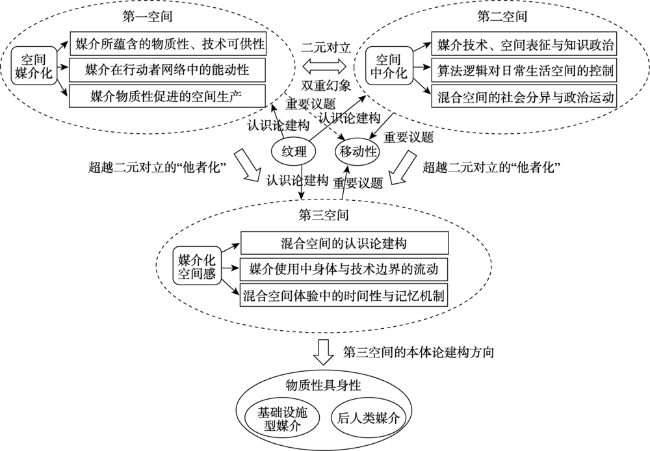
Since the rise of geomedia in recent years, the previous boundaries between production and consumption, and between technical object and symbolic representation in urban public space and everyday life space are increasingly blurred, leading to the need for theoretical innovation in terms of the "virtual/physical" dualism in geography. The development of geographies of media and communication, which is the outcome of the "spatial turn" of media research and the "communication turn" of geography, contains the potential to break through the dualism. This article reviewed the core concepts, main issues, and research framework of geographies of media and communication in order to promote the academic dialogue between Chinese scholars in geography and media and communication studies, as well as to expand the research field of Chinese human geography. First, geographies of media and communication in Western geography was founded on the dynamic relational notions of media and space that were deeply influenced by postmodernism and posthumanism thoughts, including core concepts such as texture, mobility, materiality, and embodiment. Second, existing studies mainly focus on the spatiality of digital media and posthumanism media, the hybrid space politics dominated by digital media representation and algorithmic logic, as well as the hybrid space experience brought by mobile media. Finally, this article referred to the "thirdspace" as a potential direction for geographies of media and communication to surpass the previous dualism, and materiality and embodiment serve as the ontological bridge between media and space.
Key words: geographies of media and communication; geomedia; texture; mobility; materiality; embodiment; thirdspace
WANG Weitao , ZHANG Min . Geomedia and thirdspace: The progress of research of geographies of media and communication in the West[J]. PROGRESS IN GEOGRAPHY, 2022 , 41(6) : 1082 -1096 . DOI: 10.18306/dlkxjz.2022.06.011
| [1] |
|
| [2] |
|
| [3] |
亚当斯 P C. 媒介与传播地理学[M]. 袁艳, 译. 北京: 中国传媒大学出版社, 2020: 1-12, 200-207.
[
|
| [4] |
|
| [5] |
|
| [6] |
袁艳. 当地理学家谈论媒介与传播时, 他们谈论什么?兼评保罗·亚当斯的《媒介与传播地理学》[J]. 国际新闻界, 2019, 41(7): 157-176.
[
|
| [7] |
麦夸尔 S. 地理媒介: 网络化城市与公共空间的未来[M]. 潘霁, 译. 上海: 复旦大学出版社, 2019: 1-5, 15-21.
[
|
| [8] |
|
| [9] |
|
| [10] |
|
| [11] |
安宁, 朱竑. 他者,权力与地方建构: 想象地理的研究进展与展望[J]. 人文地理, 2013, 28(1): 20-25, 47.
[
|
| [12] |
|
| [13] |
翁时秀. 基于理论旅行视角的人文地理学中想象地理研究反思[J]. 地理学报, 2018, 73(2): 261-275.
[
|
| [14] |
钱俊希, 朱竑. 新文化地理学的理论统一性与话题多样性[J]. 地理研究, 2015, 34(3): 422-436.
[
|
| [15] |
|
| [16] |
谢沁露. 从空间转向到空间媒介化: 媒介地理学在西方的兴起与发展[J]. 现代传播(中国传媒大学学报), 2018, 40(2): 75-81.
[
|
| [17] |
|
| [18] |
|
| [19] |
於红梅. 家居营造: 都市中产的自我表达实践[D]. 上海: 复旦大学, 2013: 12.
[
|
| [20] |
袁艳. 传播学研究的空间想象力[J]. 新闻与传播研究, 2006, 13(1): 45-50, 95.
[
|
| [21] |
|
| [22] |
|
| [23] |
石婉婷. 日常生活的科技社交角色: 以Facebook打卡为核心的媒介实践为例[D]. 台北: 台湾政治大学, 2013: 19.
[
|
| [24] |
|
| [25] |
戴宇辰. “旧相识”和“新重逢”: 行动者网络理论与媒介(化)研究的未来: 一个理论史视角[J]. 国际新闻界, 2019, 41(4): 68-88.
[
|
| [26] |
宋美杰. 非表征理论与媒介研究: 新视域与新想象[J]. 新闻与传播研究, 2020, 27(3): 86-97, 127-128.
[
|
| [27] |
亚当斯 P C, 杨森 A. 传播地理学: 跨越学科的桥梁[J]. 李淼, 魏文秀, 译. 新闻记者, 2019(9): 83-96.
[
|
| [28] |
|
| [29] |
|
| [30] |
|
| [31] |
艾少伟, 苗长虹. 从“地方空间“ “流动空间”到“行动者网络空间”: ANT视角[J]. 人文地理, 2010, 25(2): 43-49.
[
|
| [32] |
|
| [33] |
|
| [34] |
|
| [35] |
|
| [36] |
|
| [37] |
|
| [38] |
|
| [39] |
Mobilities. Mobilities: Aims and scope[EB/OL]. 2021-06-17 [2021-07-01]. https://www.tandfonline.com/action/journalInformation?show=aimsScope&journalCode=rmob20
|
| [40] |
|
| [41] |
|
| [42] |
|
| [43] |
|
| [44] |
|
| [45] |
|
| [46] |
|
| [47] |
|
| [48] |
|
| [49] |
|
| [50] |
|
| [51] |
|
| [52] |
|
| [53] |
|
| [54] |
|
| [55] |
|
| [56] |
曼诺维奇 L. 新媒体的语言[M]. 车琳, 译. 贵阳: 贵州人民出版社, 2020: 44-47.
[
|
| [57] |
|
| [58] |
|
| [59] |
|
| [60] |
|
| [61] |
|
| [62] |
|
| [63] |
|
| [64] |
|
| [65] |
|
| [66] |
|
| [67] |
德·赛托 M. 日常生活实践: 1.实践的艺术[M]. 方琳琳, 黄春柳, 译. 南京: 南京大学出版社, 2015: 167-170.
[
|
| [68] |
|
| [69] |
|
| [70] |
|
| [71] |
|
| [72] |
|
| [73] |
|
| [74] |
|
| [75] |
|
| [76] |
|
| [77] |
|
| [78] |
|
| [79] |
|
| [80] |
|
| [81] |
|
| [82] |
|
| [83] |
|
| [84] |
|
| [85] |
|
| [86] |
|
| [87] |
|
| [88] |
|
| [89] |
|
| [90] |
|
| [91] |
|
| [92] |
孙萍. 媒介作为一种研究方法: 传播、物质性与数字劳动[J]. 国际新闻界, 2020, 42(11): 39-53.
[
|
| [93] |
赖祐萱. 外卖骑手,困在系统里[J/OL]. 人物, 2020-09-08 [2021-07-01]. https://baijiahao.baidu.com/s?id=1677231323622016633&wfr=spider&for=pc
[
|
| [94] |
庄鹏. 遏制在线旅游大数据“杀熟”[EB/OL]. 人民网, 2020-09-24 [2021-07-01]. http://theory.people.com.cn/n1/2020/0924/c40531-31872923.html
[
|
| [95] |
李松林. 吃个饭, 隐私全没了?扫码点餐背后有多少猫腻[EB/OL]. 京报网, 2021-06-08 [2021-07-01]. https://news.bjd.com.cn/deep/2021/06/08/104021t115.html
[
|
| [96] |
孙中伟, 金凤君. 信息与通信技术对空间组织的影响及其空间效率的测算[J]. 地域研究与开发, 2010, 29(1): 49-54, 64.
[
|
| [97] |
林玥希, 汪明峰. 中国新零售的空间分布与区位选择[J]. 经济地理, 2020, 40(12): 109-118.
[
|
| [98] |
黄沣爵, 杨滔, 张晔珵. 国内外智慧城市研究热点及趋势(2010—2019年): 基于CiteSpace的图谱量化分析[J]. 城市规划学刊, 2020(2): 56-63.
[
|
| [99] |
王波, 甄峰, 席广亮, 等. 基于微博用户关系的网络信息地理研究: 以新浪微博为例[J]. 地理研究, 2013, 32(2): 380-391.
[
|
| [100] |
孙中伟, 王杨. 信息与通信地理学的学科性质、发展历程与研究主题[J]. 地理科学进展, 2013, 32(8): 1266-1275.
[
|
| [101] |
安宁, 冯秋怡, 朱竑. 基于报业话语的广州非裔社区的空间想象分析[J]. 地理学报, 2019, 74(8): 1650-1662.
[
|
| [102] |
安宁, 朱竑. 美国《时代》杂志对中国的地理想象: 基于东方主义视角的研究[J]. 地理学报, 2013, 68(12): 1702-1713.
[
|
| [103] |
邵培仁, 杨丽萍. 电影地理论: 电影作为影像空间与景观的研究[J]. 河南大学学报(社会科学版), 2010, 50(5): 111-118.
[
|
| [104] |
李蕾蕾. 跨文化传播及其对旅游目的地地方文化认同的影响[J]. 深圳大学学报(人文社会科学版), 2000, 17(2): 95-100.
[
|
| [105] |
莫利 D, 罗宾斯 K. 认同的空间:全球媒介、电子世界景观与文化边界[M].司艳, 译. 南京: 南京大学出版社, 2001.
[
|
| [106] |
莫利 D. 传媒、现代性和科技: “新”的地理学[M]. 郭大为, 常怡如, 徐春昕, 译. 北京: 中国传媒大学出版社, 2010.
[
|
| [107] |
邵培仁, 杨丽萍. 媒介地理学: 媒介作为文化图景的研究[M]. 北京: 中国传媒大学出版社, 2010: 53-73.
[
|
| [108] |
李蕾蕾. 媒介—空间辩证法: 创意城市理论新解[J]. 人文地理, 2012, 27(4): 44-48, 82.
[
|
| [109] |
孙玮. 传播: 编织关系网络: 基于城市研究的分析[J]. 新闻大学, 2013(3): 1-12.
[
|
| [110] |
潘忠党, 於红梅. 阈限性与城市空间的潜能: 一个重新想象传播的维度[J]. 开放时代, 2015(3): 8-9, 140-157.
[
|
| [111] |
李耘耕. 从列斐伏尔到位置媒介的兴起: 一种空间媒介观的理论谱系[J]. 国际新闻界, 2019, 41(11): 6-23.
[
|
| [112] |
戴宇辰. “物”也是城市中的行动者吗? 理解城市传播分析的物质性维度[J]. 新闻与传播研究, 2020, 27(3): 54-67, 127.
[
|
| [113] |
芮必峰, 孙爽. 从离身到具身: 媒介技术的生存论转向[J]. 国际新闻界, 2020, 42(5): 7-17.
[
|
| [114] |
孙玮. 交流者的身体: 传播与在场: 意识主体、身体—主体、智能主体的演变[J]. 国际新闻界, 2018, 40(12): 83-103.
[
|
| [115] |
章戈浩, 张磊. 物是人非与睹物思人: 媒体与文化分析的物质性转向[J]. 全球传媒学刊, 2019, 6(2): 103-115.
[
|
| [116] |
吴筱玫. 网上行走: Facebook使用者之打卡战术与地标实践[J]. 新闻学研究, 2016, 126: 93-131.
[
|
| [117] |
蒋晓丽, 郭旭东. 媒体朝圣与空间芭蕾: “网红目的地”的文化形成[J]. 现代传播(中国传媒大学学报), 2020, 42(10): 12-17.
[
|
| [118] |
孙玮. 我拍故我在,我们打卡故城市在: 短视频: 赛博城市的大众影像实践[J]. 国际新闻界, 2020, 42(6): 6-22.
[
|
| [119] |
|
| [120] |
|
| [121] |
段义孚. 空间与地方: 经验的视角[M]. 王志标, 译. 北京: 中国人民大学出版社, 2017.
[
|
| [122] |
|
| [123] |
|
| [124] |
|
| [125] |
刘于思, 赵舒成. “洁净”亦危险: 物质性和废弃社会视角下电子媒介垃圾的理论反思[J]. 国际新闻界, 2021, 43(4): 74-92.
[
|
| [126] |
|
| [127] |
|
| [128] |
刘怀玉, 鲁宝. 简论“空间的生产”之内在辩证关系及其三重意义[J]. 国际城市规划, 2021, 36(3): 14-22.
[
|
/
| 〈 |
|
〉 |