A new time-geography research framework of community life circle
Received date: 2020-08-31
Request revised date: 2020-10-06
Online published: 2021-02-28
Supported by
National Natural Science Foundation of China(42071203)
National Natural Science Foundation of China(41771185)
Program of Top Young Talents of Higher Learning Education of Beijing(CIT&TCD201904073)
Copyright
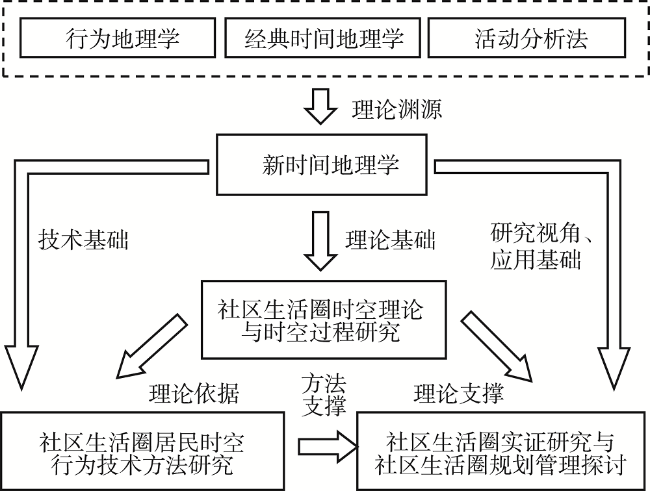
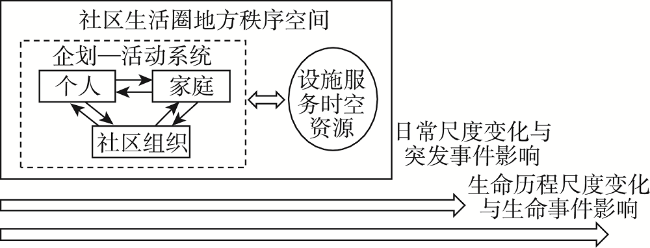
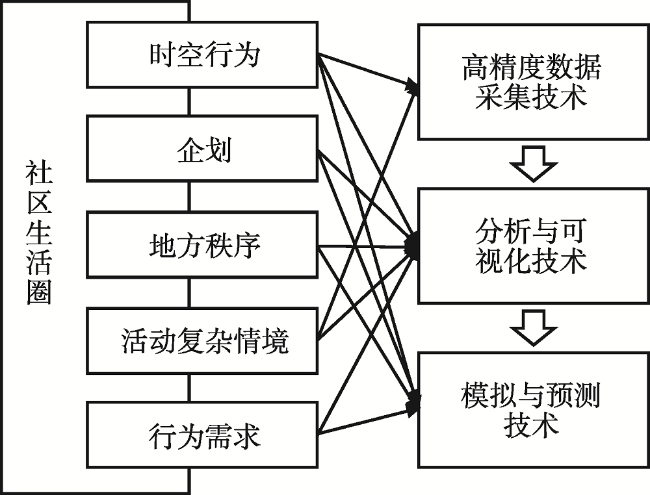
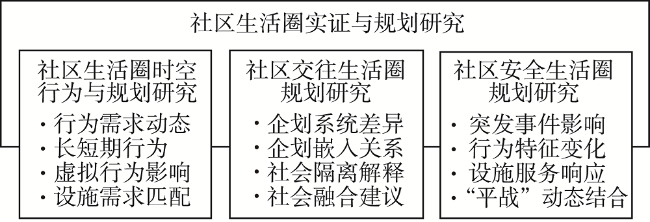
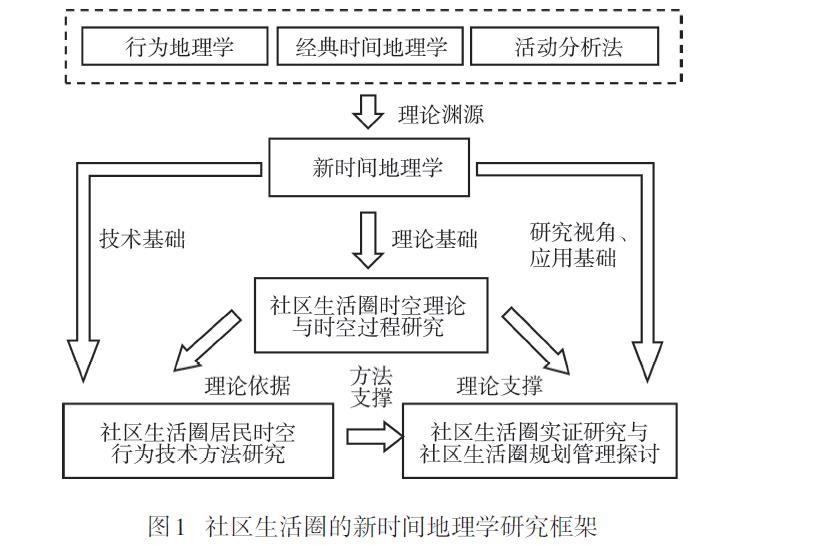
Community life circle examines urban communities from the perspective of residents' daily activities. It is the frontier of urban geography and urban related studies. It is also an important part of the innovation of Chinese territorial and spatial planning system and an important starting point for the sustainable development of China's urban society. With the continuous deepening of mobility and informatization, the agents of community life circles, community activities and residents' spatiotemporal behavior, and the function and meanings of community space are becoming more diversified, which needs innovative research and practical guidance of urban social geography. Time-geography is a comprehensive social-technical-ecological approach to understand the relationship between humans and the environment, which provides an essential basis for early research on community life circles based on activity space. New time-geography attaches great importance to the interactions and spatiotemporal combinations of projects between family and other social organizations. It can provide an important basis for the study of the complex interactions between individual, family, and community and the sociocultural constraints, the complex context analysis, and the simulation of spatiotemporal behavior in community life circles. Based on the new time-geography approach, this study proposed a new time-geography research framework of community life circle from theoretical, methodological, and empirical perspectives, including: 1) constructing the community life circle theory based on spatiotemporal behavior and revealing community life circle spatial and temporal structures; 2) developing methods for collecting and analyzing spatiotemporal behavioral data of community life circle and simulation; 3) innovating Chinese urban planning and management from the aspects of optimizing residents spatiotemporal behaviors within the community life circle, community social interaction life circle, and community safety life circle.
CHAI Yanwei , LI Chunjiang , ZHANG Yan . A new time-geography research framework of community life circle[J]. PROGRESS IN GEOGRAPHY, 2020 , 39(12) : 1961 -1971 . DOI: 10.18306/dlkxjz.2020.12.001
| [1] |
方创琳. 中国新型城镇化高质量发展的规律性与重点方向[J]. 地理研究, 2019,38(1):13-22.
[
|
| [2] |
姚士谋, 张平宇, 余成, 等. 中国新型城镇化理论与实践问题[J]. 地理科学, 2014,34(6):641-647.
[
|
| [3] |
柴彦威. 人本视角下新型城镇化的内涵解读与行动策略[J]. 北京规划建设, 2014(6):34-36.
[
|
| [4] |
冯健, 叶宝源. 西方社会空间视角下的郊区化研究及其启示[J]. 人文地理, 2013,28(3):20-26.
[
|
| [5] |
李志刚, 杜枫. 中国大城市的外国人“族裔经济区”研究: 对广州“巧克力城”的实证[J]. 人文地理, 2012,27(6):1-6.
[
|
| [6] |
宁越敏. 中国城市化特点、问题及治理[J]. 南京社会科学, 2012(10):19-27.
[
|
| [7] |
|
| [8] |
|
| [9] |
申悦, 傅行行. 社区主客观特征对社区满意度的影响机理: 以上海市郊区为例[J]. 地理科学进展, 2019,38(5):686-697.
[
|
| [10] |
孙斌栋, 阎宏, 张婷麟. 社区建成环境对健康的影响: 基于居民个体超重的实证研究[J]. 地理学报, 2016,71(10):1721-1730.
[
|
| [11] |
刘志林, 王晓梦, 马静. 转型期北京社区公共空间对邻里交往的影响机理: 本地居民与移民的对比分析[J]. 地理科学, 2020,40(1):69-78.
[
|
| [12] |
吴秋晴. 生活圈构建视角下特大城市社区动态规划探索[J]. 上海城市规划, 2015(4):13-19.
[
|
| [13] |
|
| [14] |
中共中央, 国务院. 关于进一步加强城市规划建设管理工作的若干意见[S]. 2016.
[ The Central Committee of the Communist Party of China, the State Council of China. Some opinions on further strengthening the management of urban planning and construction. 2016. ]
|
| [15] |
中华人共和国住房和城乡建设部. 城市居住区规划设计标准(GB50180—2018)[S]. 2018.
[ Ministry of Housing and Urban-Rural Development of the People's Republic of China. Urban residential area planning and design standards(GB50180-2018). 2018. ]
|
| [16] |
中国城市规划网. 社区生活圈是国土空间规划关注的重要内容[EB/OL]. 2019[2020-10-06]. http://www.planning.org.cn/news/view?id=10085&cid=0.
[ Urban Planning Society of China. Urban Planning Society of China. Community life circle planning is one of the major contents of the national territory spatial planning. 2019[2020-10-06]. http://www.planning.org.cn/news/view?id=10085&cid=0]
|
| [17] |
柴彦威, 李春江. 城市生活圈规划: 从研究到实践[J]. 城市规划, 2019,43(5):9-16, 60.
[
|
| [18] |
上海市规划和国土资源管理局. 上海市15分钟社区生活圈规划导则[S]. 2016.
[ Shanghai Urban Planning and Land Resources Administration Bureau. Planning guidance of 15-min community-life circle. 2016. ]
|
| [19] |
袁家冬, 孙振杰, 张娜, 等. 基于“日常生活圈”的我国城市地域系统的重建[J]. 地理科学, 2005,25(1):17-22.
[
|
| [20] |
孙德芳, 沈山, 武廷海. 生活圈理论视角下的县域公共服务设施配置研究: 以江苏省邳州市为例[J]. 规划师, 2012,28(8):68-72.
[
|
| [21] |
柴彦威, 张雪, 孙道胜. 基于时空间行为的城市生活圈规划研究: 以北京市为例[J]. 城市规划学刊, 2015(3):61-69.
[
|
| [22] |
杨晰峰. 上海推进15分钟生活圈规划建设的实践探索[J]. 上海城市规划, 2019(4):124-129.
[
|
| [23] |
程蓉. 以提品质促实施为导向的上海15分钟社区生活圈的规划和实践[J]. 上海城市规划, 2018(2):84-88.
[
|
| [24] |
刘云刚, 侯璐璐. 基于生活圈的城乡管治理论研究[J]. 上海城市规划, 2016(2):1-7.
[
|
| [25] |
杨晰峰. 城市社区中15分钟社区生活圈的规划实施方法和策略研究: 以上海长宁区新华路街道为例[J]. 上海城市规划, 2020(3):63-68.
[
|
| [26] |
赵宝静, 奚文沁, 吴秋晴, 等. 塑造韧性社区共同体: 生活圈的规划思考与策略[J]. 上海城市规划, 2020(2):14-19.
[
|
| [27] |
王兰, 李潇天, 杨晓明. 健康融入15分钟社区生活圈: 突发公共卫生事件下的社区应对[J]. 规划师, 2020,36(6):102-106, 120.
[
|
| [28] |
济南市自然资源与规划局. 济南市15分钟社区生活圈规划[S]. 2018.
[ Jinan Bureau of Natural Resources and Planning. Jinan 15-min community life circle planning. 2018. ]
|
| [29] |
郭嵘, 李元, 黄梦石. 哈尔滨15分钟社区生活圈划定及步行网络优化策略[J]. 规划师, 2019,35(4):18-24.
[
|
| [30] |
韩增林, 李源, 刘天宝, 等. 社区生活圈公共服务设施配置的空间分异分析: 以大连市沙河口区为例[J]. 地理科学进展, 2019,38(11):1701-1711.
[
|
| [31] |
杜伊, 金云峰. 社区生活圈的公共开放空间绩效研究: 以上海市中心城区为例[J]. 现代城市研究, 2018(5):101-108.
[
|
| [32] |
崔真真, 黄晓春, 何莲娜, 等. 基于POI数据的城市生活便利度指数研究[J]. 地理信息世界, 2016,23(3):27-33.
[
|
| [33] |
萧敬豪, 周岱霖, 胡嘉佩. 基于决策树原理的社区生活圈测度与评价方法: 以广州市番禺区为例[J]. 规划师, 2018,34(3):91-96.
[
|
| [34] |
于一凡. 从传统居住区规划到社区生活圈规划[J]. 城市规划, 2019,43(5):17-22.
[
|
| [35] |
孙道胜, 柴彦威, 张艳. 社区生活圈的界定与测度: 以北京清河地区为例[J]. 城市发展研究, 2016,23(9):1-9.
[
|
| [36] |
柴彦威, 李春江, 夏万渠, 等. 城市社区生活圈划定模型: 以北京市清河街道为例[J]. 城市发展研究, 2019,26(9):1-9.
[
|
| [37] |
王德, 傅英姿. 手机信令数据助力上海市社区生活圈规划[J]. 上海城市规划, 2019(6):23-29.
[
|
| [38] |
吴夏安, 徐磊青, 仲亮. 《城市居住区规划设计标准》中15分钟生活圈关键指标讨论[J]. 规划师, 2020,36(8):33-40.
[
|
| [39] |
|
| [40] |
魏伟, 洪梦谣, 谢波. 基于供需匹配的武汉市15分钟生活圈划定与空间优化[J]. 规划师, 2019,35(4):11-17.
[
|
| [41] |
周岱霖, 黄慧明. 供需关联视角下的社区生活圈服务设施配置研究: 以广州为例[J]. 城市发展研究, 2019,26(12):1-5, 18.
[
|
| [42] |
周弦. 15分钟社区生活圈视角的单元规划公共服务设施布局评估: 以上海市黄浦区为例[J]. 城市规划学刊, 2020(1):57-64.
[
|
| [43] |
|
| [44] |
赵万民, 方国臣, 王华. 生活圈视角下的住区适老化步行空间体系构建[J]. 规划师, 2019,35(17):69-78.
[
|
| [45] |
|
| [46] |
孙道胜, 柴彦威. 城市社区生活圈体系及公共服务设施空间优化: 以北京市清河街道为例[J]. 城市发展研究, 2017,24(9):7-14, 25.
[
|
| [47] |
|
| [48] |
|
| [49] |
|
| [50] |
|
| [51] |
申悦, 塔娜, 柴彦威. 基于生活空间与活动空间视角的郊区空间研究框架[J]. 人文地理, 2017,32(4):1-6.
[
|
| [52] |
Ellegård K, 刘伯初, 张艳, 等. 时间地理学的企划概念及其研究案例[J]. 人文地理, 2016,31(5):32-38.
[
|
| [53] |
Ellegård K, 张艳, 蒋晨, 等. 杂情境中的日常活动可视化与应用研究[J]. 人文地理, 2016,31(5):39-46.
[
|
| [54] |
Ellegård K, 张雪, 张艳, 等. 基于地方秩序嵌套的人类活动研究[J]. 人文地理, 2016,31(5):25-31.
[
|
| [55] |
|
| [56] |
张艳, 柴彦威. “新” 时间地理学: 瑞典 Kajsa 团队的创新研究[J]. 人文地理, 2016,31(5):19-24, 46.
[
|
| [57] |
柴彦威, 塔娜, 张艳. 融入生命历程理论, 面向长期空间行为的时间地理学再思考[J]. 人文地理, 2013,28(2):1-6.
[
|
| [58] |
柴彦威, 申悦, 马修军, 等. 北京居民活动与出行行为时空数据采集与管理[J]. 地理研究, 2013,32(3):441-451.
[
|
| [59] |
|
| [60] |
|
| [61] |
|
| [62] |
|
| [63] |
|
| [64] |
|
| [65] |
|
/
| 〈 |
|
〉 |