Rural social space production mechanism in a Great Relics Area from the perspective of capital circulation theory of Harvey:A case of Qin Shihuang Mausoleum
Received date: 2019-08-16
Request revised date: 2019-11-06
Online published: 2020-07-28
Supported by
Social Science Foundation of Shaanxi Province(2019S006)
National Natural Science Foundation of China(71173173)
Copyright
As more than 80% of the sites in the list of China's Great Relics Sites are located in suburban or rural areas, relics protection and tourism development will inevitably affect the rural social space around the heritage areas. Analysis of the patterns of social and economic development is the key to achieving the rural revitalization strategy. This study took the heritage area of Qin Shihuang Mausoleum as a case study area and used questionnaire, face-to-face interview, field survey, and other methods to examine the development of rural society around the area in the past 30 years. The study transformed the traditional society-space binary opposition analysis and constructed the society-space dialectical analysis method based on the Space Production Theory and David Harvey's Capital Circulation Theory to explore the mutual feedback mechanism of society and space in the countryside around the heritage area of the Qin Shihuang Mausoleum under the influence of capital. The results show that: 1) The flow of capital to the optimal location results in the differentiation of rural social space in the study area. Due to the differences in the natural environment, traffic conditions, constraints of protection zones, and the distance from the developed heritage sites, the selective investment of capital has resulted in the differentiation of rural social space in the heritage area. 2) The adjustment of rural production mode is the internal driving force of the evolution of social space in the heritage area. Under the framework of cultural relic protection, rural social space production in the relics area is a process in which the positive externality of tourism development promotes the capital flow to adjust the rural production mode, thereby affecting the social relations. 3) The government policy to the restriction of capital access in the heritage area is an external factor. The vulnerability of cultural relics in the heritage area determines that the government's strong intervention must be guaranteed in the process of display and utilization. The transformation of rural production mode that may lead to the conflict between protection and development requires the intervention of the governments, further affecting the adjustment of rural production mode. The spatial production of rural social space in the heritage area is a process of dynamic evolution and spiral rise. Only by the effective management of the government and reasonable participation of the market and rural community can we guarantee the rational development and transformation of rural communities in the heritage area.
WU Chong , ZHU Haixia , PENG Bangwen . Rural social space production mechanism in a Great Relics Area from the perspective of capital circulation theory of Harvey:A case of Qin Shihuang Mausoleum[J]. PROGRESS IN GEOGRAPHY, 2020 , 39(5) : 751 -765 . DOI: 10.18306/dlkxjz.2020.05.005
表1 秦始皇陵遗址区村庄聚落物质环境转变特征Tab.1 Spatial evolution of villages in the Qin Shihuang Mausoleum area |
| 聚落物质环境变化特征 | 聚落空间职能的转变 | 邻近的要素 | 村庄名称 |
|---|---|---|---|
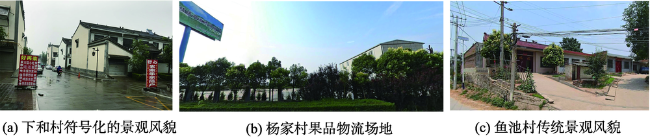
| 村庄旅游服务设施用地增加,体现景观符号化特征 | 手工艺品制作与旅游接待 | 兵马俑博物馆 | 王俭村、下和村 |
| 村庄仓储、物流用地比例增加 | 农产品包装、加工、物流 | 旅游公路 | 秦陵村、杨家村、毛家村 |
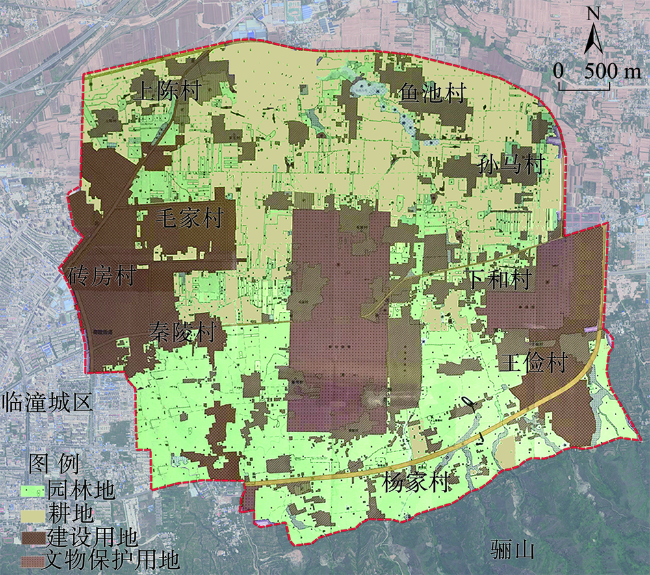
| 物质景观无明显变化 | 无明显变化 | 无 | 鱼池村、孙马村、上陈村 |
表2 王俭村与下和村企业数量统计Tab.2 Statistics of rural enterprises in Wangjian Village and Xiahe Village |
| 门类 | 20世纪 80年代 | 20世纪90年代 | 2000年 | 2010年 | 2018年 |
|---|---|---|---|---|---|
| 农林业 | 1 | 0 | 0 | 0 | 0 |
| 工业、建筑业 | 2 | 5 | 5 | 3 | 3 |
| 文物复制 | 20 | 46 | 46 | 32 | 32 |
| 旅游业 | 0 | 0 | 4 | 10 | 16 |
| 租赁与物业服务 | 0 | 0 | 1 | 2 | 2 |
| [1] |
中共中央办公厅, 国务院办公厅. 关于实施中华优秀传统文化传承发展工程的意见 [N/OL]. 人民日报, 2017- 01- 26(11) [2019-01-15]. http://culture.people.com.cn/n1/2017/0126/c87423-29049971.html.
[ General Office of the CPC Central Committee, General Office of the State Council. Opinions on carrying out the project of inheritance and development of Chinese excellent traditional culture. People's Daily, 2017- 01- 26(11) [2019-01-15]. http://culture.people.com.cn/n1/2017/0126/c87423-29049971. html. ]
|
| [2] |
中共中央办公厅, 国务院办公厅. 关于加强文物保护利用改革的若干意见 [N/OL]. 人民日报, 2018- 10- 09(1) [2019-01-15]. http://paper.people.com.cn/rmrb/html/2018-10/09/nw.D110000renmrb_20181009_2-01.htm.
[ General Office of the CPC Central Committee, General Office of the State Council. Opinions on strengthening the reform of the protection and utilization of Cultural Relics. People's Daily, 2018- 10- 09(1) [2019-01-15]. http://paper.people.com.cn/rmrb/html/2018-10/09/nw.D110000renmrb_20181009_2-01.htm. ]
|
| [3] |
陈稳亮, 孙圣举, 高忠 , 等. 共生还是绝离: 居民融入汉长安城遗址保护与发展问题探究 [J]. 城市发展研究, 2014,21(11):53-59.
[
|
| [4] |
张立新, 杨新军, 陈佳 , 等. 大遗址区人地系统脆弱性评价及影响机制: 以汉长安城大遗址区为例 [J]. 资源科学, 2015,37(9):1848-1859.
[
|
| [5] |
|
| [6] |
|
| [7] |
赵振斌, 褚玉杰, 郝亭 , 等. 汉长安城遗址乡村社区意义空间构成 [J]. 地理学报, 2015,70(10):1606-1621.
[
|
| [8] |
|
| [9] |
|
| [10] |
吕琳, 吕仁义, 周庆华 . 中国大遗址问题研究评析与展望 [J]. 西安建筑科技大学学报(自然科学版), 2012,44(4):517-522, 540.
[
|
| [11] |
|
| [12] |
余洁, 潘秋玲, 梁学成 . 我国大遗址保护区控制农地流转的法律及制度研究 [J]. 经济地理, 2007,27(4):629-633.
[
|
| [13] |
|
| [14] |
王新文, 张沛, 张中华 . 城市更新视域下大明宫遗址区空间生产实践检讨及优化策略研究 [J]. 城市发展研究, 2017,24(2):125-128.
[
|
| [15] |
郑育林, 唐远志, 张立 . 基于博弈论的大遗址保护区政府与居民搬迁行为分析 [J]. 西北大学学报(自然科学版), 2009,39(6):1052-1055.
[
|
| [16] |
|
| [17] |
唐龙, 余洁 . 大遗址保护中的土地问题 [J]. 中国文化遗产, 2008(4):65-71.
[
|
| [18] |
|
| [19] |
吴铮争 . 基于博弈论的汉长安城遗址保护策略研究 [J]. 城市问题, 2012(11):37-41.
[
|
| [20] |
钟晓华 . 遗产社区的社会抗逆力: 风险管理视角下的城市遗产保护 [J]. 城市发展研究, 2016,23(2):23-29.
[
|
| [21] |
郭文, 王丽 . 文化遗产旅游地的空间生产与认同研究: 以无锡惠山古镇为例 [J]. 地理科学, 2015,35(6):708-716.
[
|
| [22] |
方远平, 易颖, 毕斗斗 . 传承与嬗变: 广州市小洲村的空间转换 [J]. 地理研究, 2018,37(11):2318-2330.
[
|
| [23] |
孟莹, 张冠增 . 乡村空间营造的逻辑: 基于文化与社会空间理论视角的分析 [J]. 城市规划, 2018,42(6):23-29.
[
|
| [24] |
王维艳 . 乡村旅游地的空间再生产权能及其空间正义实现路径: 地役权视角下的多案例透析 [J]. 人文地理, 2018,33(5):152-160.
[
|
| [25] |
杨忍 . 广州市城郊典型乡村空间分化过程及机制 [J]. 地理学报, 2019,74(8):1622-1636.
[
|
| [26] |
周尚意, 许伟麟 . 时空压缩下的中国乡村空间生产: 以广州市域乡村投资为例 [J]. 地理科学进展, 2018,37(5):647-654.
[
|
| [27] |
陈稳亮 . 大遗址保护研究中民生问题研究综述 [J]. 城市问题, 2014(11):27-32.
[
|
| [28] |
|
| [29] |
张京祥, 姜克芳 . 解析中国当前乡建热潮背后的资本逻辑 [J]. 现代城市研究, 2016(10):1-8.
[
|
| [30] |
陈建华 . 城市化发展阶段的资本循环动因研究: 马克思主义政治经济学的视角 [J]. 经济学家, 2017,4(4):20-26.
[
|
| [31] |
张天泽, 张京祥 . 乡村增长主义: 基于“乡村工业化”与“淘宝村”的比较与反思 [J]. 城市发展研究, 2018,25(6):112-119.
[
|
| [32] |
周玉璇, 李郇, 申龙 . 资本循环视角下的城市空间结构演变机制研究: 以海珠区为例 [J]. 人文地理, 2018,33(4):68-75.
[
|
| [33] |
吴冲, 朱海霞, 向远林 , 等. 保护性利用影响下的大遗址周边地区社会空间演变: 基于空间生产视角 [J]. 人文地理, 2019,34(1):106-114.
[
|
| [34] |
孙九霞, 苏静 . 旅游影响下传统社区空间变迁的理论探讨: 基于空间生产理论的反思 [J]. 旅游学刊, 2014,29(5):78-86.
[
|
| [35] |
欧阳文婷, 吴必虎 . 旅游发展对乡村社会空间生产的影响: 基于开发商主导模式与村集体主导模式的对比研究 [J]. 社会科学家, 2017(4):96-102.
[
|
| [36] |
殷洁, 罗小龙 . 资本、权力与空间: “空间的生产”解析 [J]. 人文地理, 2012,27(2):12-16, 11.
[
|
| [37] |
|
| [38] |
谢富胜, 巩潇然 . 资本积累驱动下不同尺度地理空间的不平衡发展: 史密斯马克思主义空间理论探讨 [J]. 地理学报, 2018,73(8):1407-1420.
[
|
/
| 〈 |
|
〉 |