Beijing urban spatial cognition based on follow-up investigations:Take graduate students in the University of Chinese Academy of Sciences as an example
Received date: 2019-03-19
Request revised date: 2019-08-06
Online published: 2020-04-28
Supported by
National Natural Science Foundation of China(41771184)
Copyright
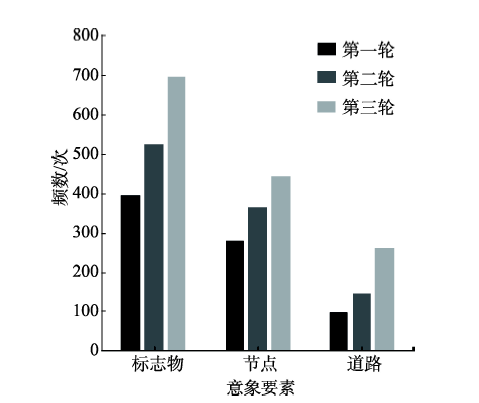
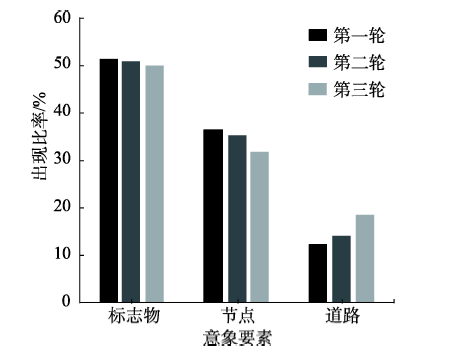
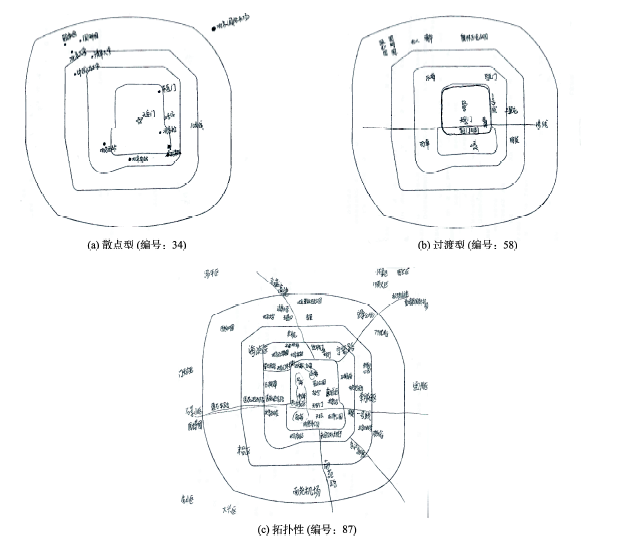
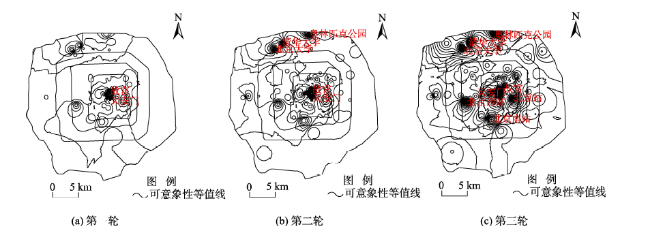
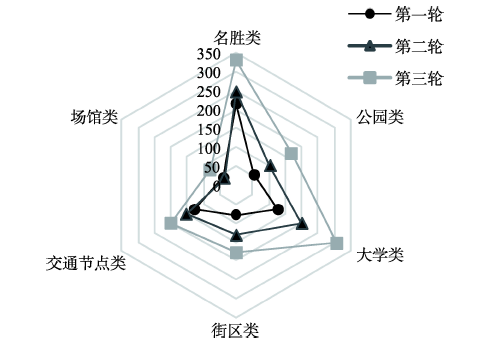
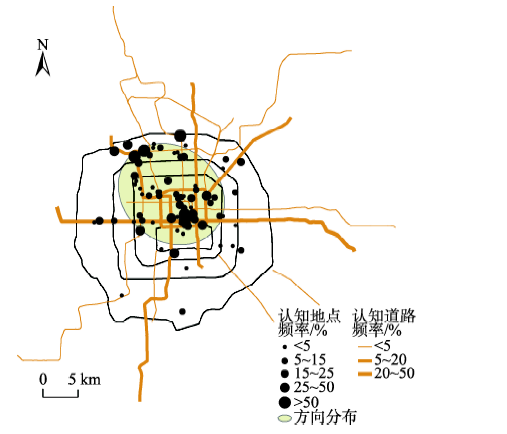
Urban spatial cognition is a classic research topic of behavioral geography. In this study, we selected the main urban districts of Beijing and investigated the spatial cognition of graduate students of the University of Chinese Academy of Sciences using a combination of methods of cognitive map and questionnaire survey. We conducted the surveys in three stages of the same students and asked them to draw a sketch of the city of Beijing, then classified the sketch maps and counted the identified ground features. Based on statistical data, we analyzed the development process and the characteristics of differences of sketch maps of the surveyed students. The research shows that different from Kevin Lynch's five elements of space imagery, the basic elements of cognitive maps are three types: paths, domains, and landmarks, in which landmarks occupy the absolute dominant position. According to the combination of identified ground features in the sketch maps, the cognitive maps can be divided into three types: scattered structure, topological structure, and transitional structure between them, with scattered structure maps constituting the absolute majority. With the progression of time, imaginary space of the city gradually became complicated, and the spatial structure changed from single core to multiple cores; urban spatial cognition of the survey respondents showed the characteristics of personal preference, spatial non-equilibrium, individual difference, and incompleteness of the cognitive process. Beijing urban spatial cognition of the surveyed students is limited mainly because of the long distance from the target places, huge spatial scope of the city, short duration of stay of the students, and the respondents' own attributes that increase the difficulty for the students to imagine ground features of Beijing.
LI Xiaoli , SONG Weixuan , WU Wei , MA Yuzhu . Beijing urban spatial cognition based on follow-up investigations:Take graduate students in the University of Chinese Academy of Sciences as an example[J]. PROGRESS IN GEOGRAPHY, 2020 , 39(2) : 276 -285 . DOI: 10.18306/dlkxjz.2020.02.009
表1 问卷发放数量统计Tab.1 Statistics of the number of questionnaires |
| 轮次 | 发放时间 | 发放问卷/份 | 有效问卷/份 | 有效率/% |
|---|---|---|---|---|
| 第一轮 | 2017年9月 | 150 | 133 | 88 |
| 第二轮 | 2018年1月 | 133 | 117 | 88 |
| 第三轮 | 2018年5月 | 117 | 104 | 89 |
表2 手绘地图中认知频率大于10%的地物Tab.2 Ground features with cognitive frequency more than 10% in sketch maps |
| 基本要素 | 轮次 | 地物 |
|---|---|---|
| 道路 | 第一轮 | 1号线(17.3)、2号线(16.3)、王府井(15.4) |
| 第二轮 | 西单(28.8)、1号线(24.0)、东单(19.2)、王府井(18.3)、南锣鼓巷(18.3)、2号线(16.3)、前门大街(11.5) | |
| 第三轮 | 西单(38.5)、1号线(36.5)、王府井(26.0)、前门大街(23.1)、东单(23.1)、南锣鼓巷(22.1)、2号线(16.3) | |
| 节点 | 第一轮 | 北京大学(38.5)、清华大学(34.6)、北京站(34.6)、北京西站(27.9)、北京南站(24)、东直门公交站(14.4) |
| 第二轮 | 北京大学(51.0)、清华大学(47.1)、北京站(35.6)、北京南站(30.8)、北京西站(29.8)、中国科学院大学玉泉路校区(21.2)、东直门公交站(16.3)、首都机场(14.4)、中国人民大学(14.4)、五道口地铁站(11.5) | |
| 第三轮 | 清华大学(57.7)、北京大学(56.7)、北京站(50.0)、北京西站(45.2)、北京南站(36.5)、东直门公交站(26.9)、中国科学院大学玉泉路校区(24.0)、首都机场(16.3)、北京师范大学(16.3)、中国人民大学(15.4)、五道口(10.6) | |
| 标志物 | 第一轮 | 天安门(88.5)、故宫(67.3)、奥林匹克公园(25.0)、圆明园(19.2)、颐和园(13.5)、人民大会堂(11.5)、鸟巢(10.6) |
| 第二轮 | 天安门(92.3)、故宫(67.3)、奥林匹克公园(42.3)、圆明园(21.2)、天坛(21.2)、颐和园(19.2)、后海(15.4)、三里屯(13.5)、北海公园(11.5)、香山公园(10.6) | |
| 第三轮 | 天安门(96.2)、故宫(71.2)、奥林匹克公园(55.8)、颐和园(40.4)、圆明园(32.7)、天坛(39.4)、鸟巢(22.1)、798艺术区(21.2)、北海公园(20.2)、三里屯(14.4)、后海(14.4)、国家博物馆(13.5)、国贸(12.5)、什刹海(12.5)、北京动物园(12.5)、欢乐谷(11.5)、景山公园(11.5)、香山公园(10.6) |
注:括号中数据为认知频率(%)。 |
表3 认知地图类型数量统计Tab.3 Statistics of the number of cognitive map types |
| 轮次 | 散点型/份 | 过渡型/份 | 拓扑型/份 |
|---|---|---|---|
| 第一轮 | 74 | 21 | 9 |
| 第二轮 | 68 | 21 | 15 |
| 第三轮 | 60 | 25 | 19 |
| [1] |
|
| [2] |
|
| [3] |
|
| [4] |
|
| [5] |
|
| [6] |
|
| [7] |
|
| [8] |
|
| [9] |
|
| [10] |
|
| [11] |
|
| [12] |
|
| [13] |
|
| [14] |
|
| [15] |
|
| [16] |
|
| [17] |
|
| [18] |
|
| [19] |
徐放 . 居民感应地理研究的一个实例: 对赣州市的调查分析[J]. 地理科学, 1983,3(2):167-174.
[
|
| [20] |
李郇, 许学强 . 广州市城市意象空间分析[J]. 人文地理, 1993,8(3):27-35.
[
|
| [21] |
顾朝林, 宋国臣 . 北京城市意象空间及构成要素研究[J]. 地理学报, 2001,56(1):64-74.
[
|
| [22] |
冯健 . 北京城市居民的空间感知与意象空间结构[J]. 地理科学, 2005,25(2):142-154.
[
|
| [23] |
申思, 薛露露, 刘瑜 . 基于手绘草图的北京居民认知地图变形及因素分析[J]. 地理学报, 2008,63(6):625-634.
[
|
| [24] |
李雪铭, 李建宏 . 大连城市空间意象分析[J]. 地理学报, 2006,61(8):809-817.
[
|
| [25] |
宋伟轩, 吕陈, 徐旳 . 城市社区微观空间意象研究: 基于南京居民250份手绘草图的比较[J]. 地理研究, 2011,30(4):709-722.
[
|
| [26] |
杨微石, 郭旦怀, 逯燕玲 , 等. 基于大数据的文化遗产认知分析方法: 以北京旧城中轴线为例[J]. 地理科学进展, 2017,36(9):1111-1118.
[
|
| [27] |
谢永俊, 彭霞, 黄舟 , 等. 基于微博数据的北京市热点区域意象感知[J]. 地理科学进展, 2017,36(9):1099-1110.
[
|
| [28] |
易峥, 李继珍, 冷炳荣 , 等. 基于微博语义分析的重庆主城区风貌感知评价[J]. 地理科学进展, 2017,36(9):1058-1066.
[
|
| [29] |
马耀峰, 李君轶 . 旅游者地理空间认知模式研究[J]. 遥感学报, 2008,12(2):378-384.
[
|
| [30] |
田逢军 . 国民休闲背景下城市游憩空间意象特征分析: 以南昌市为例[J]. 资源科学, 2013,35(5):1095-1103.
[
|
| [31] |
马晓路, 张哲乐 . 多群体视角下的成都休闲意象空间结构解析[J]. 地域研究与开发, 2018,37(4):121-125.
[
|
| [32] |
唐玉凤, 张宏梅 . 旅游前后目的地空间意象对比研究: 以旅韩中国游客为例[J]. 地域研究与开发, 2018,37(1):103-109.
[
|
| [33] |
王茂军, 张学霞, 吴骏毅 , 等. 社区尺度认知地图扭曲的空间分析: 基于首师大和北林大的个案研究[J]. 人文地理, 2009,24(3):54-60.
[
|
| [34] |
戴俊骋 . 大学校园意象空间研究: 以中国地质大学(武汉)校园为例[J]. 世界地理研究, 2009,18(4):141-150.
[
|
| [35] |
蒋志杰, 张捷, 李丽 , 等. 小尺度环境地形认知与空间行为的关系分析: 以南京大学浦口校区为例[J]. 地理学报, 2011,66(6):821-830.
[
|
| [36] |
张春晖, 白凯, 马耀峰 . 西安入境游客目的地空间意象认知序列研究[J]. 地理研究, 2014,33(7):1315-1334.
[
|
| [37] |
|
| [38] |
王成超, 黄民生 . 我国大学城的空间模式及影响因素[J]. 经济地理, 2006,26(3):482-486.
[
|
| [39] |
申悦, 傅行行 . 社区主客观特征对社区满意度的影响机理: 以上海市郊区为例[J]. 地理科学进展, 2019,38(5):686-697.
[
|
/
| 〈 |
|
〉 |