The importance of integrated transport in fostering the formation of the Guangdong-Hong Kong-Macao Greater Bay Area
Received date: 2018-11-21
Request revised date: 2018-12-05
Online published: 2018-12-28
Supported by
National Natural Science Foundation of China, No.41671154
Copyright
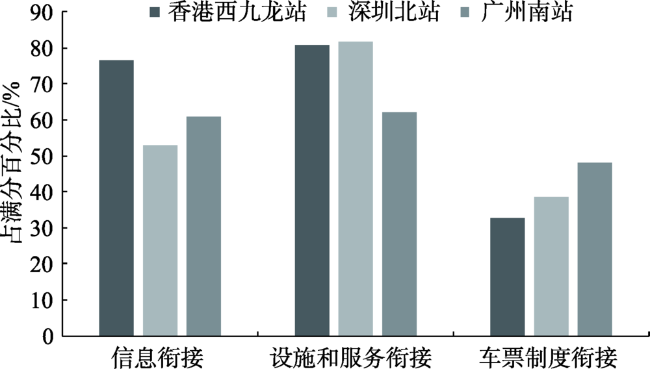
The high-speed railways network provides rapid transit service for inter-city passenger movements. The integration between high-speed railways (HSR) station and urban (intra-city) public transport plays a vital role in regional formation. Based on the passengers' travel experience, this study developed a theoretical framework of passenger-centered integrated transport. Moreover, this framework was tested with results of observational surveys conducted at three important HSR stations along the Hong Kong-Shenzhen-Guangzhou HSR line. With regard to the proposal of fostering the Guangdong-Hong Kong-Macao Greater Bay Area, the findings underline the importance of fostering seamless intermodal integration in enabling the formation of the Greater Bay Area. The results show that the Hong Kong HSR station distinguishes itself by scoring high in the "lowest level integration of information" in a cosmopolitan setting. In terms of the "moderate level integration of facilities and services," both Hong Kong and Shenzhen HSR stations are well connected to nearby shopping malls to enhance the passenger experience. In terms of the "highest level of integration of ticketing and fares," Shenzhen and Guangzhou HSR stations have made better use of information and communication technologies in ticketing; yet, none of the three stations offer any fare integration. Based on the research findings, specific suggestions on improving intermodal transfers are put forward based on the three levels of the transport integration ladder.
Becky P. Y. LOO , WANG Bo . The importance of integrated transport in fostering the formation of the Guangdong-Hong Kong-Macao Greater Bay Area[J]. PROGRESS IN GEOGRAPHY, 2018 , 37(12) : 1623 -1632 . DOI: 10.18306/dlkxjz.2018.12.004
Tab.1 Direct high-speed railways service between major cities in the Guangdong-Hong Kong-Macao Greater Bay Area表1 粤港澳大湾区主要城市间高铁直达班次及最短车程时间 |
| 城市间直达高铁站点对 | 高铁/城际班次 | 最短车程时间/min1 | 城市间直达高铁站点对 | 高铁/城际班次 | 最短车程时间/min |
|---|---|---|---|---|---|
| 香港西九龙—福田(深圳) | 79 | 14 | 深圳北—佛山西 | 2 | 58 |
| 香港西九龙—深圳北 | 65 | 18 | 福田—佛山西 | 1 | 72 |
| 香港西九龙—广州南 | 34 | 47 | 深圳北—珠海 | 1 | 112 |
| 香港西九龙—虎门(东莞) | 20 | 38 | 深圳北—中山 | 1 | 84 |
| 香港西九龙—惠州南/惠东 | 6 | 66 | 广州南—虎门(东莞) | 60 | 17 |
| 深圳北—广州南 | 111 | 29 | 广州南—中山—珠海(城际动车) | 68 | 16/63 |
| 福田—广州南 | 14 | 38 | 广州南—中山 | 3 | 29 |
| 深圳—东莞—广州东(城际动车) | 75 | 40/74 | 广州南—珠海 | 3 | 57 |
| 深圳北—虎门 | 69 | 17 | 广州南—中山—江门东(城际动车) | 11 | 16/35 |
| 福田—虎门 | 8 | 28 | 广州南—惠州南 | 8 | 59 |
| 深圳北—惠州南(城际动车) | 5 | 27 | 广州南—佛山西 | 3 | 19 |
| 深圳北—惠州南/惠东 | 14 | 27 | 广州南—肇庆东 | 3 | 35 |
| 福田—惠州南 | 1 | 64 | 广州—佛山—肇庆(城际动车) | 7 | 20/60 |
| 深圳北-肇庆东 | 3 | 67 |
注:依据12306网站查询,查询日期为2018年10月20日;1.表中2个数,例如40/74指城际动车线上分别到达2个城市的最短车程时间(深圳到东莞40分钟,深圳到广州东74分钟)。 |
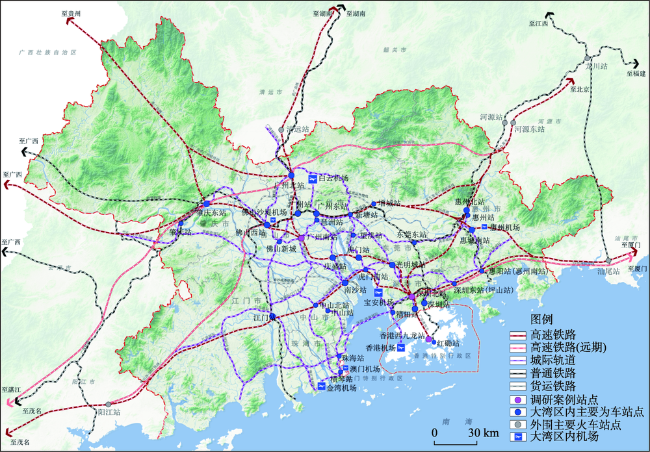
Fig.1 High-speed railways network plan of the Guangdong-Hong Kong-Macao Greater Bay Area图1 粤港澳大湾区高铁网规划 |
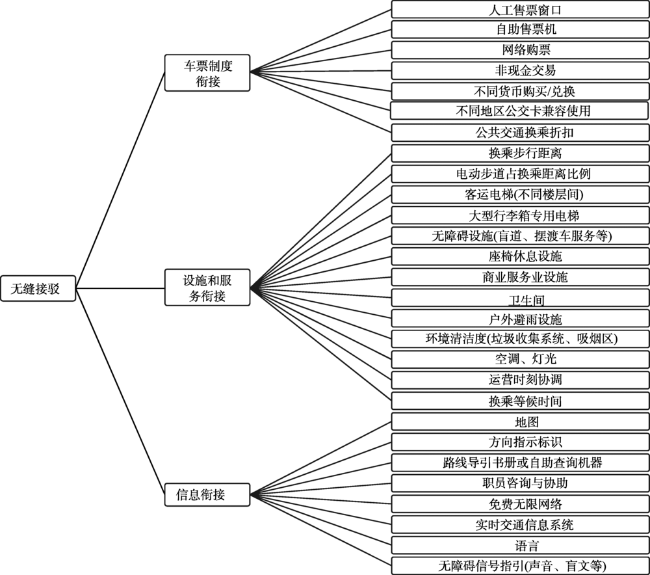
Fig.2 Framework and observational indicators of the “passenger-centered” integration between high-speed railways station and urban public transport图2 “以旅客为本”的高铁站与城市公共交通接驳理论框架与实地观察指标 |
Tab.2 Basic information of Hong Kong Western Kowloon Station, Shenzhen North Station, and Guangzhou South Station表2 香港西九龙站、深圳北站、广州南站基本情况 |
| 高铁 站点 | 位置1 | 高铁客 流量2 | 建筑 | 楼层 布局 | 换乘地铁 线路 | 换乘公交 线路 |
|---|---|---|---|---|---|---|
| 香港西 九龙站 | 距中环直线距离约2.2 km(6.4 km车程);距香港特别行政区总部直线距离约2.7 km(7.5 km车程) | — | 建筑总面积43万m2,设12台15线 | 地上2层,地下4层(上进下出):地上2层为观景平台、天空走廊;地上1层为接驳公共交通站点(港铁九龙站、柯士甸站、公交巴士总站) 的行人天桥;地面层为车站大堂(进站口) 及公交总站(通过行人天桥连接);地下1层为售票大厅、出租车(到达)、社会车辆落客点;地下2层为香港入境区和出站口、出租车(出发)、社会车辆临时停车场;地下3层为香港出境区和候车大厅;地下4层为轨道站台。 | 现状:西铁线(红磡—屯门)、机场快线(香港—机场—博览馆)、东涌线(香港—东涌) | 西九龙巴士总站:11条巴士线路 |
| 深圳 北站 | 距南山区科技园直线距离约8.1 km (13.8 km车程);距市民中心直线距离约10.1 km(11.1 km车程) | 2017年日发送高铁客运量15万 | 建筑总面积18.2万m2,设11台20线 | 地上2层,地下3层(上进上出);地上2层为地铁4、6号线月台;地上1层为地铁4、6号线站厅;地面层为车站大堂(进站、出站)、售票大厅与公交巴士(到达)、出租车(到达)、社会车辆落客点;地下1层为出租车(出发)、公交巴士(出发)、社会车辆临时停车场、轨道站台;地下2层为地铁5号线站厅、出租车(出发)、公交巴士(出发)、社会车辆临时停车场;地下3层为地铁5号线月台。 | 现状:4号线(福田口岸—清湖)、5号线(前海湾—黄贝岭) 规划:6号线(科学馆—松岗) | 深圳北站巴士总站:28条巴士线路 |
| 广州 南站 | 距中山纪念堂直线距离约15.8 km(25.3 km车程);距广州珠江新城直线距离约16 km(23 km车程) | 2017年日发送高铁客运量37万 | 建筑总面积61.5万m2,设15台28线 | 地上3层、地下2层(上进下出);地上3层为车站大堂(进站口)、出租车(到达)、社会车辆落客点;地上2层为轨道站台与;地面层为出站口、售票大厅、出租车(出发)、公交巴士(出发/到达);地下1层为地铁2、7号线地铁站厅、社会车辆临时停车场;地下2层为地铁2、7号线月台。 | 现状:2号线(广州南站—嘉禾望岗)、7号线(广州南站—大学城南站) 规划:22号线(白鹅潭—番禺广场) | 广州南站巴士总站:32条巴士线路 |
注:数据源自互联网查阅以及作者实地调研。1.借助地图查询工具,测量高铁站到CBD以及政府中心的距离;2.香港西九龙高铁刚开通,暂无客流量数据。 |
Tab.3 Observational survey on the integration between high-speed railways station and urban public transport at Hong Kong Western Kowloon Railway Station, Shenzhen North Railway Station, and Guangzhou South Railway Station表3 香港西九龙站、深圳北站、广州南站公共交通接驳观察式调研 |
 |
注:数据源自作者实地调研以及问询;1. 此处换乘包括(1)从各个公共交通落客点到高铁站售票大厅的过程,和(2)从高铁站出站口到各个公共交通上客点(当数值与(1)不同,则加粗标注在“/”后); 2. 高峰时期指11:00-13:00和17:00-19:00。 |
Fig.3 Comparison on the public transport integration performance of Hong Kong Western Kowloon Railway Station, Shenzhen North Railway Station, and Guangzhou South Railway Station图3 香港西九龙站、深圳北站、广州南站的公共交通换乘服务表现对比 |
The authors have declared that no competing interests exist.
| [1] |
[
|
| [2] |
[
|
| [3] |
[
|
| [4] |
[
|
| [5] |
|
| [6] |
|
| [7] |
|
| [8] |
|
| [9] |
|
| [10] |
|
| [11] |
|
| [12] |
|
| [13] |
|
| [14] |
|
| [15] |
|
| [16] |
|
| [17] |
|
| [18] |
|
| [19] |
|
| [20] |
|
| [21] |
|
| [22] |
|
| [23] |
|
| [24] |
|
| [25] |
|
| [26] |
|
| [27] |
|
/
| 〈 |
|
〉 |