Residential normalcy and the aging in place behaviors of older Americans
Online published: 2015-12-31
Copyright
Older Americans prefer to remain in their current dwellings as long as possible and usually move infrequently, that is, they age in place. This paper explains their infrequent relocation adjustments and shows that this residential inertia results in significant shares of older people who live in unaffordable dwellings with physical deficiencies, in neighborhoods with various undesirable physical and social changes, and who are socially isolated with unmet long-term care needs. To account for this residential inertia despite these problems, it is necessary to understand the strong attractions of their places of residence and the obstacles to moving. Although the assessments of experts and professionals are important, it is necessary to understand how older people themselves subjectively appraise the quality of their residential settings. This paper shows how residential normalcy theory portrays the emotion-based experiences of older people and whether they feel their residential or care settings are congruent with their needs and goals, and if not, how they cope with their inadequate environments.
Stephen M. GOLANT . Residential normalcy and the aging in place behaviors of older Americans[J]. PROGRESS IN GEOGRAPHY, 2015 , 34(12) : 1535 -1557 . DOI: 10.18306/dlkxjz.2015.12.004
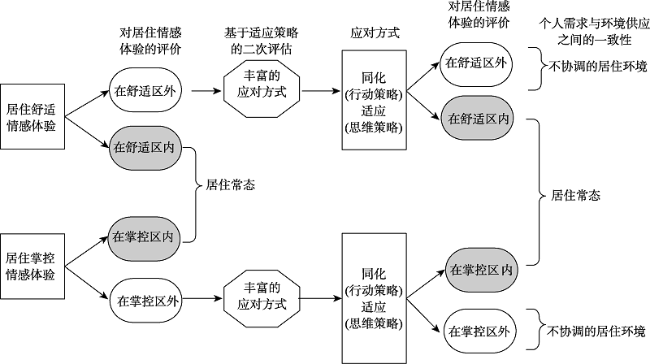
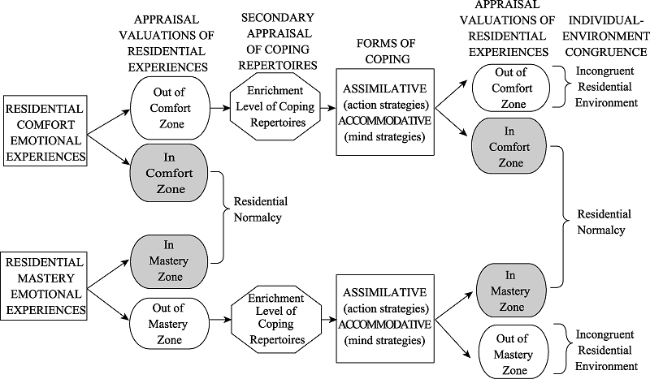
图1 居住常态理论模型 |
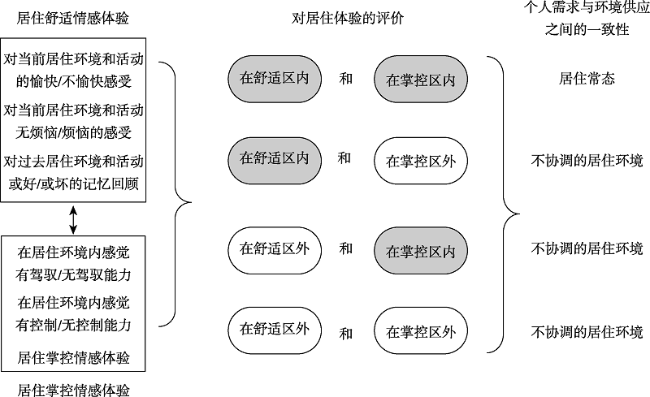
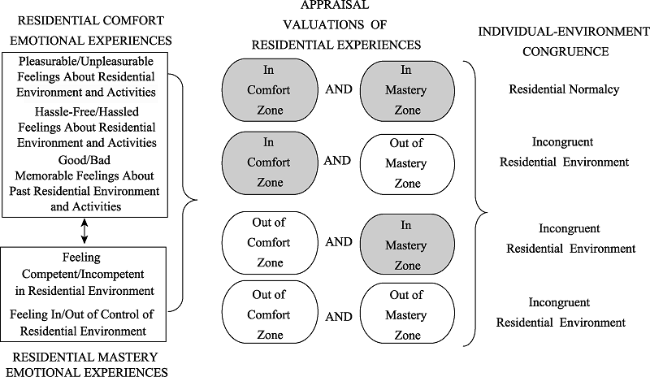
图2 其他居住常态情景 |
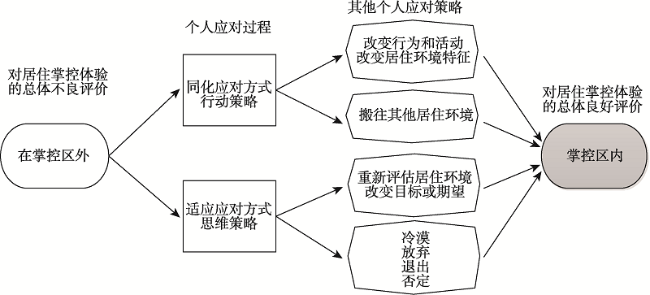
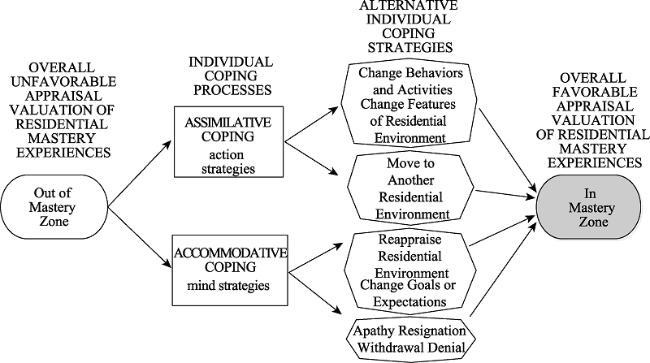
图3 居住掌控区之外的有效替代应对策略 |
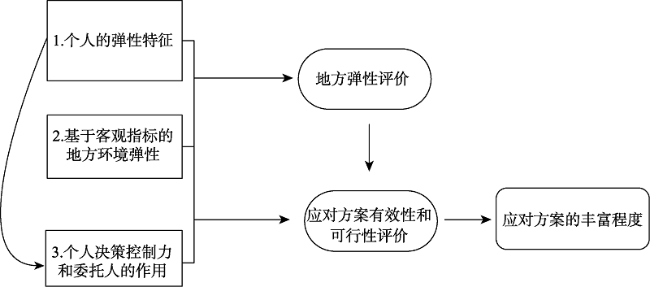
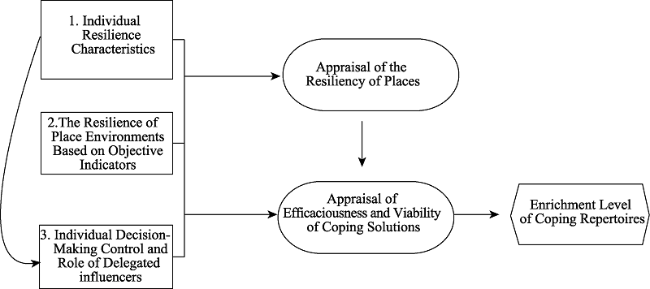
图4 老年人应对办法二次评估的影响因素 |
Fig.1 Theoretical Model of Residential Normalcy |
Fig.2 Alternative Residential Normalcy Scenarios |
Fig.3 Alternative strategies to cope successfully when out of residential mastery zone |
Fig.4 Factors influencing secondary appraisals of coping repertoires by older adults |
The authors have declared that no competing interests exist.
| [1] |
|
| [2] |
|
| [3] |
|
| [4] |
|
| [5] |
|
| [6] |
|
| [7] |
|
| [8] |
|
| [9] |
|
| [10] |
|
| [11] |
|
| [12] |
|
| [13] |
|
| [14] |
|
| [15] |
|
| [16] |
|
| [17] |
|
| [18] |
|
| [19] |
|
| [20] |
|
| [21] |
|
| [22] |
|
| [23] |
|
| [24] |
|
| [25] |
|
| [26] |
|
| [27] |
|
| [28] |
|
| [29] |
|
| [30] |
|
| [31] |
|
| [32] |
|
| [33] |
|
| [34] |
|
| [35] |
|
| [36] |
|
| [37] |
|
| [38] |
|
| [39] |
|
| [40] |
|
| [41] |
|
| [42] |
|
| [43] |
|
| [44] |
|
| [45] |
|
| [46] |
|
| [47] |
|
| [48] |
|
| [49] |
|
| [50] |
|
| [51] |
|
| [52] |
|
| [53] |
|
| [54] |
|
| [55] |
|
| [56] |
|
| [57] |
|
| [58] |
|
/
| 〈 |
|
〉 |