基于田园功能与底线约束的乡村分类与发展策略研究
|
王卫雯(1994— ),女,河南长垣人,博士,讲师,主要研究方向为乡村人居环境与社会治理。E-mail: wwwang@henu.edu.cn |
收稿日期: 2023-04-14
修回日期: 2023-12-29
网络出版日期: 2024-03-20
基金资助
教育部人文社会科学研究项目(23YJC790141)
国家自然科学基金项目(42071254)
国家自然科学基金项目(42371315)
国家自然科学基金项目(42371223)
Rural area classification and development strategies based on rural function and bottom-line constraints
Received date: 2023-04-14
Revised date: 2023-12-29
Online published: 2024-03-20
Supported by
Humanities and Social Science Research Youth Fund Project of Ministry of Education(23YJC790141)
National Natural Science Foundation of China(42071254)
National Natural Science Foundation of China(42371315)
National Natural Science Foundation of China(42371223)
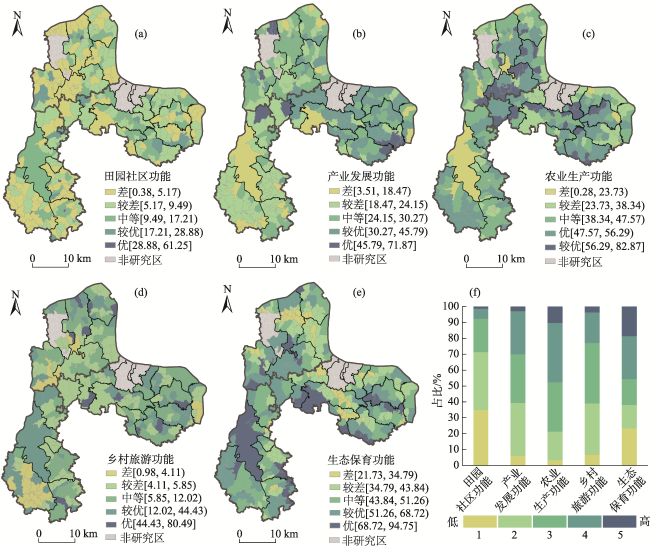
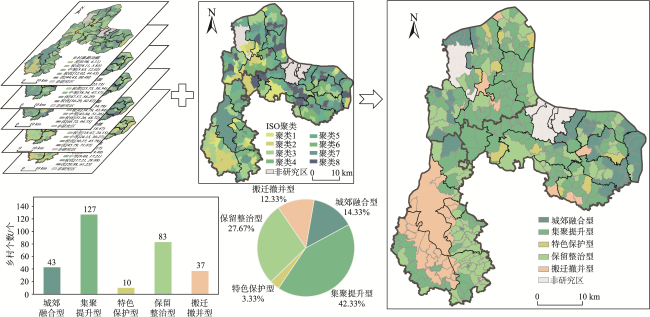
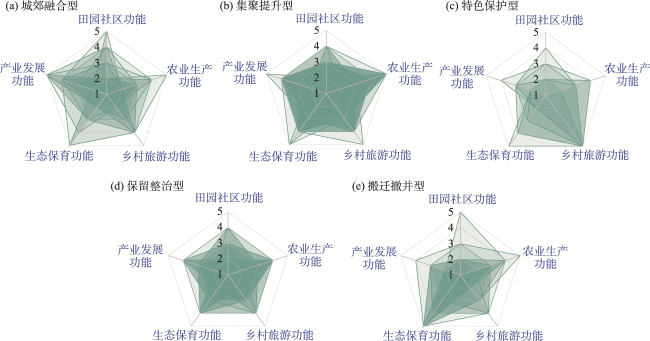
在乡村分类的基础上探索差异化发展路径对推进精准化乡村振兴战略实施和提高乡村治理能力具有重要意义。论文以湖北鄂州市乡村单元为研究对象,利用多因素综合评价法和ISO(iterative self-organization)聚类法等技术方法,构建乡村田园功能与底线约束耦合表达的乡村分类体系,挖掘乡村类别与田园功能的内在联系并提出差异化发展策略。研究结果表明:① 田园社区功能、产业发展功能、农业生产功能、乡村旅游功能和生态保育功能优势区表现出沿路、沿江、环湖、围山等空间分布特征;② 鄂州市乡村可划分为城郊融合型、集聚提升型、特色保护型、保留整治型和搬迁撤并型,且具有明显的田园功能异质性;③ 遵循分类显化功能优势、改善功能短板的思路,以促进农文旅融合发展与构建田园综合体为核心明确乡村发展策略。研究结果在明晰乡村分类特征的基础上提出差异化乡村发展策略,可为新时代乡村振兴战略的实施提供理论支撑与实践参考。
王卫雯 , 龚健 , 汪樱 , 申杨 , 乔家君 , Lochan Kumar Batala . 基于田园功能与底线约束的乡村分类与发展策略研究[J]. 地理科学进展, 2024 , 43(3) : 561 -572 . DOI: 10.18306/dlkxjz.2024.03.011
Exploring differentiated development paths on the basis of rural area classification is of great significance for promoting the implementation of the precise rural revitalization strategy and improving rural governance capacity. This research constructed a rural area classification system with a coupled expression of rural functions and bottom-line constraints based on rural units in Ezhou City, and to explore differentiated rural development strategies. The multi-factor comprehensive evaluation method and ISO clustering method were employed. The results show that: 1) The advantageous areas of rural community functions, industrial development functions, agricultural production functions, rural tourism functions, and ecological conservation functions are along roads and rivers, surrounding lakes, and surrounding mountains. 2) The rural areas of Ezhou City can be divided into suburban integration type, agglomeration and upgrading type, special protection type, retention and renovation type, and relocation and merger type, and their functional heterogeneity are obvious. 3) Following the principle of classifying and exposing functional advantages and improving functional shortcomings, this study proposed a variety of development paths, which can promote the integrated development of agriculture, culture, and tourism to build a rural multi-functional complex. The research results suggest differentiated rural development strategies on the basis of clarifying the characteristics of rural area classification, which can provide a theoretical support and practical reference for the implementation of the rural revitalization strategy.
表1 乡村田园功能评价指标体系与权重Tab.1 Evaluation indicator system of rural functions and weights |
| 田园功能 | 指标 | 指标说明 | 熵值法 | 主成分分析法 | 综合权重 |
|---|---|---|---|---|---|
| 田园社区功能 | 人口密度 | 人口/区域面积(人/km2) | 0.26 | 0.34 | 0.30 |
| 基础设施 | 交通站点、养老院、医疗场所、学校、防洪设施数量(个) | 0.34 | 0.36 | 0.35 | |
| 道路网密度 | 乡村道路总长/区域面积(km/km2) | 0.40 | 0.30 | 0.35 | |
| 产业发展功能 | 乡村企业 | 乡村企业个数(个) | 0.36 | 0.29 | 0.32 |
| GDP | 公里网格生产总值(万元/km2) | 0.62 | 0.29 | 0.46 | |
| 运输条件 | 距公路(国道、省道、县道、乡道)距离(m) | 0.02 | 0.42 | 0.22 | |
| 农业生产功能 | 耕地质量 | Σ(耕地利用等别×地块面积)/耕地面积 | 0.13 | 0.35 | 0.24 |
| 农用地占比 | 农用地面积/乡村面积 | 0.59 | 0.30 | 0.45 | |
| 农业投入产出效益 | 农业总产出/农业总投入 | 0.28 | 0.34 | 0.31 | |
| 乡村旅游功能 | 历史文化名村 | 历史文化名村等级 | 0.63 | 0.48 | 0.56 |
| 旅游景点 | 距旅游景点距离(m) | 0.01 | 0.12 | 0.07 | |
| 文物古迹 | 乡村文物古迹数量(个) | 0.36 | 0.40 | 0.37 | |
| 生态保育功能 | 生态用地占比 | 生态用地面积/乡村面积 | 0.57 | 0.50 | 0.53 |
| NDVI | (NIR-R)/(NIR+R) 式中:NIR、R分别为近红外波段、红外波段的反射率 | 0.13 | 0.37 | 0.25 | |
| 景观蔓延度 | 式中:pi为第i类土地利用类型所占面积百分比,gik为第i类和第k类土地利用类型毗邻数目,m为景观土地利用类型总数目 | 0.30 | 0.13 | 0.22 |
| [1] |
|
| [2] |
刘恬, 胡伟艳, 杜晓华, 等. 基于村庄类型的全域土地综合整治研究[J]. 中国土地科学, 2021, 35(5): 100-108.
[
|
| [3] |
房艳刚, 毕晓普, 刘建志. 基于多源数据的村庄类型判别研究: 以吉林省前郭县和靖宇县的比较分析为例[J]. 地理科学, 2023, 43(3): 541-551.
[
|
| [4] |
杨林朋, 芮旸, 王昭, 等. 基于“政策—潜力—意愿”整合视角的村庄分类研究[J]. 地理研究, 2023, 42(1): 245-261.
[
|
| [5] |
李亚静, 孔雪松, 何建华, 等. 湖北省乡村地域功能评价与转向特征分析[J]. 中国土地科学, 2021, 35(3): 79-87.
[
|
| [6] |
徐磊, 王建鹏, 尹士, 等. 基于共生视角的河北省乡村地域多功能空间格局与分区调控[J]. 农业工程学报, 2022, 38(11): 268-278.
[
|
| [7] |
李伯华, 周璐, 窦银娣, 等. 基于乡村多功能理论的少数民族传统聚落景观风貌演化特征及影响机制研究: 以湖南怀化皇都村为例[J]. 地理科学, 2022, 42(8): 1433-1445.
[
|
| [8] |
|
| [9] |
|
| [10] |
|
| [11] |
王凯歌, 栗滢超, 张凤荣, 等. 基于要素配置功能识别的差异化乡村发展策略[J]. 农业工程学报, 2021, 37(3): 250-258.
[
|
| [12] |
|
| [13] |
罗庆, 陈思旖, 王艺霏, 等. 贫困山区乡村发展类型识别及振兴路径研究: 以河南省栾川县为例[J]. 地理科学进展, 2022, 41(10): 1783-1794.
[
|
| [14] |
|
| [15] |
曲衍波, 赵丽鋆, 柴异凡, 等. 乡村振兴视角下空心村多维形态识别与分类治理: 以山东省禹城市房寺镇为例[J]. 资源科学, 2021, 43(4): 776-789.
[
|
| [16] |
王兆峰, 史伟杰. 中国美丽休闲乡村的空间分布特征及影响因素[J]. 地理科学, 2022, 42(1): 104-114.
[
|
| [17] |
苏康传, 杨庆媛, 吴江, 等. 重庆市乡村空间商品化格局特征、驱动机制及发展模式[J]. 经济地理, 2022, 42(7): 167-177.
[
|
| [18] |
瞿朝祯. 田园综合体的规划设计刍议[J]. 中国农业资源与区划, 2021, 42(11): 179, 198.
[
|
| [19] |
|
| [20] |
林坚, 吴宇翔, 吴佳雨, 等. 论空间规划体系的构建: 兼析空间规划、国土空间用途管制与自然资源监管的关系[J]. 城市规划, 2018, 42(5): 9-17.
[
|
| [21] |
|
| [22] |
|
| [23] |
|
| [24] |
|
| [25] |
申杨, 龚健, 叶菁, 等. 基于“双评价”的永久基本农田划定研究: 以黄石市为例[J]. 中国土地科学, 2021, 35(7): 27-36.
[
|
| [26] |
|
| [27] |
李繁荣. 中国乡村振兴与乡村功能优化转型[J]. 地理科学, 2021, 41(12): 2158-2167.
[
|
| [28] |
冉娜, 金晓斌, 范业婷, 等. 基于土地利用冲突识别与协调的“三线”划定方法研究: 以常州市金坛区为例[J]. 资源科学, 2018, 40(2): 284-298.
[
|
| [29] |
|
| [30] |
|
| [31] |
|
| [32] |
|
| [33] |
|
| [34] |
张高德. 新型农村社区与田园综合体规划建设[J]. 中国农业资源与区划, 2022, 43(3): 7, 18.
[
|
| [35] |
岳文泽, 王田雨, 甄延临. “三区三线”为核心的统一国土空间用途管制分区[J]. 中国土地科学, 2020, 34(5): 52-59, 68.
[
|
| [36] |
|
| [37] |
杨坤, 芮旸, 李宜峰, 等. 基于共生理论的中国特色保护类村庄振兴类型细分研究[J]. 地理科学进展, 2021, 40(11): 1861-1875.
[
|
| [38] |
梁泽, 黄姣, 韦飞黎, 等. 基于夜光遥感影像与百度POI数据的中国城市群空间范围识别方法[J]. 地理研究, 2020, 39(1): 92-102.
[
|
/
| 〈 |
|
〉 |