数字经济时代城市新零售空间重构的实证——以天津市书店的文化消费空间为例
|
王睿(1985—),女,博士,副研究员,研究方向为低碳城市规划、土地利用效益。E-mail: wangrui_1985@tju.edu.cn |
收稿日期: 2025-04-15
修回日期: 2025-11-24
网络出版日期: 2026-02-11
基金资助
天津市科技发展战略研究计划(19ZLZXZF00320)
Spatial restructuring of new retail in the digital economy era: An empirical study of cultural consumption spaces in Tianjin
Received date: 2025-04-15
Revised date: 2025-11-24
Online published: 2026-02-11
Supported by
Science and Technology Development Strategic Research in Tianjin(19ZLZXZF00320)
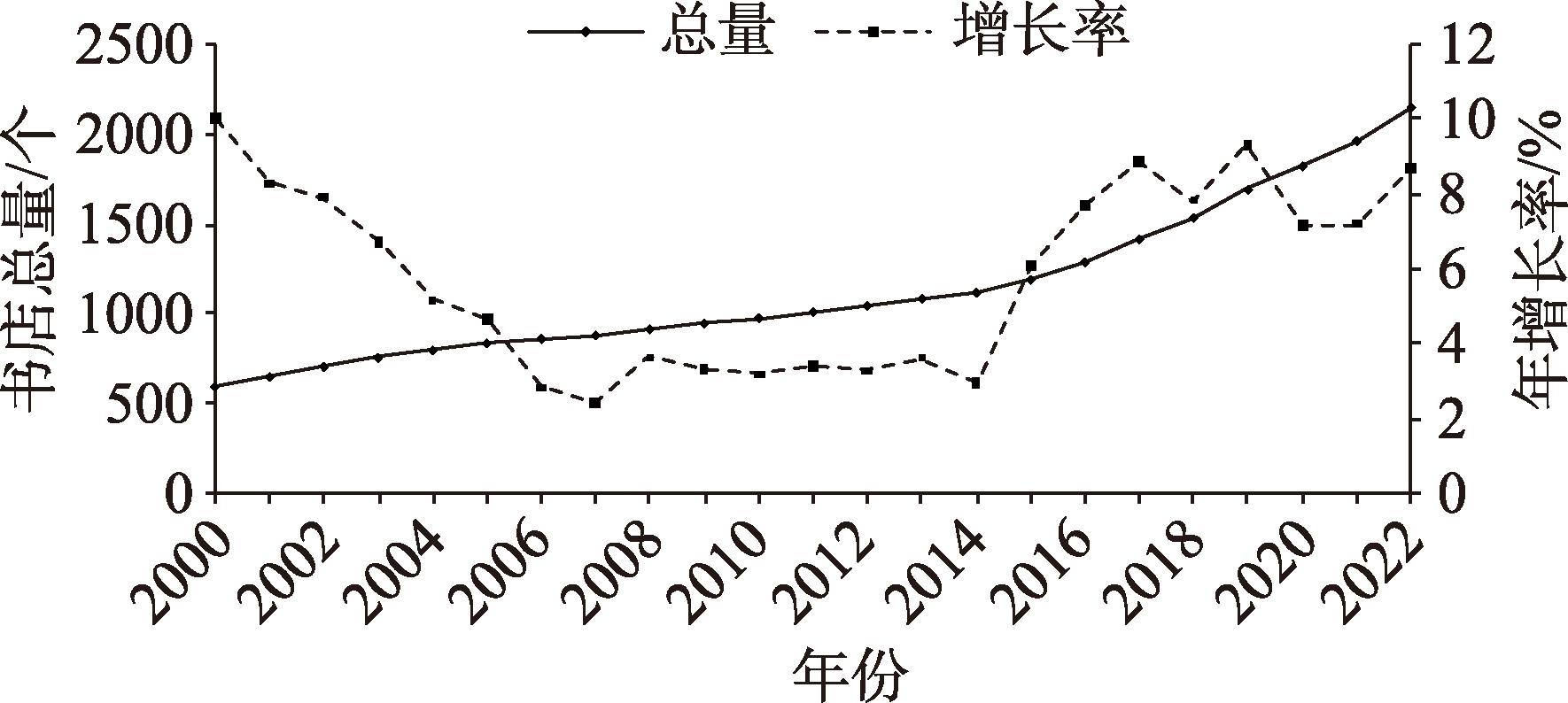
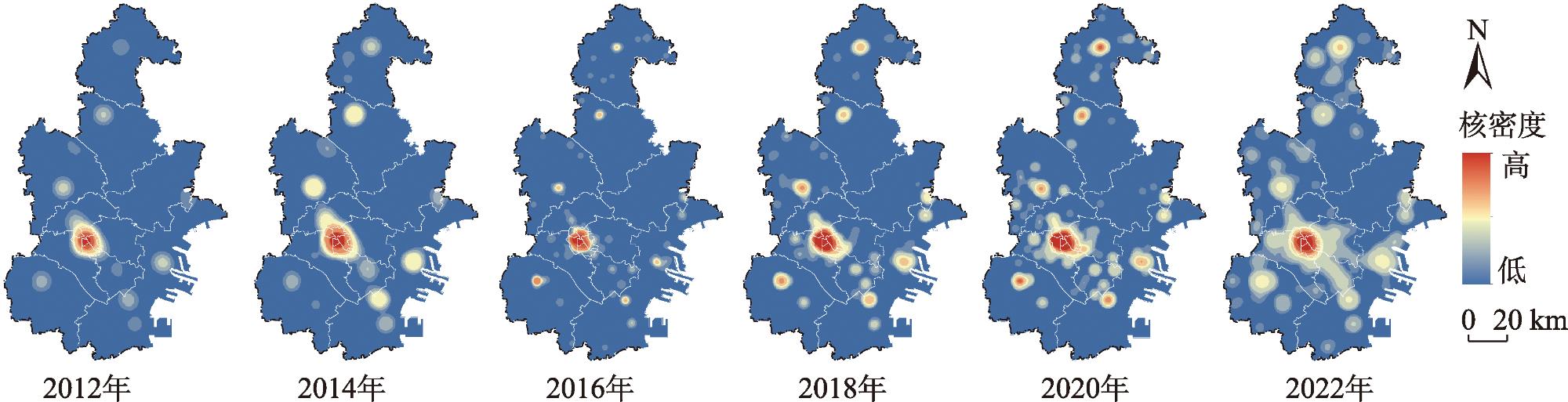
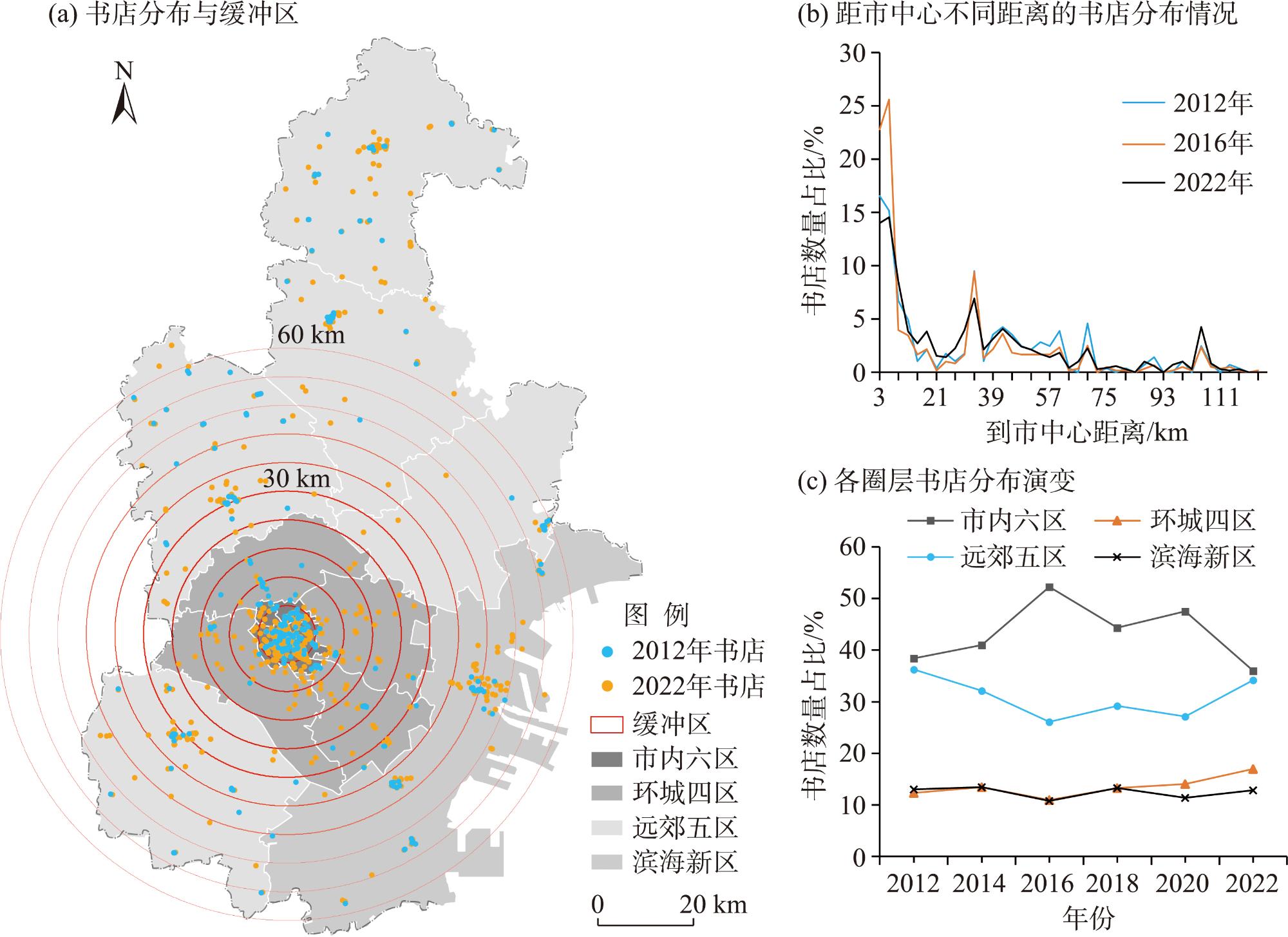
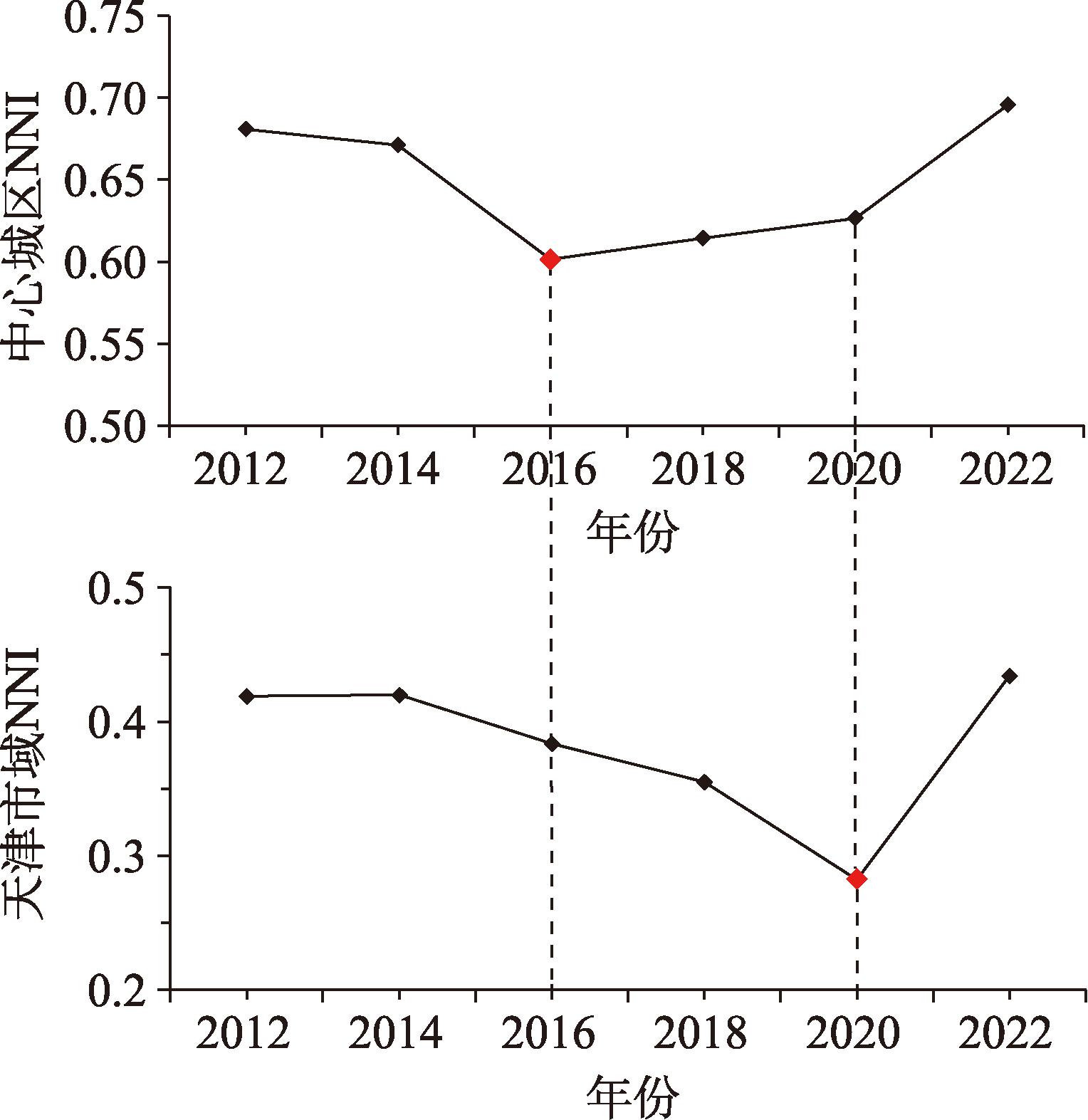
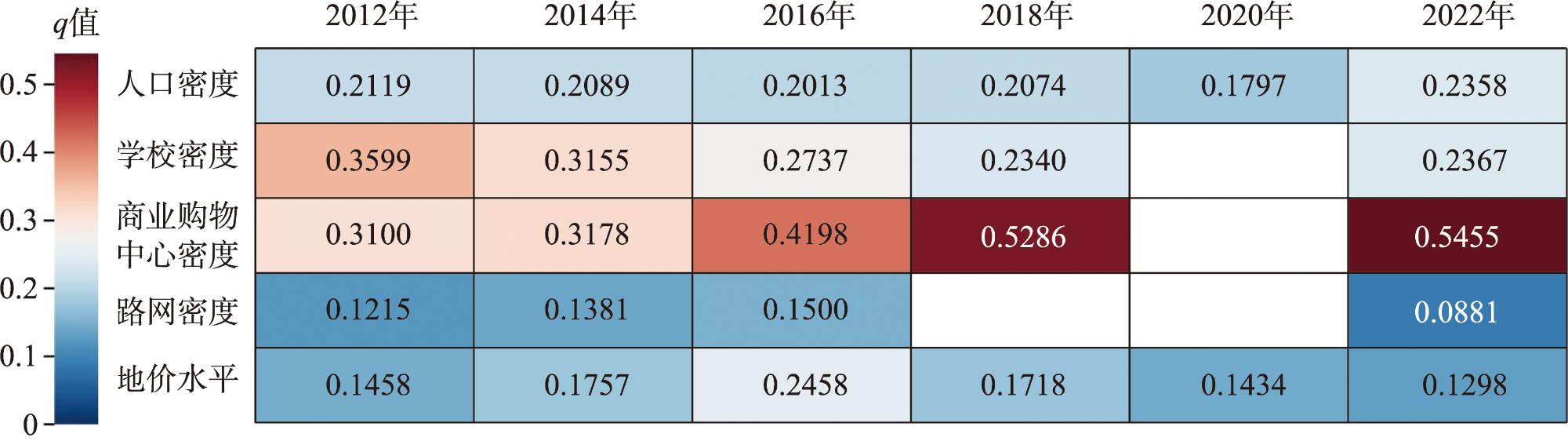
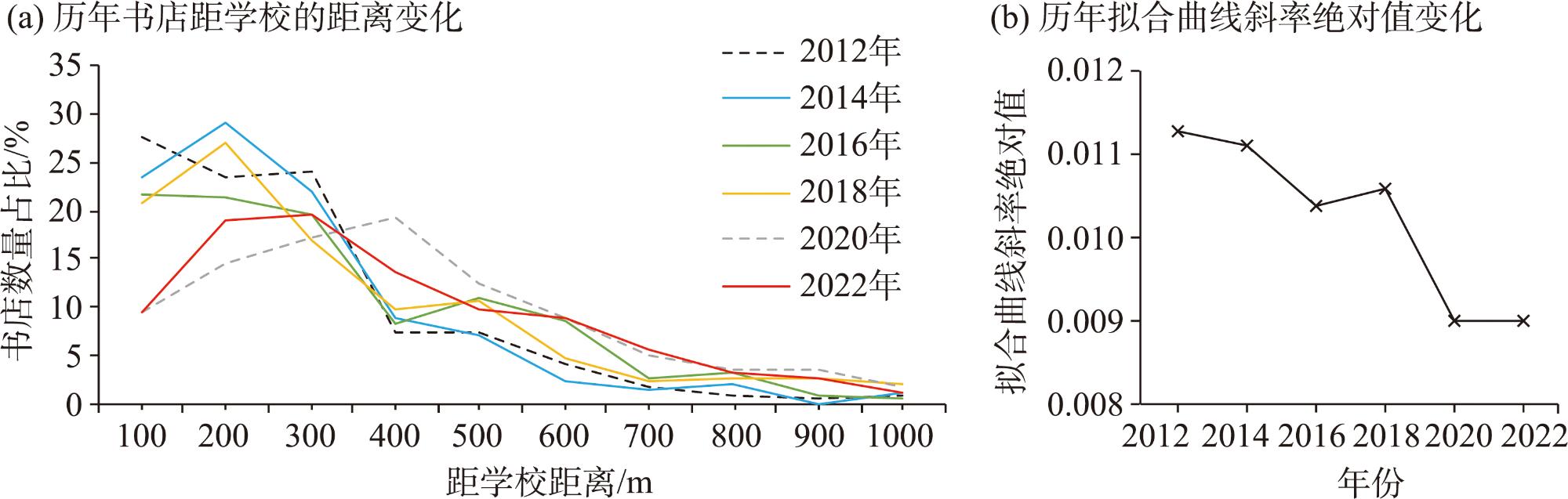
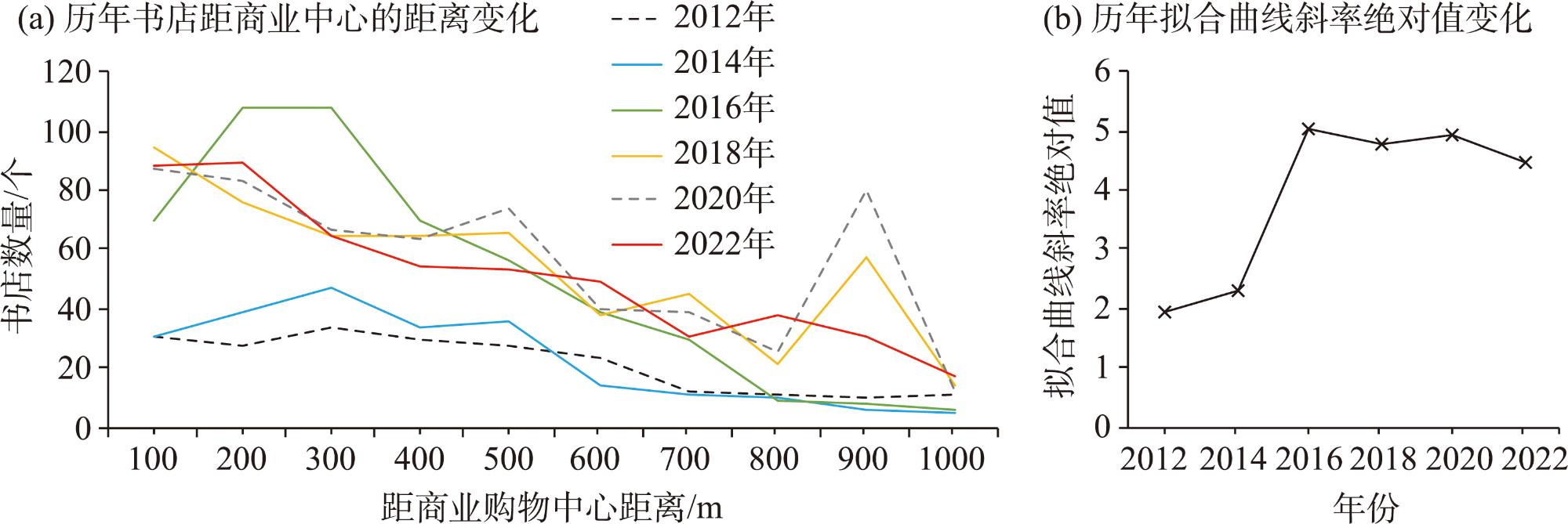
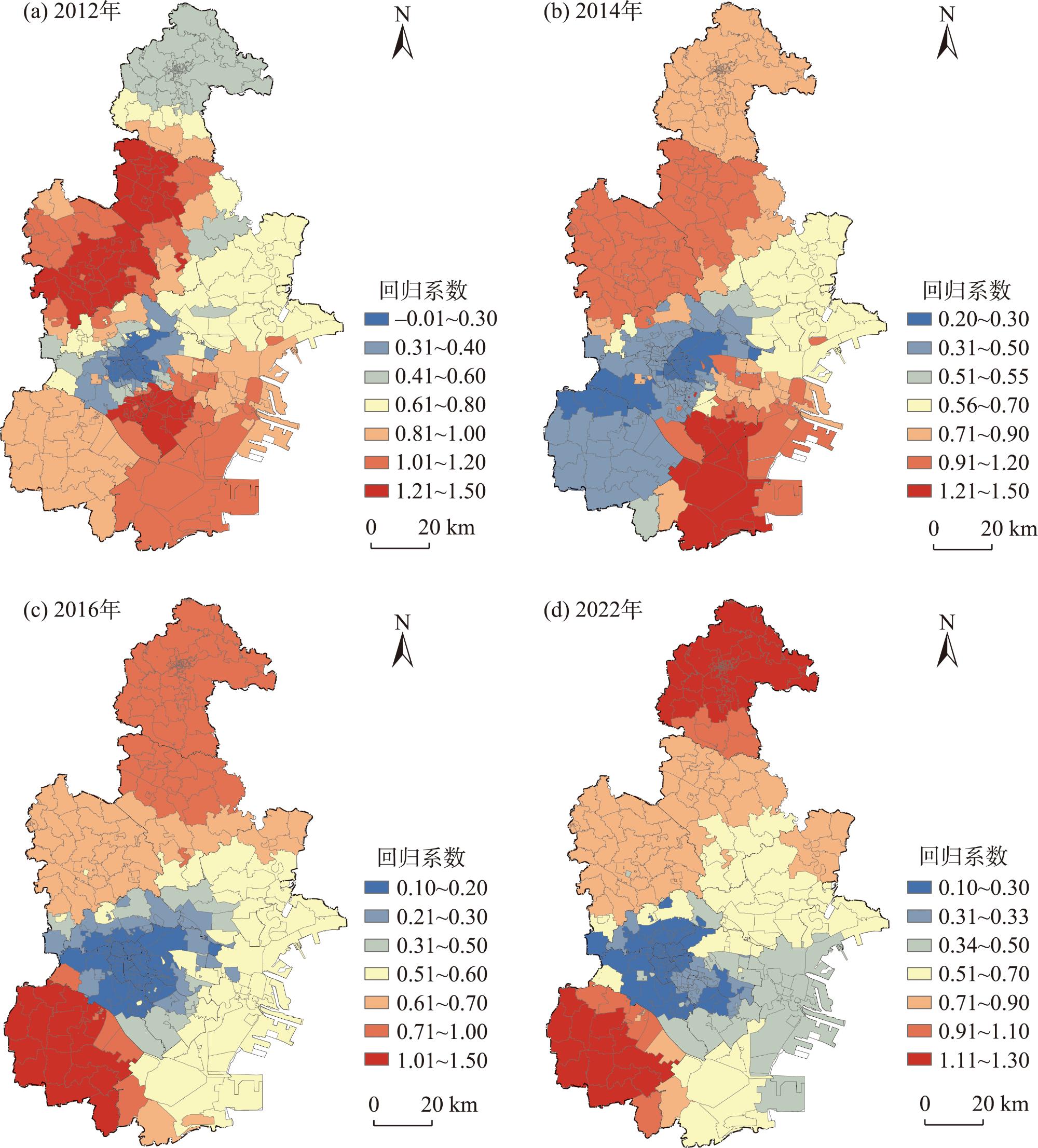
随着信息技术蓬勃发展,传统零售加速向新零售转型,新技术颠覆性改变了文化信息的传播获取途径,深刻改变了城市的文化消费空间结构。与物流驱动下实体商品零售空间发生重构不同,文化消费空间演化的规律和本质有待探讨。论文以书店为典例,运用核密度分析、最邻近指数、地理探测器和多尺度地理加权回归等方法,分析2012—2022年天津市书店空间的时空演变特征及空间演变的影响机制。结果表明:① 书店空间呈现“先中心聚集—后外围扩散”的空间演化趋势,2016年为转变拐点;② 新型书店的发展倾向于技术扩散假说,上述“聚集—扩散”现象首先在中心城区显现,郊区滞后;③ 书店空间重构的本质在于零售功能的转变,由零售功能转向体验功能,在选址上体现为学校对书店布局的影响逐年减弱,反之,商业中心的影响逐年增强;④ 路网和地价对书店的影响呈先增强后减弱的趋势,初期选址遵守传统零售布局模式,后渐摆脱对传统优势区位的依赖。研究验证了不同新零售业态的差异化空间演变趋势,为新零售选址布局、业态关联组织优化提供科学依据。
王睿 , 周雯珮 , 张赫 , 柯玲虹 , 金雨扬 , 贺晶 . 数字经济时代城市新零售空间重构的实证——以天津市书店的文化消费空间为例[J]. 地理科学进展, 2026 , 45(2) : 424 -436 . DOI: 10.18306/dlkxjz.2026.02.014
With the rapid development of information technology, traditional retail is accelerating its transformation into new retail. New technologies have dramatically changed the ways in which cultural information is disseminated and accessed, profoundly altering the structural space of cultural consumption in urban areas. Unlike the restructuring of physical retail spaces driven by logistics, the patterns and essence of the evolution of cultural consumption spaces require further exploration. Using bookstores as a typical case, we applied methods including kernel density analysis, nearest neighbor index (NNI), Geodetector, and multiscale geographically weighted regression (MGWR). We examined the spatial evolution patterns of bookstores and their driving mechanisms in Tianjin over a decade from 2012 to 2022. The findings are as follows: 1) Bookstores had undergone a dynamic process of change characterized by "initial concentration at the center, followed by outer diffusion", with 2016 as a critical turning point. 2) The development of the "new retail" bookstores wasmore inclined towards the innovation diffusion hypothesis. The aforementioned "concentration-diffusion" phenomenon first emerged in the central urban area, while it lagged in the suburbs. This suggests that the commercial environment of the central urban area wasmore sensitive to market changes, and the rapid flow of information and resources in the central urban area had further accelerated the transformation process. 3) The essence of bookstore spatial restructuring lies in the transformation of their commercial functions—from purely retail-oriented to experience-centric hybrid models. Such functional changehad reshaped locational logics, evidenced by the progressive decline of educational institutions' spatial couplingand the rising dominance of commercial agglomerationsin bookstore distribution patterns. 4) The impact of transportation factors and land price levels on bookstores showed a trend of initially increasing and then decreasing. In the early stages, bookstore location followed traditional retail layout patterns, and as technology permeated, the reliance on traditional advantageous locations gradually diminished. This research verified the differentiated spatial evolution trends of various new retail formats, providing a scientific basis for the location planning and optimization of format-related organizational structures in new retail.
表1 影响因素指标选取与描述Tab.1 Description of variables |
| 影响因素 | 代表性指标 | 变量阐释 | 单位 |
|---|---|---|---|
| 人口因素 | X1 人口密度 | 街道常住人口数与街道面积之比 | 人/km2 |
| 核心影响点 | X2 学校密度 | 街道内学校数量(小学、中学、高校)与街道面积之比 | 个/km2 |
| X3 商业购物中心密度 | 街道内商业购物中心数量与街道面积之比 | 个/km2 | |
| 交通区位 | X4 路网密度 | 街道道路总长度与街道面积之比 | m/km2 |
| 经济因素 | X5 地价水平 | 街道内商品房平均价格 | 元/m2 |
表2 OLS模型回归结果Tab.2 Regression results of the OLS model |
| 变量 | 系数 | 标准误 | t | VIF |
|---|---|---|---|---|
| 人口密度 | 0.1052* | 0.0516 | 2.0370 | 1.5489 |
| 学校密度 | 0.1236* | 0.0491 | 2.5191 | 1.3976 |
| 商业购物中心密度 | 0.5860*** | 0.0502 | 11.6796 | 1.4621 |
| 路网密度 | -0.1015* | 0.0438 | -2.3189 | 1.1119 |
| 地价水平 | 0.0991* | 0.0466 | 2.1263 | 1.2604 |
| R2 | 0.5299 | |||
| 调整R2 | 0.5213 | |||
| F-statistic | 61.5450 | |||
注:*、**、***分别表示P<0.05、P<0.01、P<0.001。 |
表3 各影响因子带宽选择Tab.3 Bandwidth selection for influencing factors |
| 影响因子 | 2012年 | 2014年 | 2016年 | 2018年 | 2020年 | 2022年 |
|---|---|---|---|---|---|---|
| 人口密度 | 257 | 278 | 278 | 278 | 278 | 278 |
| 学校密度 | 278 | 278 | 278 | 278 | 278 | 266 |
| 商业购物中心密度 | 43 | 74 | 86 | 136 | 95 | 61 |
| 路网密度 | 278 | 278 | 278 | 278 | 278 | 278 |
| 地价水平 | 158 | 158 | 158 | 278 | 236 | 278 |
| [1] |
林玥希, 汪明峰. 中国新零售的空间分布与区位选择[J]. 经济地理, 2020, 40(12): 109-118.
[
|
| [2] |
刘学, 甄峰, 张敏, 等. 网上购物对个人出行与城市零售空间影响的研究进展及启示[J]. 地理科学进展, 2015, 34(1): 48-54.
[
|
| [3] |
汪凡, 林玥希, 汪明峰. 第三空间还是无限场景: 新零售的区位选择与影响因素研究[J]. 地理科学进展, 2020, 39(9): 1522-1531.
[
|
| [4] |
林耿, 宋佩瑾, 李锐文, 等. 消费社会下商业地理研究的新取向[J]. 人文地理, 2019, 34(1): 80-89.
[
|
| [5] |
孔宇, 甄峰, 张姗琪. 智能技术影响下的城市空间研究进展与思考[J]. 地理科学进展, 2022, 41(6): 1068-1081.
[
|
| [6] |
阿里研究院. C时代新零售:阿里研究院新零售研究报告[EB/OL]. 2017-03-09 [2024-06-18]. https://mp.weixin.qq.com/s/6Sdn4Qkqiatcj7sBN_3ldQ.
[AliResearch. C-era new retail: AliResearch's report on new retail. 2017-03-09 [2024-06-18]. https://mp.weixin.qq.com/s/6Sdn4Qkqiatcj7sBN_3ldQ.]
|
| [7] |
鄢章华, 刘蕾. “新零售”的概念、研究框架与发展趋势[J]. 中国流通经济, 2017, 31(10): 12-19.
[
|
| [8] |
|
| [9] |
|
| [10] |
马妍, 李苗裔. “互联网+”环境下城市商业功能空间演变及规划响应[J]. 规划师, 2016, 32(4): 17-22.
[
|
| [11] |
晏龙旭. “均质化—再集聚”: 互联网影响下餐饮业空间布局新特征: 基于上海内环开放数据的研究[J]. 城市规划学刊, 2017(4): 113-119.
[
|
| [12] |
史坤博, 杨永春, 白硕, 等. 技术扩散还是效率优先: 基于“美团网”的中国O2O电子商务空间渗透探讨[J]. 地理研究, 2018, 37(4): 783-796.
[
|
| [13] |
张逸姬, 甄峰, 张逸群. 社区O2O零售业的空间特征及影响因素以南京市为例[J]. 经济地理, 2019, 39(11): 104-112.
[
|
| [14] |
钟雨妮, 罗震东, 方鹏飞. 移动互联网时代社区商业空间的演化: 基于杭州市主城区的实证[J]. 城市规划, 2023, 47(8): 12-20.
[
|
| [15] |
原榕, 石飞. 从地理中心到无界零售: 新零售的布局选址及影响机制: 以南京市三类便利店为例[J]. 城市问题, 2021(8): 72-82.
[
|
| [16] |
程龙, 张吉玉, 苏杰, 等. 线下和线上场景社区零售可达性及公平性研究[J]. 地理科学进展, 2022, 41(12): 2297-2310.
[
|
| [17] |
牛强, 郭艺凯, 伍磊. 外卖O2O与传统餐饮服务在空间分布上的竞合关系研究: 共存、补充抑或替代[J]. 热带地理, 2024, 44(8): 1435-1448.
[
|
| [18] |
|
| [19] |
|
| [20] |
|
| [21] |
赵文嘉, 史北祥. 新零售背景下的南京生活圈虚化特征、机制与规划策略[J]. 规划师, 2023, 39(10): 66-73.
[
|
| [22] |
伍磊, 牛强, 阿吉艾比布拉·艾尼瓦尔, 等. 虚实融合的线上线下社区生活圈: 迭代升级与规划探索[J]. 城市规划学刊, 2024(2): 25-33.
[
|
| [23] |
张赫, 贺晶, 王睿, 等. 面向线上线下融合的生活服务空间演化及配置: 以生鲜零售为例[J]. 城市规划, 2023, 47(5): 86-96.
[
|
| [24] |
钱欣彤, 席广亮, 甄峰. 线上和线下生活服务设施可达性及其协调关系: 以生鲜果蔬店铺为例[J]. 人文地理, 2022, 37(4): 105-112.
[
|
| [25] |
汪明峰, 卢姗, 邱娟. 网上购物对城市零售业空间的影响: 以书店为例[J]. 经济地理, 2010, 30(11): 1835-1840, 1896.
[
|
| [26] |
李少琦, 孙海燕, 刘苏禾, 等. 近20年中国新型实体书店的时空演变及其影响因素: 基于西西弗、言几又和“猫空”数据的分析[J]. 经济地理, 2020, 40(10): 67-73.
[
|
| [27] |
何韶颖, 吴楚槟, 张任驰, 等. 消费4.0时代历史文化街区新型文化消费空间构建研究[J]. 城市发展研究, 2024, 31(5): 21-25.
[
|
| [28] |
史北祥. 虚实相生: 电商冲击下的城市中心体系分异[J]. 城市规划, 2022, 46(8): 44-50.
[
|
| [29] |
刘瑞宽, 李九全. 西安市实体书店空间分布特征及影响因素: 基于DBSCAN算法的分析[J]. 经济地理, 2021, 41(6): 87-96.
[
|
| [30] |
甘依霖, 朱媛媛, 陈四云, 等. 后疫情时代武汉市城市文化消费空间解构: 以实体书店为例[J]. 地域研究与开发, 2020, 39(6): 65-70.
[
|
| [31] |
文嫮, 蓝佳. 中国城市影院空间扩张特征及影响因素[J]. 经济地理, 2022, 42(3): 76-86.
[
|
| [32] |
廖开怀, 李立勋, 张虹鸥. 全球化背景下广州城市文化消费空间重构: 以星巴克为例[J]. 热带地理, 2012, 32(2): 160-166.
[
|
| [33] |
|
| [34] |
王劲峰, 徐成东. 地理探测器: 原理与展望[J]. 地理学报, 2017, 72(1): 116-134.
[
|
| [35] |
|
| [36] |
郭浩, 董磊, 邬伦, 等. 空间异质性建模方法[J]. 地理学报, 2025, 80(3): 567-585.
[
|
| [37] |
沈体雁, 于瀚辰, 周麟, 等. 北京市二手住宅价格影响机制: 基于多尺度地理加权回归模型(MGWR)的研究[J]. 经济地理, 2020, 40(3): 75-83.
[
|
| [38] |
王明亮. 5000字深度解读: 中国实体书店发展20年[EB/OL]. 2020-06-11 [2025-03-15]. https://zhuanlan.zhihu.com/p/147386495.
[
|
| [39] |
焦石, 李晓东. 南京市图书零售业空间布局及其影响因素[J]. 地域研究与开发, 2016, 35(2): 71-76, 83.
[
|
| [40] |
张恩嘉, 龙瀛. 城市弱势区位的崛起: 基于大众点评数据的北京休闲消费空间研究[J]. 旅游学刊, 2024, 39(4): 16-27.
[
|
| [41] |
孙世界, 王锦忆. 隐形消费空间的分布特征及影响因素研究: 以南京老城为例[J]. 城市规划学刊, 2021(1): 97-103.
[
|
| [42] |
罗震东, 毛茗, 张佶, 等. 移动互联网时代城市新空间形成机制: 以“外卖工厂”为例[J]. 城市规划学刊, 2022, (4): 64-70.
[
|
/
| 〈 |
|
〉 |