中国西向流动人口居留意愿及其影响因素
|
曾通刚(1992— ),男,四川德阳人,博士,博士后,研究方向为人口地理与区域发展。E-mail: tonggangzeng@163.com |
收稿日期: 2024-02-26
修回日期: 2024-05-26
网络出版日期: 2024-11-26
基金资助
国家社会科学基金项目(21BJL045)
西南民族大学中央高校基本科研业务费专项资金项目(2024SQN14)
Settlement intention of westward migrants in China and its influencing factors
Received date: 2024-02-26
Revised date: 2024-05-26
Online published: 2024-11-26
Supported by
National Social Science Foundation of China(21BJL045)
The Fundamental Research Funds for the Central Universities, Southwest Minzu University(2024SQN14)
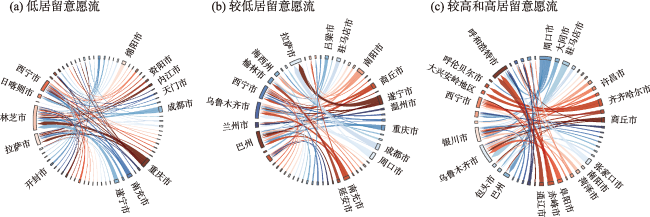
人口是区域发展的基础要素。在区域协调发展背景下,论文以“胡焕庸线”为参照,基于中国流动人口动态监测数据和相匹配的区域层面数据,运用非参数检验与多层Logit回归模型,分析中国西向流动人口居留意愿及其影响因素。研究发现:① 大约三成的西向流动人口选择长期居留,总体上居留意愿较低。在流入地分异上,城市规模越大,其居留意愿越高。② 不同强度居留意愿流存在明显地域分异。自中原地区流向西北半壁中省会城市或区域性中心城市的流动人口居留意愿较高。③ 居留意愿受到经济与非经济要素的共同作用。个体层面上,居留时间、家庭规模、家庭收入、雇主身份、拥有产权住房、积极的社会交往和心理融入以及参加社会医疗保险对居留意愿具有积极作用。流出地为东南半壁中的北方城市,其居留意愿更高。区域层面上,海拔高度对居留意愿存在抑制作用,地方发展活力和城市规模发挥积极作用。基于研究发现,论文提出稳定提高经济收入、构建家庭友好型政策体系、营造包容性社会文化环境以及发挥城市群引领带动作用的政策建议。
曾通刚 , 何雄浪 . 中国西向流动人口居留意愿及其影响因素[J]. 地理科学进展, 2024 , 43(11) : 2213 -2225 . DOI: 10.18306/dlkxjz.2024.11.009
Population is the dominant factor of regional development. In the context of coordinated population and regional development, this study took the Hu Huanyong line as reference to define the westward migrants, whose outflow place is in the southeastern side of Hu Huanyong line, while inflow place is in the northwestern side of Hu Huanyong line. Based on this definition, this study analyzed the settlement intention of China's westward migrants and its influencing factors. The analysis used the data of the China Migrants Dynamic Survey in 2017 and the corresponding regional data, and the non-parametric test and multilevel mixed-effects logistic regression methods. The results are as follows: 1) About 30% of the westward migrants chose stable residence, and the settlement intention is at a relatively low level while the vast majority of migrants chose temporary residence. With regard to destination cities, with the increase of urban scale, the settlement intention of migrants became higher. 2) The westward migrants from central China to the northwestern provincial capital cities or regional central cities were more likely to choose stable residence. 3) Settlement intention was influenced by both economic and non-economic factors. At the individual level, residence time, family size, family income, employer status, ownership of housing, active social interaction and psychological integration, and participation in social health insurance had positive effects on settlement intention. The migrants from the northern cities to the southeast of the Hu Huanyong line had a higher settlement intention. At the regional level, altitude had an inhibitory effect on settlement intention, while local development vitality and city size played a positive role. However, GDP per capita and medical and health conditions played no significant role. Based on the above research findings, this study recommend to promote the settlement intention of the westward migrants by steadily increasing income, constructing family-friendly policy system, creating inclusive social and cultural environment, and let urban agglomerations play a leading role.
表1 2017年不同规模城市的西向流动人口居留意愿分异Tab.1 Settlement intention and inflow scale of westward migrants in cities of different scales in 2017 |
| Ⅰ型大城市 | Ⅱ型大城市 | 中等城市 | Ⅰ型小城市 | Ⅱ型小城市 | |
|---|---|---|---|---|---|
| 居留意愿/% | 40.046 | 36.573 | 36.916 | 27.063 | 25.109 |
| 流入规模/人 | 874 | 2655 | 214 | 2557 | 3915 |
注:Kruskal-Wallis H检验值为156.226,在1%的水平上显著。 |
表2 变量描述性统计Tab.2 Descriptive statistics of variables |
| 变量名 | 变量解释 | 均值 | 标准差 |
|---|---|---|---|
| 个体/家庭层次变量 | |||
| 性别 | 女性=0,男性=1 | 0.600 | 0.496 |
| 年龄 | 青年人=1,中年人=2,老年人=3 | 1.572 | 0.550 |
| 民族 | 少数民族=0,汉族=1 | 0.968 | 0.177 |
| 受教育程度 | 小学及以下=1,初中=2,高中=3,大专及以上=4 | 2.178 | 0.875 |
| 本地居留时间 | 连续变量(单位:a) | 6.592 | 6.334 |
| 本地家庭规模 | 连续变量(单位:人) | 1.482 | 1.199 |
| 流动距离 | 连续变量(单位:1000 km) | 1.492 | 0.789. |
| 流出地方位 | 南方=0,北方=1 | 0.461 | 0.499 |
| 家庭月收入 | 连续变量(单位:万元) | 0.663 | 0.495 |
| 职业身份 | 雇主=1,雇员=2,自营劳动者=3,其他=4 | 2.889 | 0.820 |
| 拥有产权住房 | 否=0,是=1 | 0.256 | 0.436 |
| 社会交往 | 同乡(户口迁至本地)=1,同乡(户口仍在老家)=2,同乡(户口迁至本地与老 家以外的其他地区)=3,其他本地人=4,其他外地人=5,很少与人来往=6 | 3.749 | 1.667 |
| 心理融入程度 | 连续变量 | 3.180 | 0.439 |
| 在本地参与社会医疗保险 | 否=0,是=1 | 0.138 | 0.345 |
| 区域层次变量 | |||
| 海拔高度 | 连续变量(单位:km) | 2.533 | 1.241 |
| 人均GDP | 连续变量(单位:万元) | 5.849 | 3.057 |
| 人均固定资产投资 | 连续变量(单位:万元) | 5.685 | 2.419 |
| 每万人拥有医疗卫生机构数 | 连续变量(单位:个) | 6.704 | 3.380 |
| 城市规模 | Ⅰ型大城市或Ⅱ型大城市=1,中等城市=2,Ⅰ型小城市或Ⅱ型小城市=3 | 2.288 | 0.947 |
表3 西向流动人口居留意愿影响因素的回归结果Tab.3 Regression results of influencing factors of westward migrant settlement intention |
| 变量 | 模型1 | 模型2 | |||
|---|---|---|---|---|---|
| 系数 | 标准误 | 系数 | 标准误 | ||
| 性别(参照组:女性) | -0.006 | 0.049 | 0.021 | 0.050 | |
| 年龄(参照组:青年人) | |||||
| 中年人 | 0.027 | 0.053 | 0.027 | 0.054 | |
| 老年人 | 0.092 | 0.144 | 0.043 | 0.146 | |
| 民族(参照组:少数民族) | -0.287** | 0.127 | -0.120 | 0.134 | |
| 受教育程度(参照组:大专及以上) | |||||
| 小学及以下 | -0.315*** | 0.091 | -0.257*** | 0.093 | |
| 初中 | -0.379*** | 0.076 | -0.356*** | 0.078 | |
| 高中 | -0.234*** | 0.085 | -0.226*** | 0.087 | |
| 本地居留时间 | 0.034*** | 0.004 | 0.035*** | 0.004 | |
| 本地家庭规模 | 0.101*** | 0.020 | 0.047** | 0.022 | |
| 流动距离 | -0.028 | 0.031 | -0.014 | 0.049 | |
| 流出地方位(参照组:南方) | 0.367*** | 0.049 | 0.284*** | 0.054 | |
| 家庭月收入 | 0.307*** | 0.047 | 0.333*** | 0.049 | |
| 职业身份(参照组:雇主) | |||||
| 雇员 | -0.241** | 0.118 | -0.301** | 0.122 | |
| 自营劳动者 | -0.210* | 0.112 | -0.161 | 0.115 | |
| 其他或无业 | -0.291** | 0.119 | -0.289** | 0.123 | |
| 拥有产权住房(参照组:否) | 0.797*** | 0.054 | 0.790*** | 0.057 | |
| 社会交往(参照组:很少与人来往) | |||||
| 同乡(户口迁至本地) | 0.445*** | 0.109 | 0.405*** | 0.111 | |
| 同乡(户口仍在老家) | 0.090 | 0.068 | 0.053 | 0.070 | |
| 同乡(户口迁至本地与老家以外的其他地区) | 0.305** | 0.145 | 0.252* | 0.148 | |
| 其他本地人 | 0.444*** | 0.068 | 0.431*** | 0.071 | |
| 其他外地人 | 0.183* | 0.093 | 0.163* | 0.096 | |
| 心理融入程度 | 1.141*** | 0.057 | 1.080*** | 0.060 | |
| 本地参与社会医疗保险(参照组:否) | 0.554*** | 0.068 | 0.557*** | 0.071 | |
| 海拔高度 | -0.097* | 0.054 | |||
| 人均GDP | 0.009 | 0.028 | |||
| 人均固定资产投资 | 0.084*** | 0.029 | |||
| 每万人拥有医疗卫生机构数 | 0.011 | 0.015 | |||
| 城市规模(参照组:Ⅰ型大城市或Ⅱ型大城市) | |||||
| 中等城市 | -0.510 | 0.316 | |||
| Ⅰ型小城市或Ⅱ型小城市 | -0.495*** | 0.162 | |||
| 常数项 | -5.021*** | 0.267 | -4.991*** | 0.401 | |
注:***、**、*分别表示在1%、5%、10%的水平上显著。 |
| [1] |
孙久文, 王邹, 蒋治. 中国式现代化视域下的区域协调发展[J]. 北京行政学院学报, 2023(3): 1-10.
[
|
| [2] |
林李月, 朱宇, 柯文前. 区域协调发展背景下流动人口回流的空间意愿及其政策含义[J]. 地理研究, 2021, 40(5): 1515-1528.
[
|
| [3] |
陈明星, 李扬, 龚颖华, 等. 胡焕庸线两侧的人口分布与城镇化格局趋势: 尝试回答李克强总理之问[J]. 地理学报, 2016, 71(2): 179-193.
[
|
| [4] |
林李月, 朱宇, 柯文前. 城镇化中后期中国人口迁移流动形式的转变及政策应对[J]. 地理科学进展, 2020, 39(12): 2054-2067.
[
|
| [5] |
陆大道, 王铮, 封志明, 等. 关于“胡焕庸线能否突破”的学术争鸣[J]. 地理研究, 2016, 35(5): 805-824.
[
|
| [6] |
|
| [7] |
|
| [8] |
|
| [9] |
李亭亭, 朱宇, 林李月, 等. 流动人口居留时长意愿的空间分异及影响因素[J]. 地理学报, 2021, 76(12): 2978-2992.
[
|
| [10] |
林李月, 朱宇, 林坤, 等. 两栖生计下中国流动人口城镇购房意愿的空间特征和影响因素[J]. 地理学报, 2021, 76(6): 1350-1365.
[
|
| [11] |
刘涛, 陈思创, 曹广忠. 流动人口的居留和落户意愿及其影响因素[J]. 中国人口科学, 2019(3): 80-91, 127-128.
[
|
| [12] |
田明, 徐庆文. 流动人口居留意愿的梯次关系与决定机制[J]. 地理学报, 2023, 78(6): 1376-1391.
[
|
| [13] |
杨高, 金万富, 王宇渠, 等. 珠三角乡城流动人口居留意愿的分异及影响因素: 基于家庭生命周期视角[J]. 地理研究, 2024, 43(2): 411-428.
[
|
| [14] |
刘振, 刘盛和, 戚伟, 等. 青藏高原流动人口居留意愿及影响因素[J]. 地理学报, 2021, 76(9): 2142-2156.
[
|
| [15] |
林李月, 朱宇. 中国城市流动人口户籍迁移意愿的空间格局及影响因素: 基于2012年全国流动人口动态监测调查数据[J]. 地理学报, 2016, 71(10): 1696-1709.
[
|
| [16] |
王建顺, 林李月, 朱宇, 等. 西部民族地区流动人口户籍迁移意愿及影响因素: 以新疆为例[J]. 地理科学进展, 2018, 37(8): 1140-1149.
[
|
| [17] |
林李月, 朱宇, 柯文前, 等. 基本公共服务对不同规模城市流动人口居留意愿的影响效应[J]. 地理学报, 2019, 74(4): 737-752.
[
|
| [18] |
陈艳如, 谷跃, 宋伟轩, 等. 长三角流动人口居留意愿差异及其影响因素[J]. 经济地理, 2022, 42(9): 59-67.
[
|
| [19] |
古恒宇, 孟鑫, 沈体雁, 等. 中国城市流动人口居留意愿影响因素的空间分异特征[J]. 地理学报, 2020, 75(2): 240-254.
[
|
| [20] |
张华, 刘哲达, 殷小冰. 中国跨省流动人口回流意愿的空间差异及影响因素[J]. 地理科学进展, 2021, 40(1): 73-84.
[
|
| [21] |
李楠. 文化因素对人口流动的长期影响: 基于中国历史经验的实证分析[J]. 社会, 2015, 35(4): 159-176.
[
|
| [22] |
卓云霞, 刘涛. 迁移者的居留、返乡与再迁移决策: 基于事件史的分析[J]. 地理研究, 2022, 41(5): 1262-1278.
[
|
| [23] |
杨雪, 魏洪英. 流动人口长期居留意愿的新特征及影响机制[J]. 人口研究, 2017, 41(5): 63-73.
[
|
| [24] |
林赛南, 梁奇, 李志刚, 等. “家庭式迁移”对中小城市流动人口定居意愿的影响: 以温州为例[J]. 地理研究, 2019, 38(7): 1640-1650.
[
|
| [25] |
李雨婷, 喻忠磊, 苗长虹, 等. 多维邻近性对流动人口回流意愿的影响: 基于中国流动人口动态监测数据的实证[J]. 地理科学进展, 2022, 41(8): 1403-1415.
[
|
| [26] |
任远, 陶力. 本地化的社会资本与促进流动人口的社会融合[J]. 人口研究, 2012, 36(5): 47-57.
[
|
| [27] |
丁悦, 林李月, 朱宇, 等. 中国地级市间流动人口永久定居意愿的空间特征和影响因素[J]. 地理科学进展, 2021, 40(11): 1888-1899.
[
|
| [28] |
王珩, 龚岳. 中国流动人才居留意愿和时长的空间分布及影响因素[J]. 地理科学, 2023, 43(1): 61-71.
[
|
| [29] |
刘建娥, 凌巍. 中国县域城镇化再抉择: 社会性流动的重大转向与系统性构建[J]. 社会学研究, 2023, 38(3): 23-44, 226-227.
[
|
| [30] |
戚伟, 刘盛和, 刘振. 基于“七普”的“胡焕庸线”两侧人口集疏新态势及影响因素[J]. 地理学报, 2022, 77(12): 3023-3040.
[
|
| [31] |
张文彤, 闫洁. SPSS统计分析基础教程[M]. 北京: 高等教育出版社, 2004: 289-298.
[
|
| [32] |
黄耿志, 邢祖哥, 潘瑜鑫. 城市规模如何影响农民工的社会融合: 非正规就业组与正规就业组的比较分析[J]. 地理研究, 2024, 43(4): 985-1003.
[
|
| [33] |
窦旺胜, 秦波, 郝美竹, 等. 中国青年流动人口城市选择的空间特征及影响因素[J]. 地理研究, 2023, 42(5): 1234-1247.
[
|
| [34] |
李裕瑞, 王婧, 刘彦随, 等. 中国“四化”协调发展的区域格局及其影响因素[J]. 地理学报, 2014, 69(2): 199-212.
[
|
| [35] |
杨菊华. 中国流动人口的社会融入研究[J]. 中国社会科学, 2015(2): 61-79, 203-204.
[
|
| [36] |
张晶, 徐苑瑜. “排斥”还是“包容”: 方言多样性与流动人口永久迁移意愿[J]. 经济科学, 2022(3): 155-168.
[
|
| [37] |
林李月, 朱宇, 柯文前. 居住选择对流动人口城市居留意愿的影响: 基于一项对福建省流动人口的调查[J]. 地理科学, 2019, 39(9): 1464-1472.
[
|
| [38] |
曾通刚, 杨永春, 满姗. 中国城市流动人口心理融入的地区差异与影响因素[J]. 地理科学, 2022, 42(1): 126-135.
[
|
| [39] |
温涛, 刘渊博. 西部地区高质量发展的制约瓶颈和突破路径[J]. 贵州财经大学学报, 2019(3): 75-81.
[
|
| [40] |
马楠, 陈若雪. 我国流动人口的族际互嵌格局与互动机制[J]. 中南民族大学学报(人文社会科学版), 2023, 43(11): 122-131, 186.
[
|
| [41] |
何雄浪, 尹凤茗. 新时代“五位一体”铸牢中华民族共同体意识探究[J]. 民族学刊, 2021, 12(3): 10-20, 95.
[
|
/
| 〈 |
|
〉 |