行动者网络视角下批发市场新电商模式
作者简介:江璇(1994-),女,安徽池州人,硕士研究生,主要从事城市更新和中产化研究,E-mail: jiangxuansn@163.com。
收稿日期: 2017-10-09
要求修回日期: 2017-12-12
网络出版日期: 2018-07-28
基金资助
国家自然科学基金项目(41671139,41301181)
New models of E-commerce in wholesale market from the perspective of actor-network theory
Received date: 2017-10-09
Request revised date: 2017-12-12
Online published: 2018-07-28
Supported by
National Natural Science Foundation of China, No. 41671139, No. 41301181
Copyright
在电商兴起和旧城更新的背景下,传统批发市场出现衰退趋势,亟需转型升级。本文在梳理广州市一德路海味干货市场转型历史的基础上,得出市场近年经历了由衰退到出现电商再到综合升级的初步判断,并构建了一德市场电商化的行动者网络模型探讨转型机制和效应。通过深入的现场调查,详尽分析人类行动者如商、客、政府和非人类行动者如海味干货商品、网络在电商化过程中的作用,得出具体的转型新模式。研究表明:①传统批发市场经过电商化转型,不会走向单一电商化或地理空间无用化的极端,而是出现综合多样的业态形式,如电商和实体、批发和零售4种类型的交叉组合;②在引发传统批发市场转型的多元行动者力量中,非人类主体如商品和网络发挥着巨大的作用,如商品的客观特性阻碍着地理空间的消除,而网络引发人们对空间重要性的重新权衡和促进对实物商品的升级改造。
江璇 , 杨帆 , 林耿 . 行动者网络视角下批发市场新电商模式[J]. 地理科学进展, 2018 , 37(7) : 976 -985 . DOI: 10.18306/dlkxjz.2018.07.011
Under the background of prosperous development of E-commerce and old city renewal, traditional wholesale markets are declining, and their transformation and upgrading are needed. In order to guide the upgrading of wholesale markets and old city space, this study took the Guangzhou Yide Seafood Market as an example to examine the mechanism and effects of its transformation. The author conducted an in-depth field research from November 2016 to March 2017 by methods of participatory observation, structured interview, snowball sampling, and questionnaire survey. Based on the history of the Yide Market from the Ming Dynasty, this article draws an preliminary conclusion that the market in recent years experienced a recessionary stage, followed by the emergence of E-commerce and comprehensive upgrading. The article then discusses the transformation mechanism and its effects by constructing an actor-network model of E-commercialization of the Yide Market. It analyzes the effects of human and non-human actors in the process of transformation by in-depth field investigation and shows that the Yide Market contains five kinds of actors—customers, the government, businesses, commodities, and network platform. In the stage of "problematization," the non-human actors, networks, and seafood dry cargo commodity showed strong guiding power and control. Then the government mobilized other actors to participate in E-commerce in the stage of "enrolment and mobilization," and businesses made different choices in the "interestement" stage. Next, role differentiations of businesses and customers became apparent, caused mainly by the actor network. Finally, the measures of self-guiding and self-management by the chamber of commerce maintained the feasibility of E-commerce along with supervision by the government. Thus the alliance of interests of the actor network was finally built. The research found that after the E-commerce transformation, traditional wholesale market would not develop to the extremity of single E-commercialization or geospatial invalidation, but form comprehensive and multiple commercial activity forms such as combinations of online and offline wholesale and retail, and that diverse powers of actors would lead the transformation of traditional wholesale markets. Non-human subjects such as products and the Internet are contributing great effects, for example, the objective characteristics of goods to be inspected hinders the elimination of geographical space, while the Internet causes people to reconsider the importance of space and upgrade the physical goods.
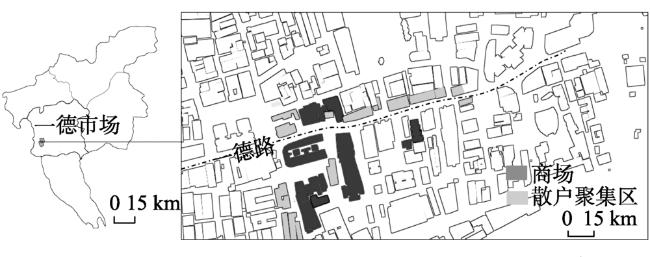
Fig. 1 Location of the Yide Market图1 一德市场区位示意 |
Tab.1 Participants of in-depth interviews表1 深度访谈对象 |
| 对象 | 访谈对象(下文引用编号) | 访谈时间 |
|---|---|---|
| 商家 | 海中宝商家(A1、A2)、临街散户(B1、B2、B3)、海勤盛管理处负责人(C1)、海勤盛商家(C2)、山海城商家(D)、海谊综合批发市场商家(E)、海味干货商会负责人(F1、F2、F3) | 2016年11月30日-2017年12月21日、2017年3月10-14日 |
| 顾客 | 批发客户(K1、K2、K3、K4、K5) | 2016年1月1-5日 |
| 政府 | 人民街街道办事处工作人员(I1、I2) | 2016年1月6日 |
| 企业 | 一德电子商务有限公司负责人(G1、G2) | 2016年1月7-9日 |
Tab.2 Transformation stages of the Yide Market表2 一德市场历史转型阶段划分 |
| 阶段 | 时间 | 特征 | 节点事件 | 影响要素 |
|---|---|---|---|---|
| 三栏 | 明代至清代 | 传统集市、散户为主 | “三栏”市场名声打响 | 空间、人气 |
| 咸鱼 | 民国至建国初期 | 商家联盟、合作管理 | 一德路扩建、1946年第一个专业商会成立 | 空间、管理方法 |
| 国营 | 1980年代 | 入室经营、国营供应 | 1988年第一个商场建成 | 空间、流通渠道 |
| 翘楚 | 1990年代-2003年 | 数量增加、档次提升 | 1994年起多行业商场大量涌现 | 产业、品牌、空间 |
| 惨淡 | 2003-2012年 | 信誉受损、政策调控 | 2003年毒鱼翅事件,2012年“八项规定” | 流通渠道、品牌、政策背景、空间 |
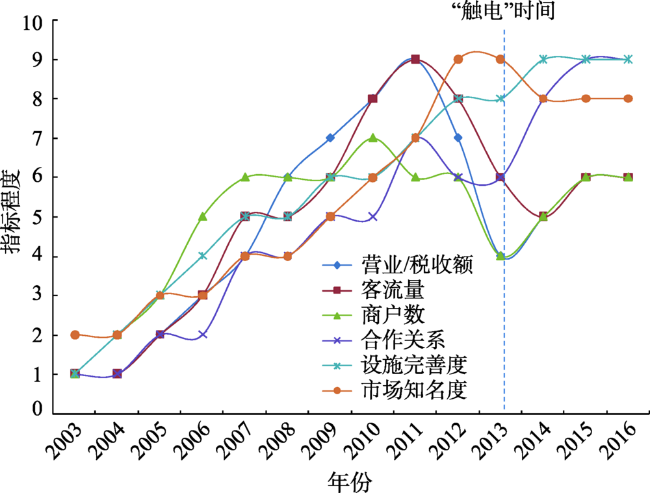
Fig. 2 Process and effects of E-commerce transformation in the Yide Market图2 一德市场电商化过程及效应 |
Tab. 3 Enrolment measures of governments at all levels表3 各级政府征召举措 |
| 时间 | 政府部门 | 征召举措 | 征召意义 |
|---|---|---|---|
| 2013 | 区政府 | 成立人民街专业市场升级改造咨询委员会,联合区商会举办“小屏幕,大商机”电子商务专题讲座,推进电商网站建设 | 电商引导 |
| 2014 | 街道办 | 由街道向区争取升级改造项目扶持资金;协调整合辖内海味、食品和精品玩具行业商会网站,以结盟形式促进电子商务建设 | 电商结盟 |
| 2014 | 区政府 | 在果菜西社区成立互联网孵化中心、互联网金融中心,引进电商和金融企业,由金融街管委会管理 | 电商扶持 |
| 2015 | 街道办 | 建立上线电子商务网站“一德商圈”,吸引2000多户商户入驻,5万种商品实现在线交易 | 电商扩张 |
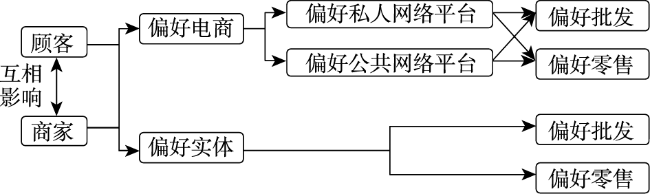
Fig.3 Polarization of customers and businesses图3 顾客和商家的分化 |
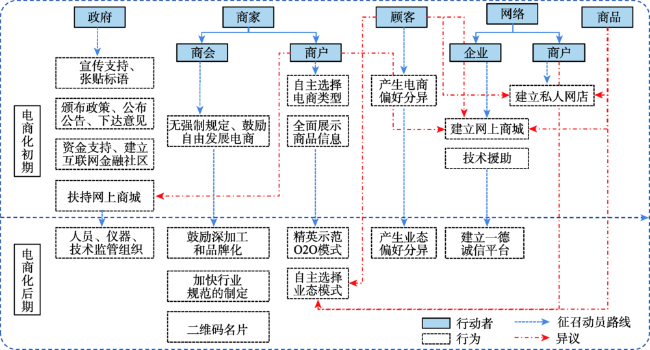
Fig.4 Translation in the Yide Market's actor network图4 一德市场行动者网络转译过程 |
Fig.5 Formation mechanism of four types of business formats图5 四种业态模式的形成机制 |
The authors have declared that no competing interests exist.
| [1] |
[
|
| [2] |
[
|
| [3] |
[
|
| [4] |
[
|
| [5] |
[
|
| [6] |
[
|
| [7] |
[
|
| [8] |
[
|
| [9] |
[
|
| [10] |
[
|
| [11] |
[
|
| [12] |
[
|
| [13] |
[
|
| [14] |
[
|
| [15] |
[
|
| [16] |
[
|
| [17] |
[
|
| [18] |
|
| [19] |
|
| [20] |
|
| [21] |
|
| [22] |
|
| [23] |
|
| [24] |
|
/
| 〈 |
|
〉 |