基于SNA的新型集中社区公共空间网络结构优化
作者简介:邹晴晴(1990-),女,河南周口人,硕士生,从事城乡规划理论与设计研究,E-mail: zouqingqing92@163.com。
网络出版日期: 2016-07-20
基金资助
基金项目:国家自然科学基金项目(51278319,51578352);江苏省高校哲学社会科学研究项目(2014SJB567);江苏省普通高校研究生科研创新计划项目(KYLX15_1306)
Network structure optimization of public space in new concentrated communities based on SNA
Online published: 2016-07-20
Supported by
Foundation: National Natural Science Foundation of China, No.51278319, No.51578352; Philosophical and Social Science Foundation of Jiangsu Province, No.2014SJB567; The Graduate Students’ Scientific Research Innovation Project of Education Department of Jiangsu Province, No.KYLX15_1306
Copyright
公共空间并非“存在即合理”。公共空间网络结构效率折射出社会网络的重构能力、社会资本的建构强度、社会秩序的重塑能力。新型集中社区作为近年大量涌现的新型居住形态,正面临社会关系重构的巨大压力。本文运用社会学的网络分析法研究公共空间网络,并对苏州新型集中社区D的公共空间网络结构进行实证分析,其结论为:公共空间网络的关联度为0.216、中心势0.358、小世界值1.978,表明空间网络整体关联度不足,呈现出破碎化的特征;商业空间整合效应的发挥受到业态配置的影响;居民社会属性对空间网络结构特征造成一定影响。最后,基于“社会—空间”互动逻辑,以社会网络重构为导向,从集中安置模式、公共空间网络优化2个层面,提出新型集中社区有待进一步研究的方向,以期为当前及未来的集中社区规划建设和公共空间整体优化提供科学合理的依据。
关键词: 新型集中社区; 公共空间网络; 社会网络分析法(SNA); 量化分析; 苏州市
邹晴晴 , 王勇 , 李广斌 . 基于SNA的新型集中社区公共空间网络结构优化[J]. 地理科学进展, 2016 , 35(7) : 829 -838 . DOI: 10.18306/dlkxjz.2016.07.004
The efficiency of public space network structure reflects the ability of communities to reconstruct their social network, to accumulate social capital, and to rebuild social order. In recent years, as a new form of living and emerging in large numbers, new concentrated communities are facing enormous pressure in reconstructing social relations. Using Social Network Analysis, this study found that: the public space network correlation degree is 0.216, central potential is 0.358, and small world business value is 1.978. These show that the overall association degree of the spatial network is insufficient and the network is fragmented; the integration effect of commercial space is affected by the configuration of businesses; and the social attributes of residents influence the characteristics of the spatial network structure. Finally, with regard to concentrated resettlement model and pubic space network optimization, the author puts forward the direction of further research of new concentrated communities, in order to provide a scientific basis for the current and future planning and development and overall optimization of public space of concentrated communities.
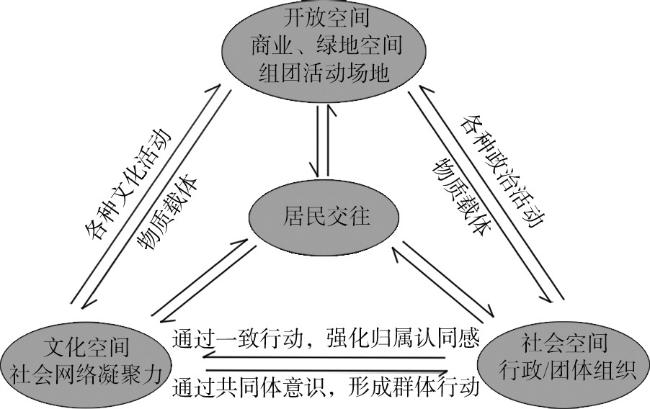
Fig.1 Network structure of community public space图1 社区公共空间网络系统构成 |
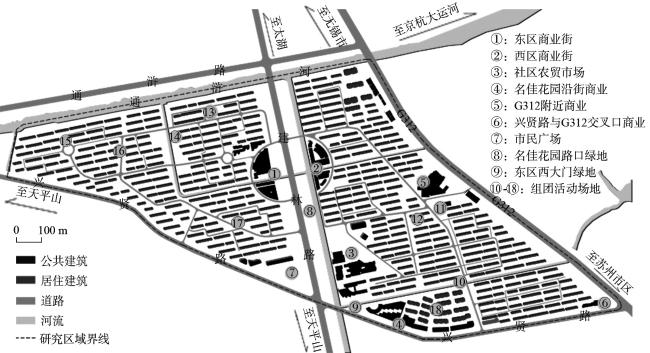
Fig.2 Spatial extent and public space nodes of Community D图2 D社区范围和公共空间节点 |
Tab.1 Basic information of the samples表1 样本基本特征 |
| 样本属性 | 数量/份 | 所占比例/% | 样本属性 | 数量/份 | 所占比例/% |
|---|---|---|---|---|---|
| 性别 | 家庭人均月收入/元 | ||||
| 男 | 169 | 44.8 | ≤1500 | 107 | 28.3 |
| 女 | 209 | 55.2 | 1501~2500 | 163 | 43.2 |
| 年龄 | 2501~3500 | 84 | 22.1 | ||
| 18岁以下 | 11 | 12.9 | ≥3501 | 24 | 6.4 |
| 18~30岁 | 72 | 19.0 | 职业 | ||
| 31~45岁 | 118 | 31.3 | 待业 | 32 | 8.5 |
| 46~60岁 | 121 | 21.9 | 产业工人 | 119 | 31.4 |
| 61岁以上 | 56 | 14.9 | 商业服务人员 | 41 | 10.8 |
| 文化程度 | 个体工商户 | 38 | 10.1 | ||
| 初中及以下 | 184 | 48.8 | 行政人员 | 31 | 8.2 |
| 高中 | 118 | 31.2 | 专业技术人员 | 54 | 14.3 |
| 专科 | 50 | 13.1 | 专业管理人员 | 34 | 9.0 |
| 本科以上 | 26 | 6.9 | 私营企业主 | 26 | 7.7 |
| 家庭规模 | 入住年数 | ||||
| 2人及以下 | 68 | 18.0 | 1~2年 | 42 | 11.2 |
| 3~4人 | 150 | 39.6 | 2~4年 | 65 | 17.1 |
| 5~6人 | 128 | 33.9 | 4~6年 | 114 | 30.1 |
| 6人以上 | 32 | 8.5 | 6年以上 | 157 | 41.6 |
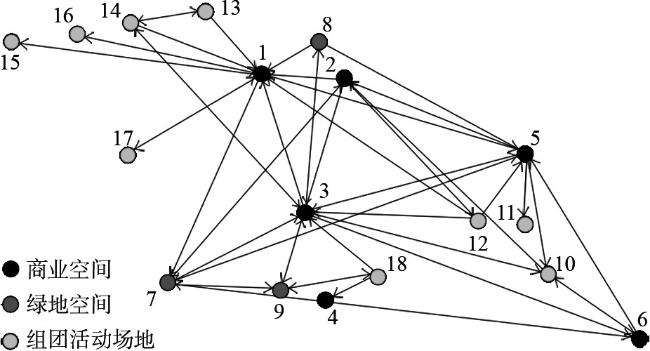
Fig.3 Flows between the nodes of Community D public space图3 D社区公共空间网络节点流向图 |
Tab.2 Indicators and overall characteristic parameters of public space network structure表2 公共空间网络结构量化指标及整体特征参数值 |
| 空间量化指标 | 特征参数 | 参数值 | 解释 |
|---|---|---|---|
| 空间关联度 | 密度 | 0.216 | 区域范围内所有直接联系的公共空间数量 |
| 空间整合度 | 中心势 | - | 中心度高的空间起到重要的“中介”作用,是通往其他空间的“要道” |
| 点的平均中心势 | 4.698 | 反映空间节点之间控制度的重要指标 | |
| 图的中心势 | 0.358 | 衡量整个网络的联系紧密程度的重要指标 | |
| 空间连通性 | 小世界值 | 1.978 | 平均路径长度和聚类系数的比值。值越大表示小世界特征越明显,衡量网络的连通性 |
| 聚类系数 | 0.562 | 各个点密度系数的均值 | |
| 平均路径长度 | 1.948 | 连接任何两点之间最短途径的平均长度 |
3.3.1 密度 |
Tab.3 The structural hole parameters of the public space nodes of Community D表3 D社区公共空间网络节点结构洞参数值 |
| 节点编号 | 1 | 2 | 3 | 4 | 5 | 6 | 7 | 8 | 9 | 10 | 11 | 12 | 13 | 14 | 15 | 16 | 17 | 18 |
|---|---|---|---|---|---|---|---|---|---|---|---|---|---|---|---|---|---|---|
| 中间中心度* | 18.5 | 6.8 | 7.5 | 6.3 | 9.1 | 3.4 | 1.1 | 1.1 | 0.5 | 0.4 | 0.0 | 0.0 | 0.0 | 0.2 | 0.0 | 0.0 | 0.0 | 0.0 |
| 中间人指数** | 52.5 | 2.0 | 9.5 | 1.0 | 9.0 | 2.0 | 5.0 | 3.0 | 1.5 | 1.0 | 0.0 | 0.0 | 0.0 | 1.5 | 0.0 | 0.0 | 0.0 | 2.0 |
Tab.4 Business and service facilities in Community D表4 D社区商业服务业设施设置情况 |
| 节点编号 | 空间区位 | 商业业态 | 与居民日常生活的相关性 |
|---|---|---|---|
| 1 | 穿过的城市主干道、东区主入口 | ①服饰卖场、蛋糕店、药店等;②饭店;③菜市场;④工商银行、培训机构、旅馆 | 最高 |
| 2 | 穿过的城市主干道、西区主入口 | ①五金店、药店;②饭店;③俱乐部、网吧等;④旅馆 | 较低 |
| 3 | 二区主要道路 | ①小卖部、商铺等;②美发店 | 一般 |
| 4 | 社区外围的城市道路 | ①饭店;②旅馆 | 较低 |
| 5 | 西区主要道路的中部 | ①购物中心、药店等;②饭店;③菜市场;④劳务服务一条街、浴场 | 较高 |
| 6 | 社区外围的城市道路 | ①购物中心;②饭店;③宾馆 | 最低 |
4.1.3 空间网络的整体连通性 |
Tab.5 Correlation analysis of network structure of public space and sample characteristics in Community D表5 D社区公共空间网络结构与样本特征相关性分析 |
| 基本属性 | 项目 | 空间关联度(密度) | 空间整合度(中心势) | 空间连通性(小世界值) |
|---|---|---|---|---|
| 居民年龄 | 相关系数 | 0.66 | 0.71 | 0.63 |
| P值 | 0.52 | 0.54 | 0.33 | |
| 入住年份 | 相关系数 | 0.61 | 0.77 | 0.22 |
| P值 | 0.05 | 0.03 | 0.01 | |
| 文化程度 | 相关系数 | -0.79 | -0.62 | 0.19 |
| P值 | 0.03 | 0.02 | 0.43 | |
| 家庭收入 | 相关系数 | -0.69 | -0.45 | -0.80 |
| P值 | 0.04 | 0.62 | 0.01 | |
| 家庭规模 | 相关系数 | 0.31 | 0.40 | 0.28 |
| P值 | 0.35 | 0.86 | 0.65 |
The authors have declared that no competing interests exist.
| 1 |
[
|
| 2 |
[
|
| 3 |
[
|
| 4 |
邓肯·J·瓦茨. 2011. 六度分隔: 一个相互连接的时代的科学[M]. 陈禹, 译. 北京: 中国人民大学出版社.
|
| 5 |
|
| 6 |
[
|
| 7 |
[
|
| 8 |
|
| 9 |
[
|
| 10 |
[
|
| 11 |
[
|
| 12 |
[
|
| 13 |
[
|
| 14 |
[
|
| 15 |
[
|
| 16 |
|
| 17 |
|
| 18 |
[
|
| 19 |
[
|
| 20 |
斯特凡纳·托内拉. 2009. 城市公共空间社会学[J]. 黄春晓, 陈烨, 译. 国际城市规划, 24(4): 40-45.
[
|
| 21 |
[
|
| 22 |
[
|
| 23 |
[
|
| 24 |
[
|
| 25 |
[
|
| 26 |
[
|
| 27 |
约翰·斯科特. 2007. 社会网络分析法[M]. 刘军, 译, 重庆: 重庆大学出版社.
|
| 28 |
[
|
| 29 |
|
| 30 |
|
| 31 |
|
| 32 |
|
| 33 |
|
| 34 |
|
| 35 |
|
| 36 |
|
| 37 |
|
/
| 〈 |
|
〉 |