中国对“一带一路”沿线直接投资空间格局
作者简介:郑蕾(1988-),女,博士研究生,河南南阳人,主要从事经济地理与区域发展研究,E-mail: zhengl.11s@igsnrr.ac.cn。
网络出版日期: 2015-06-17
基金资助
国家自然科学基金项目(71441037)
Spatial pattern of Chinese outward direct investment in the Belt and Road Initiative area
Online published: 2015-06-17
Copyright
2015年3月28日,中国政府正式发布了《推动共建丝绸之路经济带和21世纪海上丝绸之路的愿景与行动》。如何通过对“一带一路”国家和地区直接投资,提升主要产业的国际竞争力,促进中国产业转型升级,实现与沿线国家共同繁荣,已成为当前迫切需要解决的重大课题。现有对外投资理论多基于发达国家的经验,不完全适用于中国;目前的研究侧重从自然资源、市场要素等方面分析中国企业的海外投资动因及影响机制,缺少面向国家战略需求的宏观投资格局研究。本文通过集成统计数据、实地调研和高层访谈等,在回顾国内外对外直接投资研究基础上,提出中国对“一带一路”沿线直接投资空间战略的分析框架,进一步分析中国对沿线国家和地区直接投资的空间分布和产业选择;尔后,剖析投资面临的困境和挑战,并提出中国对沿线地区的空间差异化投资引导战略。
郑蕾 , 刘志高 . 中国对“一带一路”沿线直接投资空间格局[J]. 地理科学进展, 2015 , 34(5) : 563 -570 . DOI: 10.11820/dlkxjz.2015.05.004
The Vision and Actions on Jointly Building Silk Road Economic Belt and 21st-Century Maritime Silk Road policy document was issued by the Chinese government on 28 March 2015. How to implement the overall national strategy becomes a major topic of theoretical discussion with much practical significance, namely, to promote the international competitiveness and upgrading of Chinese industries, and achieve common prosperity among countries in the Belt and Road Initiative area through Chinese outward direct investment (ODI). Existing literature on ODI originated largely from developed countries, and thus cannot satisfactorily explain the booming ODI from emerging countries such as China. Moreover, the research on Chinese foreign direct investment focused more on the natural resources and market factors in analyzing motivations and driving forces, mainly based on historical data. There is little discussion on large scale, national demand-oriented Chinese ODI strategy, for example, in the Belt and Road Initiative area. Against this background, this article investigates the spatial strategy of Chinese outward direct investment (ODI) in the Belt and Road Initiative area, using statistical data and results from fieldwork and interviews. It first develops a theoretical framework to investigate Chinese outward direct investment in the Belt and Road Initiative area based on a review of existing research on foreign direct investment. It then analyzes the basic characteristics of Chinese ODI in this region with regard to its spatial distribution and choice of sectors. Third, the article explores difficulties and challenges that Chinese enterprises will face when they implement the “going global” strategy. Finally, it investigates the spatially differentiated investment guiding strategy for Chinese ODI in the Belt and Road Initiative area.
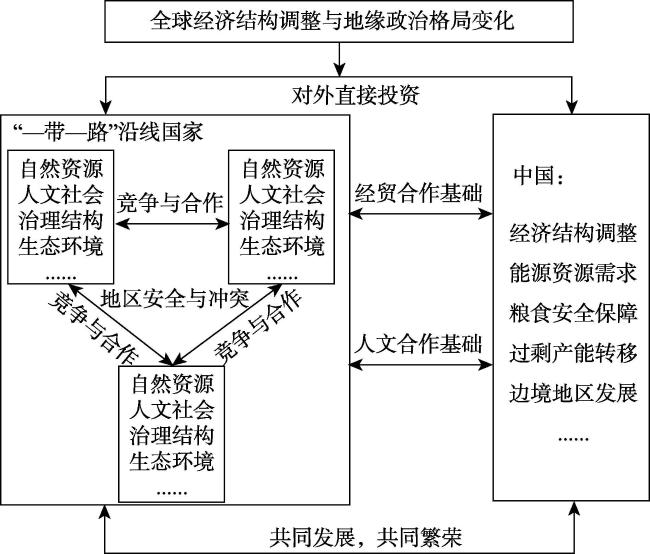
Fig.1 Analytical framework for Chinese outward direct investment (ODI) in the Belt and Road Initiative area图1 中国对“一带一路”沿线国家直接投资战略分析框架 |
Tab.1 Chinese outward direct investment (ODI) stock in the Belt and Road Initiative area, 2003-2013表1 2003-2013年中国对“一带一路”沿线地区直接投资存量 |
| 2003 | 2004 | 2005 | 2006 | 2007 | 2008 | 2009 | 2010 | 2011 | 2012 | 2013 | |
|---|---|---|---|---|---|---|---|---|---|---|---|
| 沿线地区/亿美元 | 13.4 | 19.5 | 34.1 | 52.7 | 97.3 | 149.8 | 202.6 | 292.5 | 416.8 | 567.6 | 720.2 |
| 世界/亿美元 | 332.2 | 447.8 | 272.1 | 750.3 | 1179.1 | 1839.7 | 2457.6 | 3172.1 | 4247.8 | 5319.4 | 6604.8 |
| 沿线地区比重/% | 4.0 | 4.4 | 12.5 | 7.0 | 8.3 | 8.1 | 8.2 | 9.2 | 9.8 | 10.7 | 10.9 |
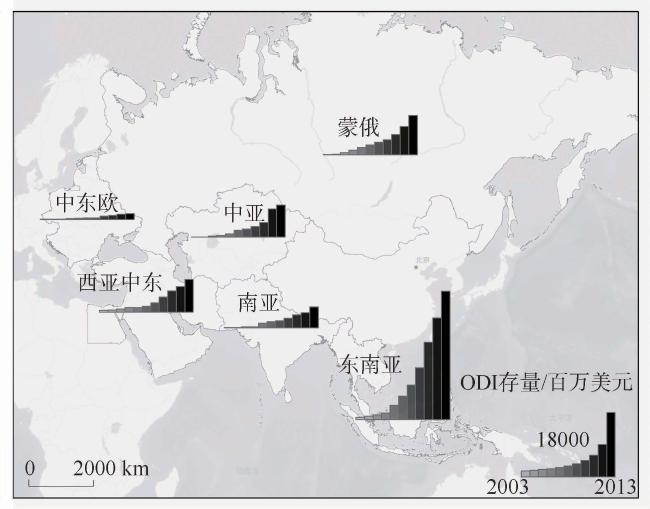
Fig.2 Chinese outward direct investment (ODI) stock in six regions of the Belt and Road Initiative area, 2003-2013图2 2003-2013中国对“一带一路”六大区域直接投资存量 |
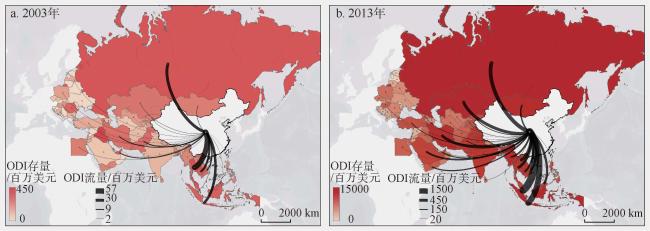
Fig.3 Spatial pattern of Chinese outward direct investment (ODI) in the Belt and Road Initiative area in 2003 and 2013图3 2003、2013年中国对“一带一路”沿线国家地区直接投资格局 |
Tab.2 Differentiated investment strategy for Chinese outward direct investment (ODI) in the Belt and Road Initiative area表2 中国对“一带一路”沿线国家投资差异化战略 |
| 区域 | 战略意义 | 投资重点领域 | 注意事宜 |
|---|---|---|---|
| 中亚 | 保障中国战略资源安全,消化国内部分剩余产能转移 | 以哈萨克斯坦石油、土库曼斯坦天然气为重点,扩大在中亚能源资源等领域投资,提高资源就地加工转化比重 | 中亚地区政局不稳及大国争端影响,加强与俄罗斯沟通,发挥上合作组织协调作用 |
| 俄(罗斯)与蒙(古国) | 加强与俄罗斯的战略合作关系,牵制美日在亚太地区的影响 | 在俄罗斯投资重点为航空航天、空间技术、资源精深加工等领域合作;在蒙古国重点投资农牧业和矿能等领域,发展出口加工业 | 俄罗斯和蒙古国政策多变性影响,日美在该地区与中国的投资竞争 |
| 中东欧 | 欧洲东大门、消化国内部分剩余产能 | 以波兰、罗马尼亚、匈牙利和白俄罗斯为重点,重点加强装备制造、高铁、汽车及零部件、通用航空和高端装备制造、新能源等领域投资 | 防范欧洲国家经济恢复及俄罗斯在乌克兰危机过后政策变化带来的风险 |
| 南亚 | 人力资源丰富,转移国内劳动密集型产业 | 以巴基斯坦为重点加强基础设施、能源、汽车、机械电子、通讯和金融等领域投资;加快对印度高科技领域投资,加强农业领域投资 | 需要妥善处理中印关系,同时注意俄罗斯、美国对该地区地缘政治格局的影响 |
| 东南亚 | 能源资源安全大通道;促进中国南海安全 | 以马来西亚和文莱为重点加强能源投资,加快向印尼和菲律宾转移劳动密集型产业,增加海洋产业投资 | 充分利用中国—东盟合作框架,密切关注域外势力影响 |
| 西亚 | 海外石油保障基地 | 加强资源深加工投资,加大对能源设备产品投资 | 关注中国经济转型和能源价格下降对能源需求影响 |
| “一带一路”沿线 | 提高中国战略资源保障能力的提高,转移国内剩余产能,提升中国产业竞争力,谋求与沿线国家共同发展、互利共赢 | 加大对传统能源资源勘探开发和深加工投资,提高能源资源就地、就近加工转化率,带动装备与工程服务投资;深化农业和海洋产业领域投资,加强高技术和新兴产业领域投资 | 发挥国家统筹协调作用,综合协调对外援助、人文合作和外交军事等力量,为对外直接投资创造良好环境,关注世界和地区地缘政治变化影响 |
The authors have declared that no competing interests exist.
| 1 |
[
|
| 2 |
[
|
| 3 |
[
|
| 4 |
[
|
| 5 |
[
|
| 6 |
[
|
| 7 |
|
| 8 |
|
| 9 |
|
| 10 |
|
| 11 |
|
| 12 |
|
| 13 |
|
| 14 |
|
| 15 |
|
| 16 |
|
| 17 |
|
| 18 |
|
| 19 |
|
| 20 |
|
| 21 |
|
| 22 |
|
| 23 |
|
| 24 |
|
| 25 |
|
| 26 |
|
| 27 |
|
| 28 |
|
| 29 |
|
| 30 |
|
| 31 |
|
| 32 |
|
| 33 |
|
/
| 〈 |
|
〉 |